
Rhabdomyolysis in older adults: signs and urgent steps
Short answer
Rhabdomyolysis in older adults can follow a fall, prolonged immobility, illness, heat, or medicines and needs prompt medical assessment.
This answers one question. It is not a diagnosis and does not replace an assessment by a licensed doctor.
At a glance
- Common setting
- A fall followed by prolonged immobility can injure muscle.
- Do not overlook
- New weakness, confusion, dark urine, or reduced urination.
Why older adults need careful assessment
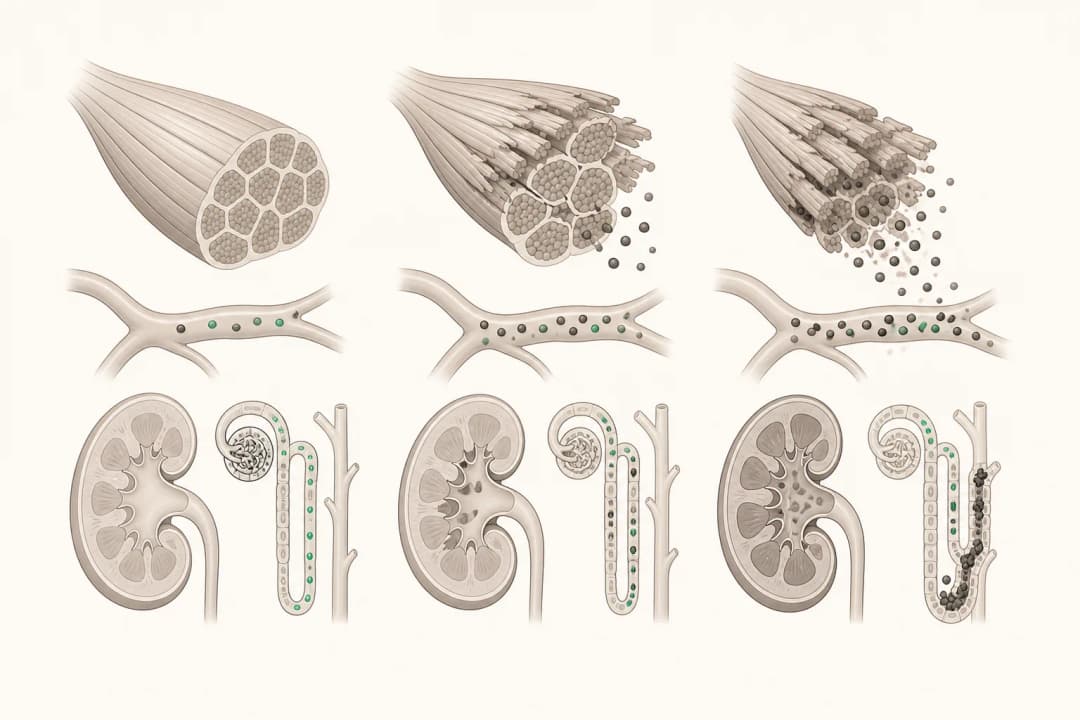
Muscle cells can break down after a person remains on the floor following a fall, experiences a crush injury, becomes overheated, or has severe exertion or infection. Some medicines and interactions may also contribute. Released muscle contents can burden the kidneys and disturb fluid or mineral balance. An older person may not report pain clearly, particularly with memory problems, reduced mobility, or an existing condition. New weakness, difficulty standing, muscle swelling, confusion, or dark urine may be more revealing than soreness.
Ordinary post-exercise soreness generally follows a familiar activity pattern. Guidance on distinguishing it from more concerning changes is available in [Muscle Soreness After Exercise](/symptoms/muscle-soreness-after-exercise/).
Practical next steps
Seek prompt medical advice and do not leave a weak, confused, or recently fallen person alone. Note how long they were immobile, whether there was heat or injury, current medicines, fluid intake, and changes in urination. Help them rest safely; avoid unassisted walking if balance is poor. Fluids should follow clinician guidance, especially when heart or kidney disease is present. Evaluation may involve blood and urine tests, a medication review, monitoring urine output, and treatment selected for the person's overall health.
When to seek emergency care
Call emergency services for confusion, fainting, severe weakness, breathing difficulty, chest symptoms, repeated vomiting, very little or no urine, or tea-coloured urine. Urgent assessment is warranted after a fall with prolonged time on the floor, even when pain seems modest. A sudden decline in mobility or alertness should not be explained away as ageing or fatigue.
Questions to bring
Ask whether any medicines should be changed, how fluid intake should be balanced with heart or kidney conditions, which test results need repeating, and what level of walking is safe. Ask how to reduce fall and heat risks and which changes in urine, strength, or alertness should prompt immediate reassessment.
Find care
General Clinics & Polyclinics in Abu Dhabi
That answer is general. If you want it applied to your own case, these are licensed general clinics & polyclinics listed in Abu Dhabi.
27 Ar Ruwwad St - Shakhbout City - MSH4 - Abu Dhabi - United Arab Emirates
Accepts: Daman, Thiqa, Cigna, MetLife +20 more
Al Ruwais, Al Dhafrah
Accepts: Daman, Thiqa, AXA, Cigna +16 more
Al Bahyah - Al Bahyah Old - Abu Dhabi - United Arab Emirates
Accepts: Daman, Thiqa, Cigna, Allianz Care +18 more
Abu Dhabi
Accepts: Daman, Thiqa, AXA, Cigna +27 more
Ordered by verification status and how complete each clinic's public record is, then alphabetically. This is a directory listing, not a ranking — Zavis does not rate or recommend providers.
A factual listing drawn from the DHA, DOH and MOHAP licence registers. It is not a referral, an endorsement, or advice that any of these providers is right for you.
Questions people ask
Can rhabdomyolysis occur without severe pain in an older adult?
Yes. Weakness, reduced mobility, confusion, or urine changes may be more noticeable than pain.
Should medicines be stopped at home?
Do not stop prescribed treatment without medical advice; give the clinician a complete medicine and supplement list.
Related
Related reading
Keep reading
Medical disclaimer. This page is general health information, not medical advice, and it cannot diagnose you. Always consult a licensed healthcare provider about your own symptoms and treatment. In an emergency in the UAE, call 998 for an ambulance.