
Rhabdomyolysis in runners: warning signs and next steps
Short answer
Rhabdomyolysis in runners is a serious form of muscle breakdown that requires prompt assessment when symptoms exceed ordinary training soreness.
This answers one question. It is not a diagnosis and does not replace an assessment by a licensed doctor.
At a glance
- Pause
- Stop running when weakness, severe pain, swelling, or unusual exhaustion develops.
- Key warning
- Dark urine or reduced urination needs urgent attention.
How it can happen during running
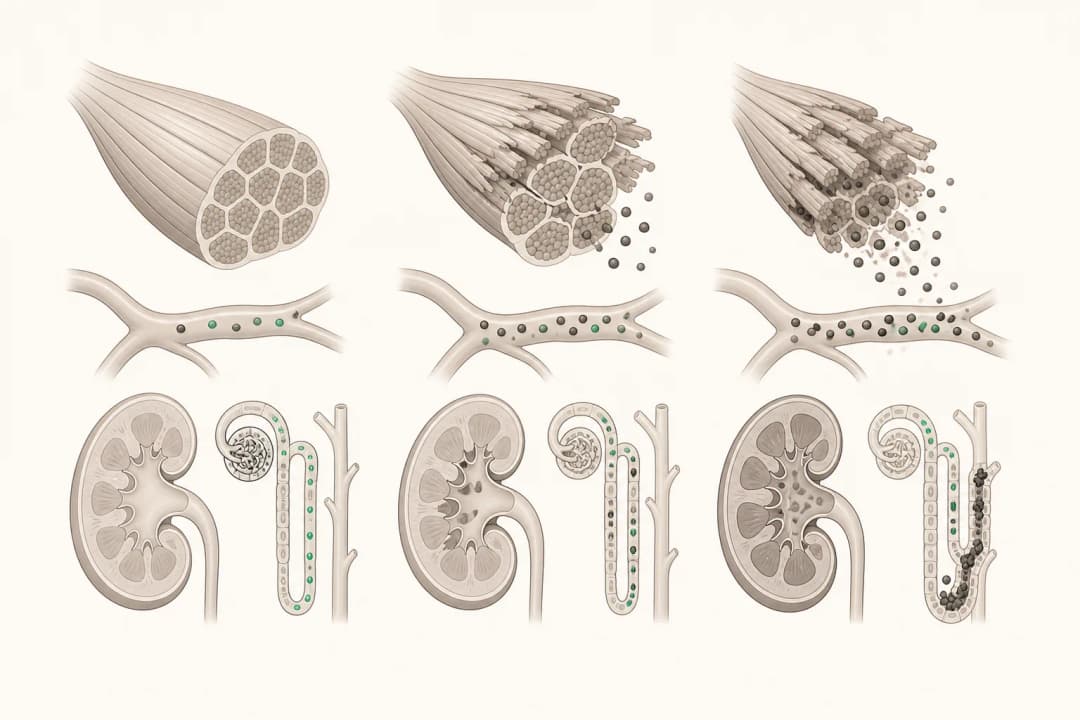
A sudden increase in distance, speed work, hills, heat, or long training without adequate recovery can place unusual stress on muscle. Injury, illness, and certain medicines can add to that stress. Damaged muscle releases proteins and minerals into the blood, which may affect the kidneys and fluid balance. Severe muscle tenderness, swelling, weakness, cramps, or exhaustion may appear during or after a run. Dark urine is a warning sign, but its absence does not rule out the condition.
Routine soreness tends to be familiar and improves gradually. Rhabdomyolysis can feel more intense, limit normal movement, or worsen instead of easing. For a comparison with common post-exercise discomfort, see [Muscle Soreness After Exercise](/symptoms/muscle-soreness-after-exercise/).
What to do after suspicious symptoms
Stop running, move to a cool place, and arrange prompt medical assessment. Record the workout details, heat exposure, fluid intake, supplements, medicines, and when symptoms began. Sip fluids if you are fully alert and can keep them down, unless a clinician has told you to restrict fluids; do not force fluids if vomiting or confused. Avoid further exercise, alcohol, and unapproved pain medicines until assessed. Clinicians may check muscle enzymes, kidney function, minerals, urine, and hydration status.
When the situation is urgent
Use emergency care for cola-coloured urine, sharply reduced urination, severe swelling or pain, fainting, confusion, chest symptoms, breathing difficulty, or repeated vomiting. Prompt assessment is also appropriate for profound weakness or symptoms that are escalating after a demanding run. Do not use the ability to walk, or a normal-looking urine sample, as proof that the kidneys are unaffected.
Useful questions
Ask which results show recovery, when you can resume easy running, how training should be rebuilt, and whether heat or hydration changes matter for you. Ask whether any medicine or supplement may have contributed and whether follow-up testing is needed before returning to hard sessions.
Find care
General Clinics & Polyclinics in Abu Dhabi
That answer is general. If you want it applied to your own case, these are licensed general clinics & polyclinics listed in Abu Dhabi.
27 Ar Ruwwad St - Shakhbout City - MSH4 - Abu Dhabi - United Arab Emirates
Accepts: Daman, Thiqa, Cigna, MetLife +20 more
Al Ruwais, Al Dhafrah
Accepts: Daman, Thiqa, AXA, Cigna +16 more
Al Bahyah - Al Bahyah Old - Abu Dhabi - United Arab Emirates
Accepts: Daman, Thiqa, Cigna, Allianz Care +18 more
Abu Dhabi
Accepts: Daman, Thiqa, AXA, Cigna +27 more
Ordered by verification status and how complete each clinic's public record is, then alphabetically. This is a directory listing, not a ranking — Zavis does not rate or recommend providers.
A factual listing drawn from the DHA, DOH and MOHAP licence registers. It is not a referral, an endorsement, or advice that any of these providers is right for you.
Questions people ask
Is every painful run rhabdomyolysis?
No. Common training soreness is not the same as muscle breakdown, but unusually severe or worsening symptoms require clinical assessment.
Can runners prevent every episode?
No. Gradual training, recovery, heat awareness, and individualized hydration may reduce strain but cannot remove every risk.
Related
Related reading
Keep reading
Medical disclaimer. This page is general health information, not medical advice, and it cannot diagnose you. Always consult a licensed healthcare provider about your own symptoms and treatment. In an emergency in the UAE, call 998 for an ambulance.