
Rhabdomyolysis and its effect on the liver: what to know
Short answer
Rhabdomyolysis can raise some liver-related blood markers because injured muscle releases enzymes, so results need clinical interpretation.
This answers one question. It is not a diagnosis and does not replace an assessment by a licensed doctor.
At a glance
- Test interpretation
- Some liver-panel enzymes are also present in muscle.
- Broader review
- Clinicians assess muscle, kidney and liver-related findings together.
Why liver tests may change
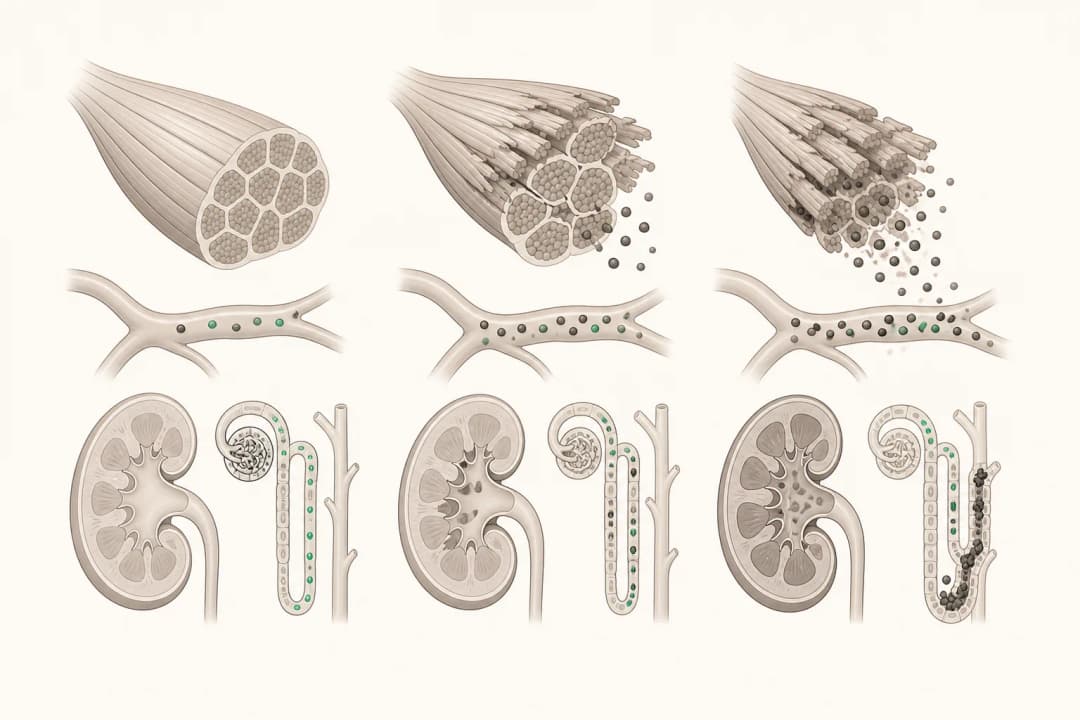
Damaged muscle releases proteins and enzymes into the bloodstream. Some enzymes measured in a liver panel are also found in muscle, so rhabdomyolysis can make liver-related results look abnormal without proving that the liver is the main source. Clinicians compare several markers with symptoms, examination findings and muscle-injury tests. They may also consider alcohol, medicines, viral illness and existing liver conditions.
How it is assessed
Seek medical review when severe muscle pain, weakness or swelling follows intense exertion, injury, illness or a medicine. The evaluation may include repeat blood tests for muscle enzymes, kidney function, electrolytes and liver-related markers, along with urine testing. Share your full medication and supplement list, and avoid strenuous exercise until you receive clear guidance.
Urgent symptoms
Get urgent care for reduced urination, severe weakness, confusion, fainting, persistent vomiting, yellowing of the skin or eyes, severe abdominal pain, breathing difficulty or rapidly worsening muscle swelling. These symptoms may point to kidney, muscle, liver or fluid-balance complications and need examination rather than interpretation from a single test result.
Questions for your doctor
Ask which abnormal markers are more consistent with muscle release, whether your liver itself needs further assessment, when blood tests should be repeated, and which activities, medicines or supplements to avoid. Ask how kidney function and urine output will be monitored during recovery.
Find care
General Clinics & Polyclinics in Abu Dhabi
That answer is general. If you want it applied to your own case, these are licensed general clinics & polyclinics listed in Abu Dhabi.
27 Ar Ruwwad St - Shakhbout City - MSH4 - Abu Dhabi - United Arab Emirates
Accepts: Daman, Thiqa, Cigna, MetLife +20 more
Al Ruwais, Al Dhafrah
Accepts: Daman, Thiqa, AXA, Cigna +16 more
Al Bahyah - Al Bahyah Old - Abu Dhabi - United Arab Emirates
Accepts: Daman, Thiqa, Cigna, Allianz Care +18 more
Abu Dhabi
Accepts: Daman, Thiqa, AXA, Cigna +27 more
Ordered by verification status and how complete each clinic's public record is, then alphabetically. This is a directory listing, not a ranking — Zavis does not rate or recommend providers.
A factual listing drawn from the DHA, DOH and MOHAP licence registers. It is not a referral, an endorsement, or advice that any of these providers is right for you.
Questions people ask
Does rhabdomyolysis always damage the liver?
No. It can alter some liver-related blood markers because of muscle release, but the liver must be assessed separately.
Can one abnormal liver test diagnose liver disease?
No. A clinician interprets the pattern alongside symptoms, other tests and possible muscle injury.
Related
Related reading
Keep reading
Medical disclaimer. This page is general health information, not medical advice, and it cannot diagnose you. Always consult a licensed healthcare provider about your own symptoms and treatment. In an emergency in the UAE, call 998 for an ambulance.