
Rhabdomyolysis and risk of death: what to know
Short answer
There is no single death rate that predicts an individual outcome from rhabdomyolysis; early assessment and treatment of complications matter.
This answers one question. It is not a diagnosis and does not replace an assessment by a licensed doctor.
At a glance
- Risk assessment
- Cause, kidney function, electrolytes and speed of treatment all influence risk.
- Monitoring
- Urine output and blood tests help detect complications.
Why risk varies
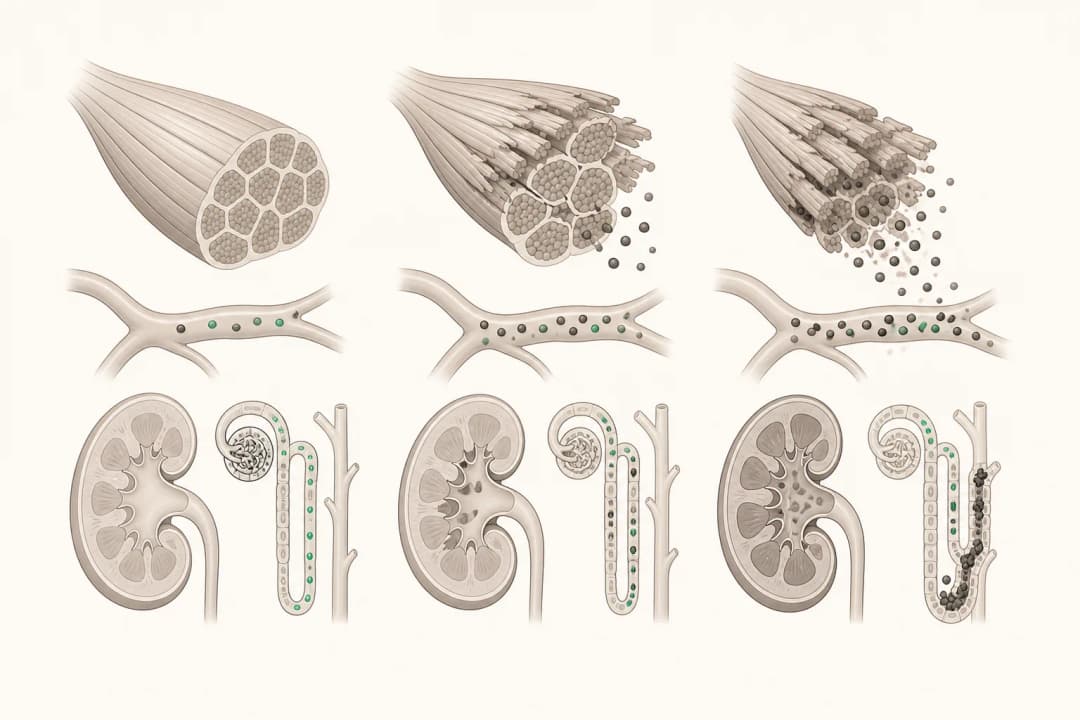
Rhabdomyolysis describes muscle breakdown, not one uniform illness. Risk depends on the cause, the amount and location of muscle injury, kidney function, fluid and electrolyte changes, other illnesses and how quickly care begins. Kidney injury, dangerous potassium changes, severe dehydration and problems from the original trauma can make the situation more serious. Many people recover when complications are recognised and managed promptly.
What assessment involves
If rhabdomyolysis is suspected, stop strenuous activity and seek medical advice promptly. A healthcare team may repeat blood tests to follow muscle enzymes, kidney function and electrolytes, while monitoring urine output and heart rhythm when needed. Treatment is tailored to the cause and may include supervised fluids, correction of chemical imbalances and management of injury, infection or medication effects.
Warning signs
Seek emergency care for very little urine, severe weakness, confusion, fainting, chest discomfort, palpitations, breathing difficulty, persistent vomiting or rapidly worsening muscle swelling and pain. These signs can reflect complications that cannot be judged safely at home. Do not delay because symptoms seem related to exercise or because urine colour looks normal.
Questions for your doctor
Ask what caused the muscle injury, which complications you are watching for, how often tests need repeating, what fluid plan is safe, and which medicines or activities to avoid while recovering. Ask what specific changes should bring you back urgently.
Find care
General Clinics & Polyclinics in Abu Dhabi
That answer is general. If you want it applied to your own case, these are licensed general clinics & polyclinics listed in Abu Dhabi.
27 Ar Ruwwad St - Shakhbout City - MSH4 - Abu Dhabi - United Arab Emirates
Accepts: Daman, Thiqa, Cigna, MetLife +20 more
Al Ruwais, Al Dhafrah
Accepts: Daman, Thiqa, AXA, Cigna +16 more
Al Bahyah - Al Bahyah Old - Abu Dhabi - United Arab Emirates
Accepts: Daman, Thiqa, Cigna, Allianz Care +18 more
Abu Dhabi
Accepts: Daman, Thiqa, AXA, Cigna +27 more
Ordered by verification status and how complete each clinic's public record is, then alphabetically. This is a directory listing, not a ranking — Zavis does not rate or recommend providers.
A factual listing drawn from the DHA, DOH and MOHAP licence registers. It is not a referral, an endorsement, or advice that any of these providers is right for you.
Questions people ask
Can rhabdomyolysis be treated successfully?
Many people recover with timely care, but the outcome depends on the cause and complications.
Is rhabdomyolysis always fatal?
No. It ranges in severity, and prompt medical management can address complications.
Related
Related reading
Keep reading
Medical disclaimer. This page is general health information, not medical advice, and it cannot diagnose you. Always consult a licensed healthcare provider about your own symptoms and treatment. In an emergency in the UAE, call 998 for an ambulance.