
Rhabdomyolysis CK levels and treatment: what to know
Short answer
CK levels help show the extent and trend of muscle injury, but treatment depends on the whole clinical picture, especially kidney function and blood salts.
This answers one question. It is not a diagnosis and does not replace an assessment by a licensed doctor.
At a glance
- CK means
- Creatine kinase, a marker released by injured muscle cells.
- Treatment focus
- Support kidney function, correct blood-salt problems, and address the cause.
How CK fits the picture
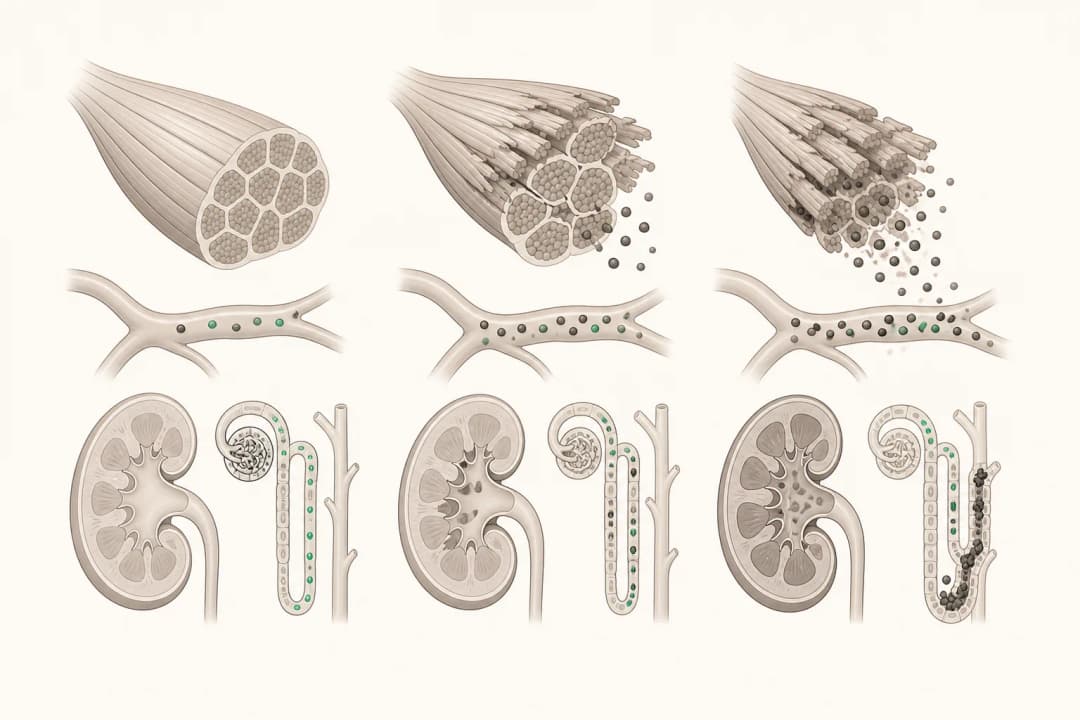
Creatine kinase rises when muscle cells are injured, including after severe exertion, trauma, heat stress, prolonged pressure, or seizures. A result cannot be interpreted safely without knowing when the injury occurred and whether symptoms are improving. Clinicians also consider urine output, kidney filtering, blood salts, hydration status, heart rhythm, and the suspected cause. Ordinary post-exercise soreness may be different from rhabdomyolysis, particularly when weakness, swelling, or dark urine appears.
How treatment is chosen
Treatment starts with stopping the trigger and assessing the person promptly. In a monitored setting, clinicians may give fluids, follow urine output, correct blood-salt disturbances, treat the underlying cause, and adjust medicines that could worsen muscle or kidney stress. Repeat CK and kidney tests show whether injury is settling. Do not chase a target number at home or restart intense exercise because one result improves.
When to get urgent help
Go to emergency care for dark or scant urine, severe or increasing muscle pain, marked weakness, swelling that feels tight, confusion, fainting, breathing difficulty, or chest symptoms. These signs can accompany kidney injury or dangerous blood-salt changes, regardless of the CK value you may have seen.
Questions for your doctor
Ask how your CK trend relates to symptoms, whether kidney function and blood salts are stable, which treatment is planned, and when repeat tests are due. Confirm when movement and exercise can resume and which warning signs require emergency care.
Find care
General Clinics & Polyclinics in Abu Dhabi
That answer is general. If you want it applied to your own case, these are licensed general clinics & polyclinics listed in Abu Dhabi.
27 Ar Ruwwad St - Shakhbout City - MSH4 - Abu Dhabi - United Arab Emirates
Accepts: Daman, Thiqa, Cigna, MetLife +20 more
Al Ruwais, Al Dhafrah
Accepts: Daman, Thiqa, AXA, Cigna +16 more
Al Bahyah - Al Bahyah Old - Abu Dhabi - United Arab Emirates
Accepts: Daman, Thiqa, Cigna, Allianz Care +18 more
Abu Dhabi
Accepts: Daman, Thiqa, AXA, Cigna +27 more
Ordered by verification status and how complete each clinic's public record is, then alphabetically. This is a directory listing, not a ranking — Zavis does not rate or recommend providers.
A factual listing drawn from the DHA, DOH and MOHAP licence registers. It is not a referral, an endorsement, or advice that any of these providers is right for you.
Questions people ask
Does a falling CK mean I am fully recovered?
Not necessarily. Kidney function, urine output, strength, and symptoms also need to be considered.
Is treatment based only on CK?
No. Clinicians combine the CK trend with examination findings, kidney tests, urine, blood salts, and the event that caused the injury.
Related
Related reading
Keep reading
Medical disclaimer. This page is general health information, not medical advice, and it cannot diagnose you. Always consult a licensed healthcare provider about your own symptoms and treatment. In an emergency in the UAE, call 998 for an ambulance.