
Rhabdomyolysis blood work: what to know
Short answer
Rhabdomyolysis blood work checks muscle injury, kidney function, and blood salts, and repeat testing may track how the condition is changing.
This answers one question. It is not a diagnosis and does not replace an assessment by a licensed doctor.
At a glance
- Muscle marker
- CK helps show muscle-cell injury.
- Other monitoring
- Kidney filtering, urine, and blood salts are assessed together.
What the tests look for
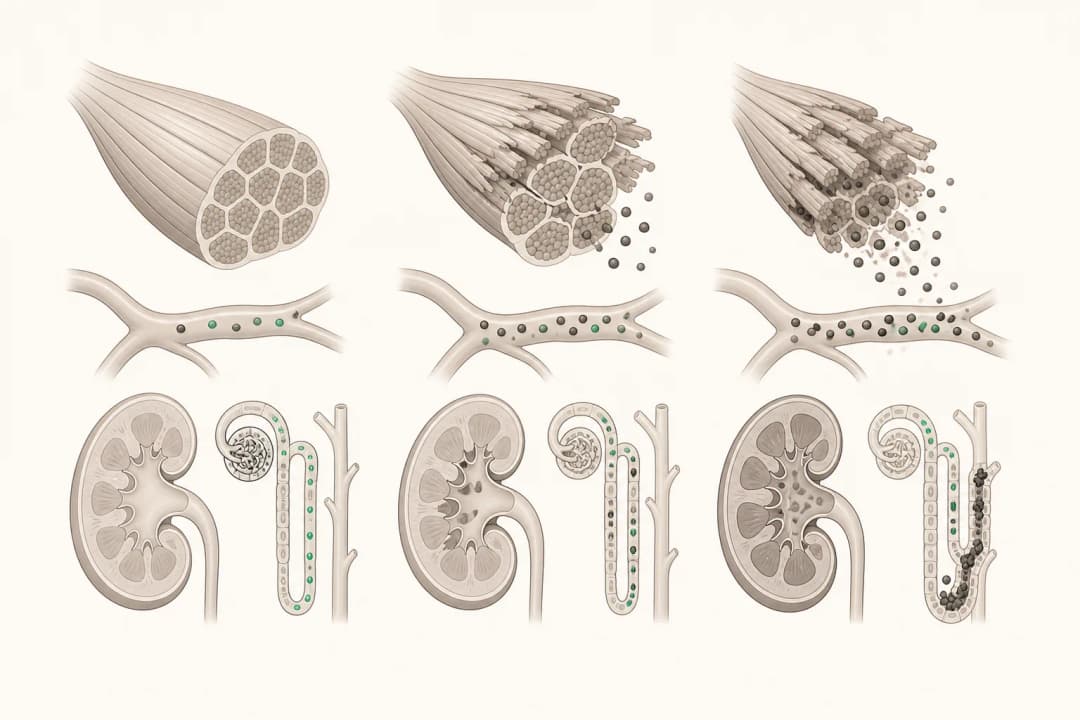
Creatine kinase, often called CK, is an enzyme released when muscle cells are damaged. Clinicians may also check creatinine and other measures of kidney filtering, along with potassium, calcium, phosphate, bicarbonate, and related salts. The pattern matters more than one isolated result: symptoms, timing after exertion or injury, urine findings, and repeat results help explain the situation. Blood work is usually paired with urine testing because urine colour and kidney effects can provide additional clues.
Preparing for evaluation
Tell the clinician about recent intense exercise, falls, heat exposure, prolonged immobility, seizures, infections, medicines, and supplements. Avoid strenuous activity until advised. Do not alter prescribed treatment or force fluids based on a single result. If repeat blood work is requested, attend even when pain is easing, because muscle enzyme and kidney results can change at different times.
When results or symptoms need urgency
Seek emergency help for very little urine, dark urine, severe weakness, confusion, fainting, breathing difficulty, chest discomfort, or rapidly worsening swelling. These symptoms can signal kidney or blood-salt complications and need assessment rather than home interpretation of laboratory values.
Questions for your doctor
Ask which results are abnormal, whether CK is rising or falling, how kidney filtering looks, whether blood salts need treatment, and when testing should be repeated. Ask which symptoms should send you directly to emergency care.
Find care
General Clinics & Polyclinics in Abu Dhabi
That answer is general. If you want it applied to your own case, these are licensed general clinics & polyclinics listed in Abu Dhabi.
27 Ar Ruwwad St - Shakhbout City - MSH4 - Abu Dhabi - United Arab Emirates
Accepts: Daman, Thiqa, Cigna, MetLife +20 more
Al Ruwais, Al Dhafrah
Accepts: Daman, Thiqa, AXA, Cigna +16 more
Al Bahyah - Al Bahyah Old - Abu Dhabi - United Arab Emirates
Accepts: Daman, Thiqa, Cigna, Allianz Care +18 more
Abu Dhabi
Accepts: Daman, Thiqa, AXA, Cigna +27 more
Ordered by verification status and how complete each clinic's public record is, then alphabetically. This is a directory listing, not a ranking — Zavis does not rate or recommend providers.
A factual listing drawn from the DHA, DOH and MOHAP licence registers. It is not a referral, an endorsement, or advice that any of these providers is right for you.
Questions people ask
Does a high CK prove rhabdomyolysis?
No single result proves the diagnosis; clinicians interpret CK with symptoms, history, urine findings, and kidney-related tests.
Can blood work be normal early on?
Results can change with timing, so a clinician may recommend repeat testing when symptoms and history remain concerning.
Related
Related reading
Keep reading
Medical disclaimer. This page is general health information, not medical advice, and it cannot diagnose you. Always consult a licensed healthcare provider about your own symptoms and treatment. In an emergency in the UAE, call 998 for an ambulance.