
Rhabdomyolysis before and after: what to know
Short answer
Before and after rhabdomyolysis, focus on early assessment, kidney monitoring, gradual recovery, and identifying the trigger with your clinician.
This answers one question. It is not a diagnosis and does not replace an assessment by a licensed doctor.
At a glance
- Recovery priority
- Monitor kidney function and follow a gradual return to activity.
- Bring to review
- Your medicine list, exercise history, injuries, and symptoms.
Before and after the episode
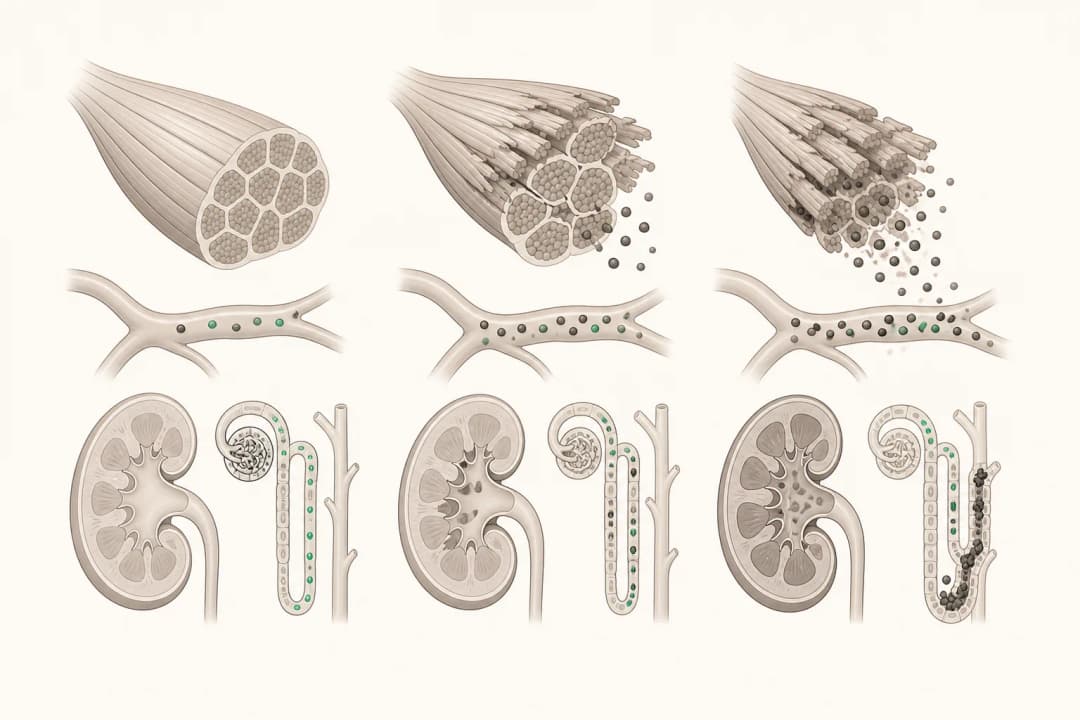
Before symptoms, risk can rise with an abrupt increase in training, exercising in heat, dehydration, crushing injury, prolonged immobility, infection, or a medicine-related muscle reaction. Afterward, pain and weakness may last while the body clears damaged muscle contents. Dark urine, swelling, reduced urine, or increasing fatigue are not routine signs of recovery. Muscle soreness after exercise is often less serious, but the severity, timing, and associated urine changes matter.
How to manage recovery
Stop the activity that preceded symptoms and seek medical advice promptly. Bring a list of medicines, supplements, recent workouts, heat exposure, injuries, and fluid intake. Follow the testing plan for muscle enzymes, kidney function, urine, and blood salts. Restart exercise only when your clinician says it is appropriate; begin gently, allow rest, avoid heat stress, and increase demands gradually. Do not reuse a suspected trigger without professional guidance.
When to seek care
Use emergency care for little or no urine, dark urine, worsening weakness, severe swelling, confusion, fainting, breathing difficulty, or symptoms after a major injury. During recovery, contact your clinician promptly if pain escalates, urine output changes, or you cannot keep fluids down. Improvement in soreness alone does not confirm that kidney function has recovered.
Questions for your doctor
Ask what likely triggered the episode, when repeat tests are needed, which activities are allowed, how to return to training, and whether medicines or supplements need review. Request clear warning signs for urgent reassessment.
Find care
General Clinics & Polyclinics in Abu Dhabi
That answer is general. If you want it applied to your own case, these are licensed general clinics & polyclinics listed in Abu Dhabi.
27 Ar Ruwwad St - Shakhbout City - MSH4 - Abu Dhabi - United Arab Emirates
Accepts: Daman, Thiqa, Cigna, MetLife +20 more
Al Ruwais, Al Dhafrah
Accepts: Daman, Thiqa, AXA, Cigna +16 more
Al Bahyah - Al Bahyah Old - Abu Dhabi - United Arab Emirates
Accepts: Daman, Thiqa, Cigna, Allianz Care +18 more
Abu Dhabi
Accepts: Daman, Thiqa, AXA, Cigna +27 more
Ordered by verification status and how complete each clinic's public record is, then alphabetically. This is a directory listing, not a ranking — Zavis does not rate or recommend providers.
A factual listing drawn from the DHA, DOH and MOHAP licence registers. It is not a referral, an endorsement, or advice that any of these providers is right for you.
Questions people ask
When can I exercise again after rhabdomyolysis?
Only after clinical review confirms recovery is progressing; the return should be gradual and individualized.
Can rhabdomyolysis happen again?
A repeat episode is possible, particularly if the original trigger returns, so prevention depends on finding and managing that trigger.
Related
Related reading
Keep reading
Medical disclaimer. This page is general health information, not medical advice, and it cannot diagnose you. Always consult a licensed healthcare provider about your own symptoms and treatment. In an emergency in the UAE, call 998 for an ambulance.