
Rhabdomyolysis and liver damage
Short answer
Rhabdomyolysis can raise some liver-related blood tests because injured muscle releases enzymes, so results need careful interpretation.
This answers one question. It is not a diagnosis and does not replace an assessment by a licensed doctor.
At a glance
- Why tests overlap
- Several enzymes measured in liver panels can also be released by injured muscle.
- Helpful context
- CK, bilirubin, symptoms, medicines, and timing help separate muscle and liver causes.
Muscle and liver test results
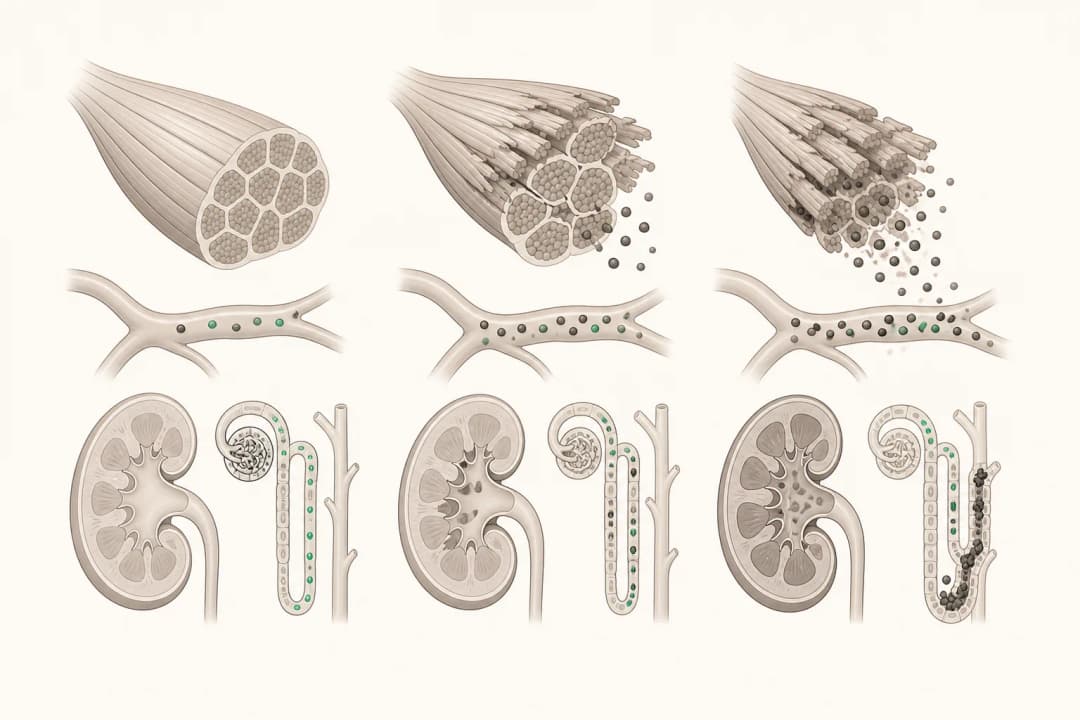
Muscle breakdown releases enzymes and other proteins into the blood. Some of these enzymes are also measured as part of liver testing, so an abnormal result may come from muscle rather than liver injury. Clinicians compare liver markers with CK, bilirubin, symptoms, examination findings, and the timing of the illness instead of relying on one result.
True liver problems can also occur alongside muscle injury, particularly after a medicine, toxin, infection, or another illness. Yellowing of the skin or eyes, unusual itching, pale stools, persistent vomiting, or pain under the right ribs should be reported because they point toward a broader assessment.
What to do next
Arrange prompt medical review when severe muscle symptoms or dark urine occur, even if the main concern seems to be the liver. Avoid strenuous exercise and alcohol until you have medical advice. Provide a full list of medicines, supplements, energy products, and recent illnesses. Do not restart or stop a prescription on your own; ask the prescriber how it should be handled while blood tests are abnormal.
When to seek urgent help
Seek urgent care for very dark or reduced urine, severe weakness, rapidly increasing muscle swelling, confusion, fainting, or inability to keep fluids down. Emergency attention is needed for yellow skin with severe illness, bleeding, chest symptoms, or breathing difficulty. Kidney function and electrolytes may need checking alongside repeat muscle and liver tests.
Questions for your doctor
Which abnormal results may be coming from muscle? Do I need repeat CK and liver testing? Could a medicine, supplement, infection, or toxin explain the changes? What symptoms should prompt emergency care?
Find care
General Clinics & Polyclinics in Abu Dhabi
That answer is general. If you want it applied to your own case, these are licensed general clinics & polyclinics listed in Abu Dhabi.
27 Ar Ruwwad St - Shakhbout City - MSH4 - Abu Dhabi - United Arab Emirates
Accepts: Daman, Thiqa, Cigna, MetLife +20 more
Al Ruwais, Al Dhafrah
Accepts: Daman, Thiqa, AXA, Cigna +16 more
Al Bahyah - Al Bahyah Old - Abu Dhabi - United Arab Emirates
Accepts: Daman, Thiqa, Cigna, Allianz Care +18 more
Abu Dhabi
Accepts: Daman, Thiqa, AXA, Cigna +27 more
Ordered by verification status and how complete each clinic's public record is, then alphabetically. This is a directory listing, not a ranking — Zavis does not rate or recommend providers.
A factual listing drawn from the DHA, DOH and MOHAP licence registers. It is not a referral, an endorsement, or advice that any of these providers is right for you.
Questions people ask
Does an abnormal liver test prove liver damage?
No. Muscle injury can affect some results, so clinicians interpret the panel with other blood tests and symptoms.
Can rhabdomyolysis and liver disease happen together?
Yes. A separate liver problem can coexist, which is why persistent or liver-specific symptoms need review.
Related
Related reading
Keep reading
Medical disclaimer. This page is general health information, not medical advice, and it cannot diagnose you. Always consult a licensed healthcare provider about your own symptoms and treatment. In an emergency in the UAE, call 998 for an ambulance.