
Rhabdomyolysis and CK levels
Short answer
CK levels help show muscle injury in rhabdomyolysis, but the result must be interpreted with symptoms, timing, and kidney tests.
This answers one question. It is not a diagnosis and does not replace an assessment by a licensed doctor.
At a glance
- CK meaning
- A blood marker that can rise when muscle cells are injured.
- Interpretation
- Timing, symptoms, kidney function, urine, and electrolytes all matter.
What CK tells you
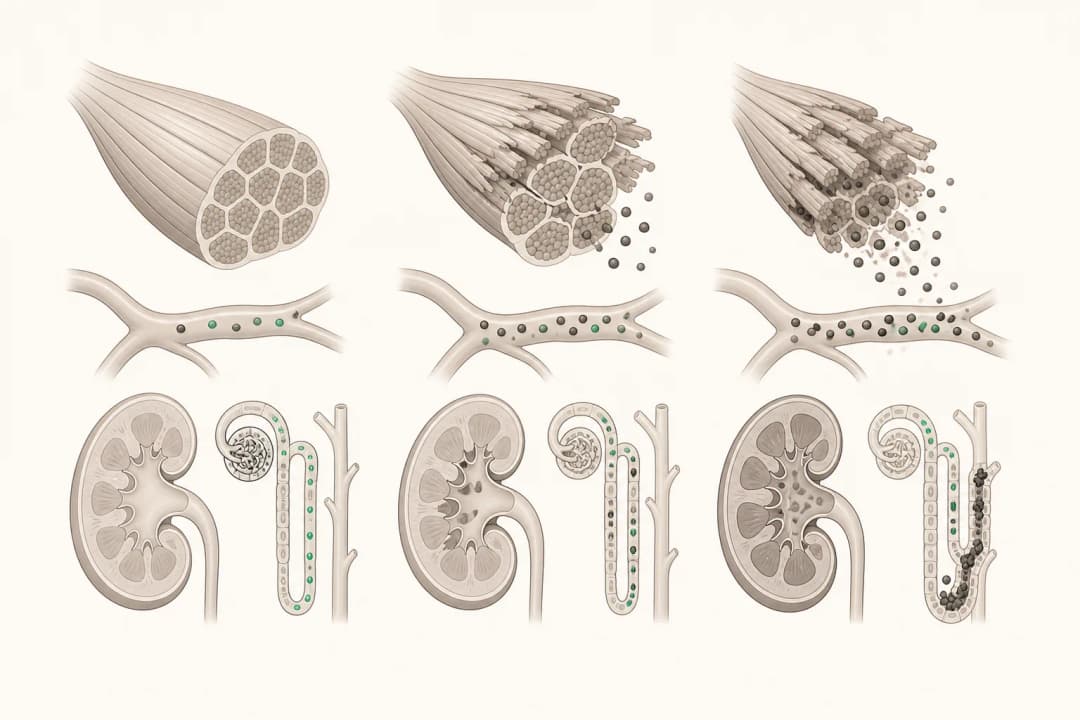
Creatine kinase, often shortened to CK or CPK, is an enzyme found inside muscle cells. When muscle fibres are damaged, CK can move into the blood. A raised result supports muscle injury, but it does not identify the cause by itself. Exercise, injections, falls, seizures, inflammation, medicines, and other conditions can also change CK.
The result changes over time, so one test may not reflect the full episode. Clinicians consider whether pain, weakness, swelling, or dark urine began recently and may repeat CK. They also check kidney function, urine findings, and electrolytes because the immediate concern is not the number alone but the effect of muscle breakdown on the body.
Practical next steps
Avoid strenuous activity while significant symptoms or a suspected episode are being assessed. Tell the clinician about recent workouts, heat, injury, infection, alcohol or drug exposure, and all prescribed or over-the-counter medicines. Do not stop a prescribed medicine without advice. Follow the hydration plan you are given, especially if you have kidney or heart disease, and attend repeat blood tests when requested.
When to seek care
Get urgent care for severe or rapidly worsening muscle pain, weakness that limits movement, swelling, dark or scant urine, vomiting, confusion, fainting, or signs of dehydration. Emergency help is needed for chest pressure, severe breathlessness, collapse, or a new pounding or irregular heartbeat. A mildly abnormal CK with concerning symptoms still deserves medical review.
Questions to bring
What might have caused my CK change? Should CK, kidney function, urine, or electrolytes be repeated? Which activities and medicines should I avoid for now? What symptoms mean I should return urgently?
Find care
General Clinics & Polyclinics in Abu Dhabi
That answer is general. If you want it applied to your own case, these are licensed general clinics & polyclinics listed in Abu Dhabi.
27 Ar Ruwwad St - Shakhbout City - MSH4 - Abu Dhabi - United Arab Emirates
Accepts: Daman, Thiqa, Cigna, MetLife +20 more
Al Ruwais, Al Dhafrah
Accepts: Daman, Thiqa, AXA, Cigna +16 more
Al Bahyah - Al Bahyah Old - Abu Dhabi - United Arab Emirates
Accepts: Daman, Thiqa, Cigna, Allianz Care +18 more
Abu Dhabi
Accepts: Daman, Thiqa, AXA, Cigna +27 more
Ordered by verification status and how complete each clinic's public record is, then alphabetically. This is a directory listing, not a ranking — Zavis does not rate or recommend providers.
A factual listing drawn from the DHA, DOH and MOHAP licence registers. It is not a referral, an endorsement, or advice that any of these providers is right for you.
Questions people ask
Does a high CK always mean rhabdomyolysis?
No. CK can rise after exercise or other muscle injury, so clinicians use the complete clinical picture.
Can CK return to normal?
It may fall as muscle injury settles, but follow-up testing helps confirm the trend and check for ongoing damage.
Related
Related reading
Keep reading
Medical disclaimer. This page is general health information, not medical advice, and it cannot diagnose you. Always consult a licensed healthcare provider about your own symptoms and treatment. In an emergency in the UAE, call 998 for an ambulance.