
How to prevent rhabdomyolysis
Short answer
Lower rhabdomyolysis risk by progressing exercise gradually, taking breaks in heat, replacing fluids, and stopping when severe symptoms appear.
This answers one question. It is not a diagnosis and does not replace an assessment by a licensed doctor.
At a glance
- Build up
- Increase one exercise demand at a time
- Act urgently for
- Severe pain, weakness, swelling or dark urine
Why intense exercise can be a problem
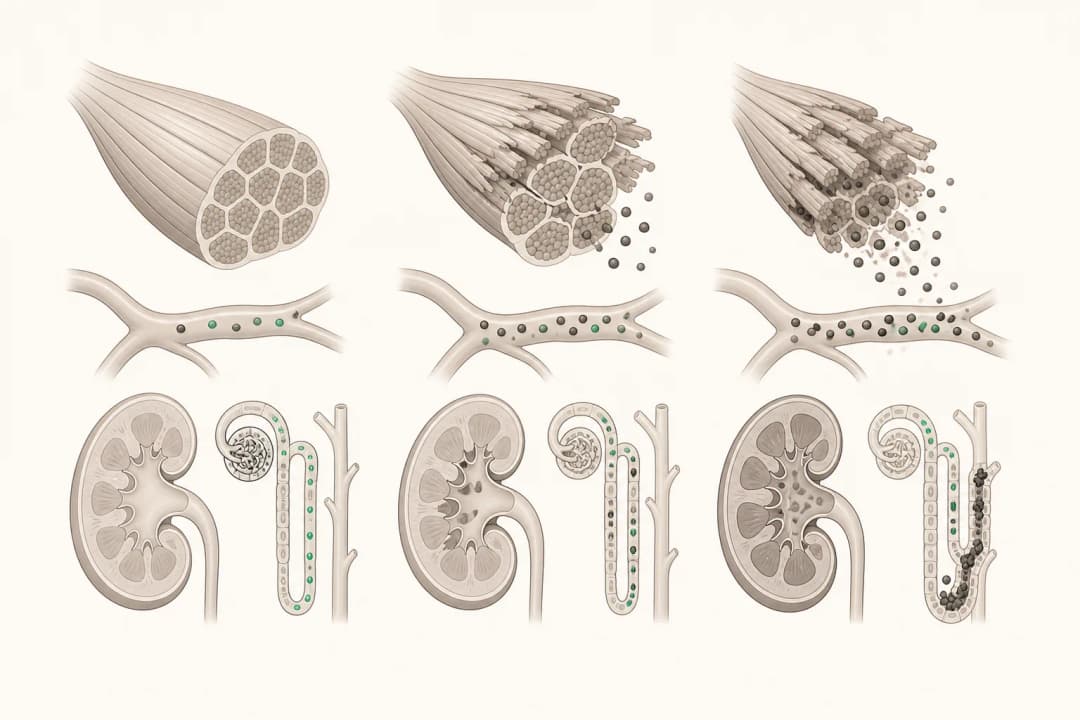
Rhabdomyolysis occurs when muscle cells break down and release their contents into the bloodstream. It can follow an unusually intense workout, a rapid return after inactivity, prolonged exertion, heat exposure, dehydration or repeated exercise without recovery. Ordinary post-exercise soreness generally improves with time, while severe or unexpected symptoms need a different response. Your fitness level, medicines and health conditions can change how much exertion is appropriate.
Exercise more safely
Begin a new programme at an easy level and increase duration, resistance or intensity in stages rather than changing everything together. Warm up, take rest breaks and avoid maximal efforts when unwell, overheated or poorly recovered. Drink fluids regularly according to thirst and conditions, and move to a cooler place during hot training. Do not use supplements or medicines marketed for performance without checking their suitability. Keep a written plan when returning to demanding exercise, and stop if symptoms become unusually intense. Typical soreness is described here: [Muscle Soreness After Exercise](/symptoms/muscle-soreness-after-exercise/).
Symptoms that need urgent care
Stop exercising and seek urgent medical advice for severe muscle pain, marked swelling, unusual weakness, vomiting, confusion, fainting or urine that is dark or much less frequent than usual. Do not wait for symptoms to settle if they are disproportionate to the workout or you struggle to move normally. A clinician may check muscle injury and kidney function with examination and tests. Tell them about recent exercise, heat exposure, medicines and supplements.
Questions to discuss
Ask how quickly to progress your programme, how much recovery you need, and whether a medicine or health condition changes your exercise plan. Ask which symptoms require emergency care and when it is safe to train again after a suspected episode.
Find care
General Clinics & Polyclinics in Abu Dhabi
That answer is general. If you want it applied to your own case, these are licensed general clinics & polyclinics listed in Abu Dhabi.
27 Ar Ruwwad St - Shakhbout City - MSH4 - Abu Dhabi - United Arab Emirates
Accepts: Daman, Thiqa, Cigna, MetLife +20 more
Al Ruwais, Al Dhafrah
Accepts: Daman, Thiqa, AXA, Cigna +16 more
Al Bahyah - Al Bahyah Old - Abu Dhabi - United Arab Emirates
Accepts: Daman, Thiqa, Cigna, Allianz Care +18 more
Abu Dhabi
Accepts: Daman, Thiqa, AXA, Cigna +27 more
Ordered by verification status and how complete each clinic's public record is, then alphabetically. This is a directory listing, not a ranking — Zavis does not rate or recommend providers.
A factual listing drawn from the DHA, DOH and MOHAP licence registers. It is not a referral, an endorsement, or advice that any of these providers is right for you.
Questions people ask
Is muscle soreness after exercise the same as rhabdomyolysis?
No. Rhabdomyolysis is a serious muscle breakdown problem; severe, unusual pain or weakness, swelling or dark urine needs urgent assessment.
Can drinking fluids prevent rhabdomyolysis?
Fluids support safe exercise, but they cannot by themselves prevent problems from extreme exertion; gradual training, cooling and rest are also necessary.
Related
Related reading
Keep reading
Medical disclaimer. This page is general health information, not medical advice, and it cannot diagnose you. Always consult a licensed healthcare provider about your own symptoms and treatment. In an emergency in the UAE, call 998 for an ambulance.