
Preterm premature rupture of membranes: what to know
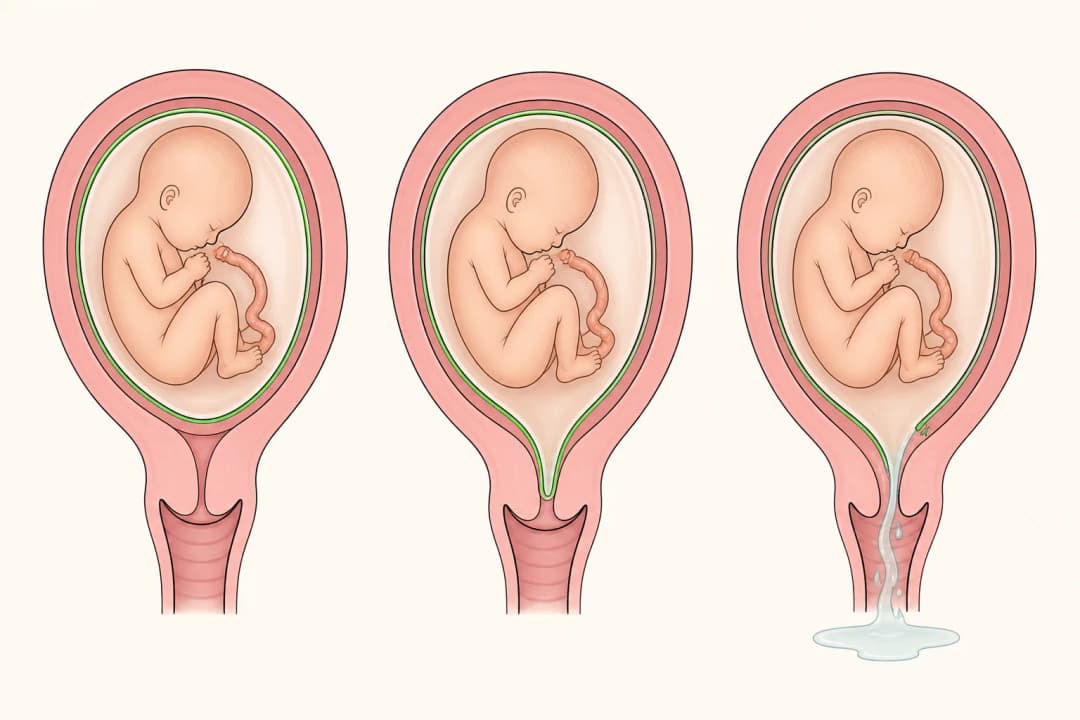
Short answer
Preterm premature rupture of membranes means the amniotic sac breaks before labour and before the pregnancy reaches term, so prompt maternity assessment is needed.
This answers one question. It is not a diagnosis and does not replace an assessment by a licensed doctor.
At a glance
- Also called
- PPROM or waters breaking early
- First step
- Contact the maternity unit promptly
What it means
The fluid may come as a gush or a continuing trickle, and it can be difficult to distinguish from urine or normal pregnancy discharge. A maternity team may ask when the fluid began, examine you, check your temperature and pulse, and monitor the baby. They may also test the fluid and look for signs of infection or contractions.
The timing of the membrane rupture, your health, the baby's wellbeing, and any infection signs guide the plan. The membranes do not always lead to labour immediately, but the pregnancy needs close clinical supervision because infection and early birth are possible.
What to do now
Contact your maternity unit immediately if you think your waters have broken early. Use a clean maternity pad to observe the fluid; note its colour, smell, and when the leaking started. Avoid putting anything into the vagina, including tampons, and avoid sex until a clinician has assessed you.
Follow the monitoring and medication plan you are given. Depending on gestational age and findings, care may include observation in hospital, antibiotics, medicines to support fetal lung development such as an [Antenatal Steroid Injection](/treatments/pregnancy-and-birth-care/antenatal-corticosteroid-injection/), or planning birth when that is safer.
When to seek urgent care
Seek urgent maternity help for fever or chills, feeling suddenly unwell, abdominal or back pain, regular contractions, vaginal bleeding, unpleasant-smelling or green fluid, or reduced baby movements. A cord or part of the baby at the vaginal opening is an emergency: call emergency services and do not push it back.
Questions for your doctor
Ask how the rupture was confirmed, how the baby will be monitored, which symptoms should prompt immediate review, and how long observation is appropriate. Ask when birth would be recommended and whether [Induction of Labour](/treatments/pregnancy-and-birth-care/induction-of-labour/) could be part of the plan.
Find care
General Clinics & Polyclinics in Abu Dhabi
That answer is general. If you want it applied to your own case, these are licensed general clinics & polyclinics listed in Abu Dhabi.
27 Ar Ruwwad St - Shakhbout City - MSH4 - Abu Dhabi - United Arab Emirates
Accepts: Daman, Thiqa, Cigna, MetLife +20 more
Al Ruwais, Al Dhafrah
Accepts: Daman, Thiqa, AXA, Cigna +16 more
Al Bahyah - Al Bahyah Old - Abu Dhabi - United Arab Emirates
Accepts: Daman, Thiqa, Cigna, Allianz Care +18 more
Abu Dhabi
Accepts: Daman, Thiqa, AXA, Cigna +27 more
Ordered by verification status and how complete each clinic's public record is, then alphabetically. This is a directory listing, not a ranking — Zavis does not rate or recommend providers.
A factual listing drawn from the DHA, DOH and MOHAP licence registers. It is not a referral, an endorsement, or advice that any of these providers is right for you.
Questions people ask
Can leaking fluid be mistaken for urine?
Yes. A clinician can assess the fluid and use an examination or test to clarify the cause.
Will labour start straight away?
Not always. Your team will balance the risks of infection and early birth when planning monitoring and delivery.
Related
Related reading
Keep reading
Medical disclaimer. This page is general health information, not medical advice, and it cannot diagnose you. Always consult a licensed healthcare provider about your own symptoms and treatment. In an emergency in the UAE, call 998 for an ambulance.