
What should you know about PCL and MCL injury?
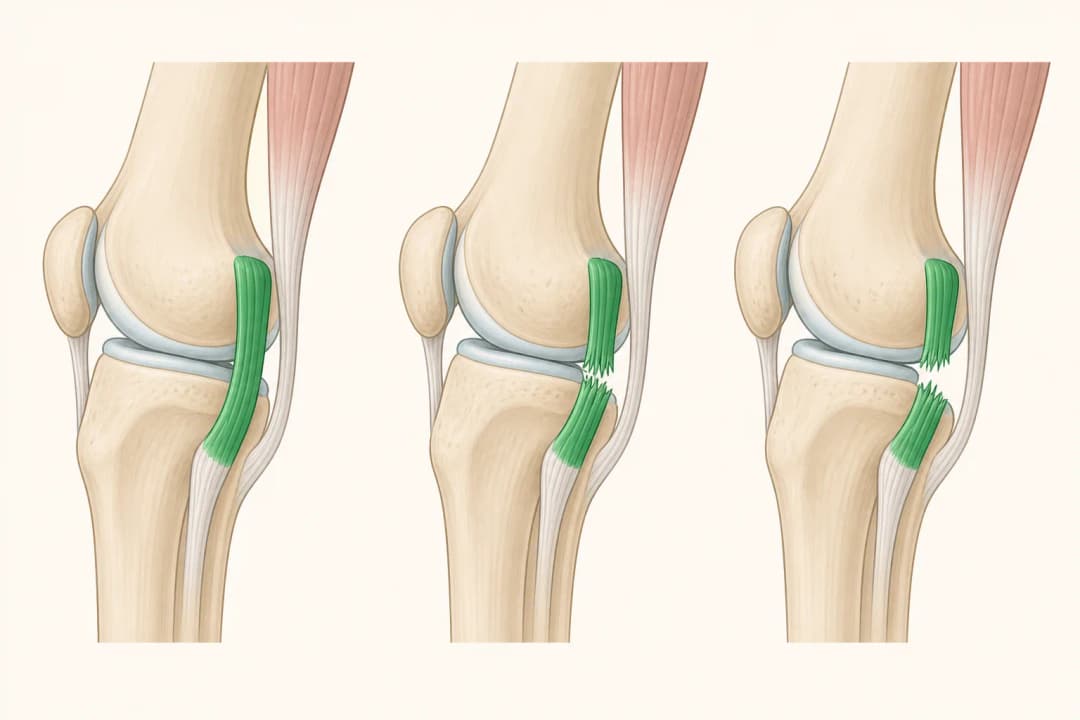
Short answer
A PCL and MCL injury affects two knee ligaments and may cause pain, swelling, reduced movement and a feeling of instability.
This answers one question. It is not a diagnosis and does not replace an assessment by a licensed doctor.
At a glance
- Structures involved
- Posterior cruciate and medial collateral ligaments
- Common concerns
- Pain, swelling and reduced knee stability
- Assessment
- Physical examination, with imaging when indicated
What the injury means
The posterior cruciate ligament helps control backward movement of the shinbone, while the medial collateral ligament supports the inner side of the knee. A force such as a sports collision, fall or awkward landing can strain one or both. A clinician checks tenderness, movement and stability, and may use imaging to understand the injury and look for associated damage.
Symptoms can include deep knee pain, soreness along the inner joint line, swelling, difficulty bending or straightening, and trouble walking or turning. A combined injury can make the knee feel less dependable because more than one stabilising structure is affected.
What to do next
Until assessment, protect the knee from twisting and impact, use comfortable supported walking, and follow personalised advice about cold therapy and elevation. Do not return to running, jumping or contact play while the knee remains painful or unstable.
Treatment depends on examination findings. A hinged support may protect the inner knee during healing; see Knee Bracing for more information. Physiotherapy can restore movement, strength and balance through staged exercises. A Return-to-Sport Programme can help test control and function before sport resumes.
When to seek care
Arrange prompt medical assessment after a significant knee injury, especially when swelling appears quickly, the knee gives way, or walking is difficult. Seek urgent care if the leg looks deformed, the foot becomes cold or numb, pain is severe, or you cannot move the knee after the injury.
Questions for your doctor
Ask which ligament is injured and how severely, whether imaging is needed, what activity is safe now, whether a brace is suitable, and which movement or strength milestones should come before driving, work or sport.
Find care
General Clinics & Polyclinics in Abu Dhabi
That answer is general. If you want it applied to your own case, these are licensed general clinics & polyclinics listed in Abu Dhabi.
27 Ar Ruwwad St - Shakhbout City - MSH4 - Abu Dhabi - United Arab Emirates
Accepts: Daman, Thiqa, Cigna, MetLife +20 more
Al Ruwais, Al Dhafrah
Accepts: Daman, Thiqa, AXA, Cigna +16 more
Al Bahyah - Al Bahyah Old - Abu Dhabi - United Arab Emirates
Accepts: Daman, Thiqa, Cigna, Allianz Care +18 more
Abu Dhabi
Accepts: Daman, Thiqa, AXA, Cigna +27 more
Ordered by verification status and how complete each clinic's public record is, then alphabetically. This is a directory listing, not a ranking — Zavis does not rate or recommend providers.
A factual listing drawn from the DHA, DOH and MOHAP licence registers. It is not a referral, an endorsement, or advice that any of these providers is right for you.
Questions people ask
Can a PCL and MCL injury heal without surgery?
Some injuries are managed with protection, rehabilitation and gradual strengthening, while combined or severe injuries need specialist review to choose the safest approach.
When can you return to sport?
Return is guided by pain-free movement, strength, balance and knee control rather than by a fixed timetable.
Related
Related reading
Keep reading
Medical disclaimer. This page is general health information, not medical advice, and it cannot diagnose you. Always consult a licensed healthcare provider about your own symptoms and treatment. In an emergency in the UAE, call 998 for an ambulance.