
What should you know about pathophysiology of rhabdomyolysis?
Short answer
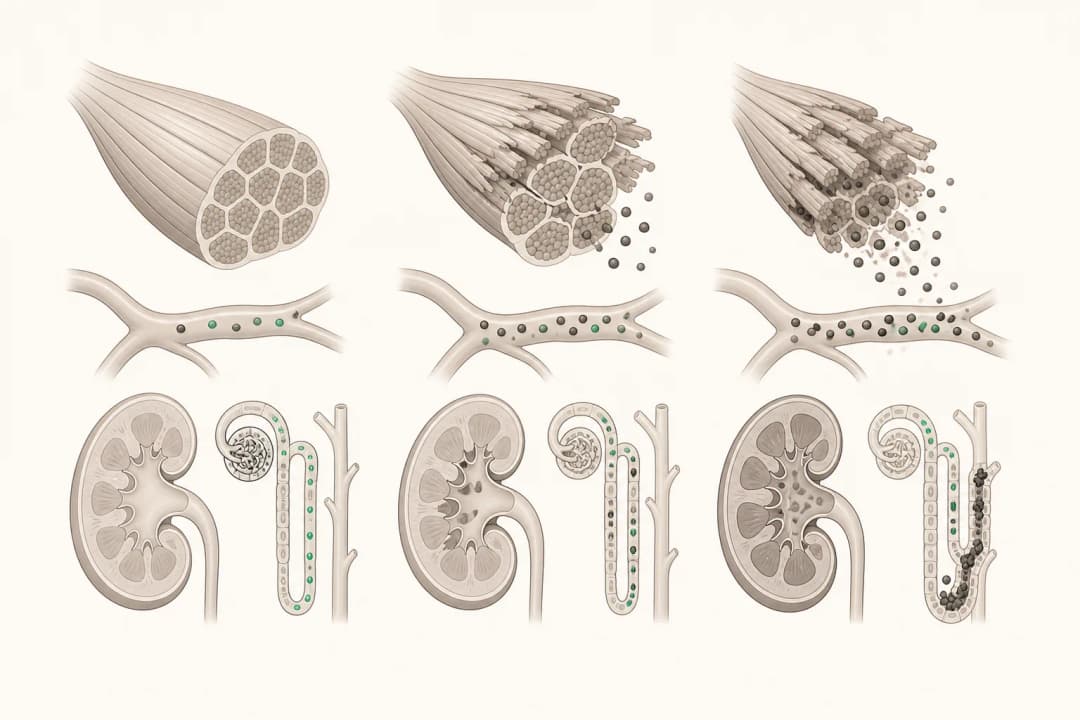
Rhabdomyolysis occurs when injured muscle cells break apart and release proteins and electrolytes into the bloodstream, potentially stressing the kidneys.
This answers one question. It is not a diagnosis and does not replace an assessment by a licensed doctor.
At a glance
- Main process
- Damaged muscle cells release contents into the bloodstream.
- Organs watched
- The kidneys and systems controlling fluid and electrolytes.
- Warning sign
- Dark urine, reduced urination, severe weakness, or intense swelling.
What happens in the body
Muscle cells contain substances that normally stay inside the cell. Severe exertion, crushing injury, heat illness, seizures, prolonged immobility, or some medicines can damage the cell membrane. The released contents can cause muscle swelling and may disturb the body's fluid and electrolyte balance. Myoglobin, a muscle protein, is filtered by the kidneys and can contribute to kidney injury, especially when dehydration or other illness is present. Muscle pain after exercise is common and does not by itself establish rhabdomyolysis; the overall pattern and blood tests matter.
What to do
Stop strenuous exercise and seek medical advice if symptoms are unusually intense, worsening, or accompanied by weakness or reduced urination. A clinician may check blood and urine, review medicines and exertion, monitor kidney function, and give carefully selected fluids. Do not attempt to manage suspected rhabdomyolysis by forcing large amounts of water or taking extra supplements. Rest while arranging assessment and tell the clinician about heat exposure, injury, new medicines, and training changes.
When to seek care
Get urgent medical care for severe muscle pain or swelling, marked weakness, confusion, faintness, vomiting, very dark urine, or passing much less urine than usual. Emergency assessment is also needed after a crush injury, prolonged collapse, seizure, or heat illness. Early evaluation matters because kidney and electrolyte problems may develop even when the skin looks normal.
Questions for your doctor
Ask which tests will be repeated, whether kidney function and electrolytes are stable, which medicines or supplements to pause, and how to restart activity safely. Clarify warning signs for returning to urgent care and whether an underlying muscle or metabolic problem needs investigation.
Find care
General Clinics & Polyclinics in Abu Dhabi
That answer is general. If you want it applied to your own case, these are licensed general clinics & polyclinics listed in Abu Dhabi.
27 Ar Ruwwad St - Shakhbout City - MSH4 - Abu Dhabi - United Arab Emirates
Accepts: Daman, Thiqa, Cigna, MetLife +20 more
Al Ruwais, Al Dhafrah
Accepts: Daman, Thiqa, AXA, Cigna +16 more
Al Bahyah - Al Bahyah Old - Abu Dhabi - United Arab Emirates
Accepts: Daman, Thiqa, Cigna, Allianz Care +18 more
Abu Dhabi
Accepts: Daman, Thiqa, AXA, Cigna +27 more
Ordered by verification status and how complete each clinic's public record is, then alphabetically. This is a directory listing, not a ranking — Zavis does not rate or recommend providers.
A factual listing drawn from the DHA, DOH and MOHAP licence registers. It is not a referral, an endorsement, or advice that any of these providers is right for you.
Questions people ask
Is ordinary muscle soreness the same as rhabdomyolysis?
No. Ordinary soreness is common after unfamiliar activity, while rhabdomyolysis involves more substantial muscle injury and can affect kidney function.
Why can rhabdomyolysis affect the kidneys?
Muscle breakdown releases myoglobin and other contents that can burden the kidneys, particularly when dehydration or another illness is present.
Related
Related reading
Keep reading
Medical disclaimer. This page is general health information, not medical advice, and it cannot diagnose you. Always consult a licensed healthcare provider about your own symptoms and treatment. In an emergency in the UAE, call 998 for an ambulance.