
How is paradoxical hypertrichosis treated?
Short answer
Treating paradoxical hypertrichosis begins with confirming the change, pausing unsuitable sessions, and selecting a hair-removal plan based on the individual area.
This answers one question. It is not a diagnosis and does not replace an assessment by a licensed doctor.
At a glance
- Treatment principle
- Confirm the pattern before changing or repeating treatment
- Possible alternative
- Electrolysis may suit selected individual hairs
- Medical review
- Consider it when hair growth comes with hormonal symptoms
How clinicians assess it
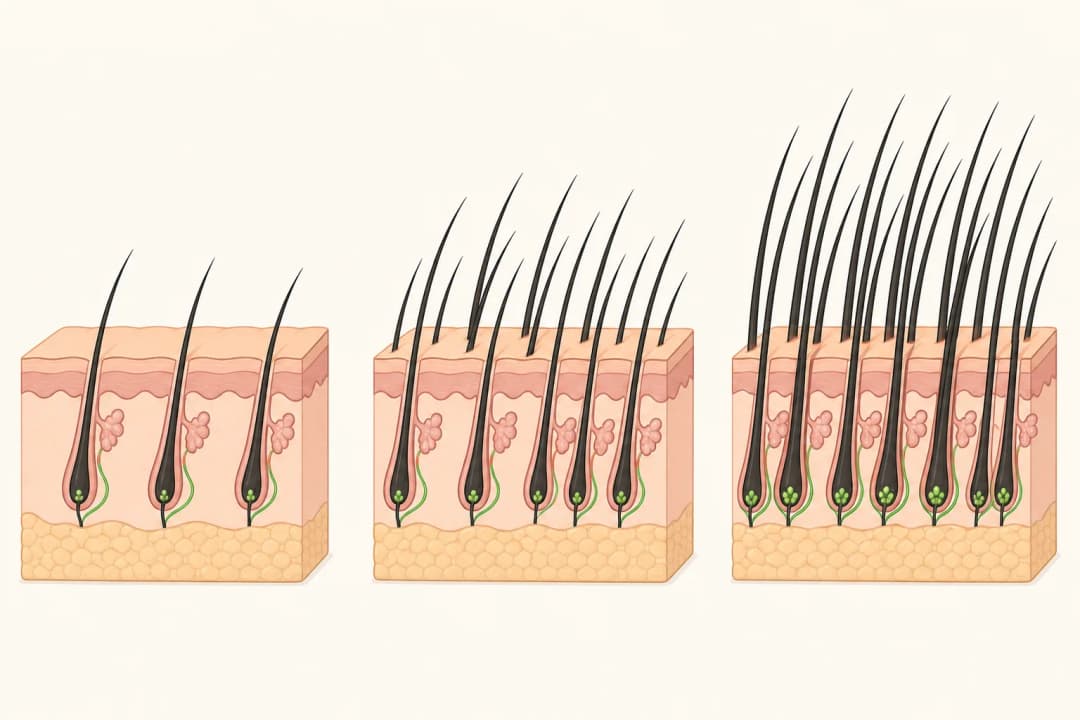
The clinician compares the current hair with earlier photographs and asks about the device, settings, interval between sessions, and any changes in medication or hormones. They examine whether the hair is finer or coarser, whether growth is confined to the treatment field, and whether the skin has signs of a burn or inflammation.
The aim is to separate paradoxical hypertrichosis from expected regrowth, an unrelated hormonal pattern, or a skin reaction. A sudden increase in facial or body hair alongside acne, scalp hair thinning, or menstrual changes may justify a broader medical assessment.
Treatment planning
Do not book another session on the affected area until the plan has been reviewed. Keep the skin calm, avoid picking or irritating recently treated skin, and use simple hair removal only if the clinician says it is suitable. Photograph the area at intervals so changes are judged consistently.
The next option may be a revised light-based plan for appropriate hair and skin characteristics, or a different method for selected hairs. [Electrolysis Hair Removal](/treatments/laser-and-energy/electrolysis-hair-removal/) targets individual follicles, while [Laser Hair Removal](/treatments/laser-and-energy/laser-hair-removal/) is considered according to hair pigment, skin tone, and the treatment area. A professional should explain expected sessions, aftercare, and possible skin reactions before proceeding.
When to seek care
Arrange a non-urgent review when growth remains visibly increased after the expected recovery period or appears outside the treated zone. Seek prompt care for severe pain, blistering, open skin, pus, fever, or redness that is spreading. New excess hair with other hormonal symptoms also warrants medical assessment rather than repeated cosmetic treatment alone.
Questions for your doctor
Ask whether the pattern is confirmed, which treatment should be stopped, and whether the skin needs time to recover. Discuss whether electrolysis or another method is appropriate, how treatment settings will be selected, how progress will be documented, and which symptoms would require an earlier review.
Find care
General Clinics & Polyclinics in Abu Dhabi
That answer is general. If you want it applied to your own case, these are licensed general clinics & polyclinics listed in Abu Dhabi.
27 Ar Ruwwad St - Shakhbout City - MSH4 - Abu Dhabi - United Arab Emirates
Accepts: Daman, Thiqa, Cigna, MetLife +20 more
Al Ruwais, Al Dhafrah
Accepts: Daman, Thiqa, AXA, Cigna +16 more
Al Bahyah - Al Bahyah Old - Abu Dhabi - United Arab Emirates
Accepts: Daman, Thiqa, Cigna, Allianz Care +18 more
Abu Dhabi
Accepts: Daman, Thiqa, AXA, Cigna +27 more
Ordered by verification status and how complete each clinic's public record is, then alphabetically. This is a directory listing, not a ranking — Zavis does not rate or recommend providers.
A factual listing drawn from the DHA, DOH and MOHAP licence registers. It is not a referral, an endorsement, or advice that any of these providers is right for you.
Questions people ask
Can paradoxical hypertrichosis be treated?
It can often be managed with a tailored hair-removal plan, but the appropriate method depends on the hair, skin, treatment history, and any underlying contributors.
Is more laser always the answer?
No. Continuing the same approach without review may be unsuitable; a clinician should assess the changed area and discuss alternatives when needed.
Related
Related reading
Keep reading
Medical disclaimer. This page is general health information, not medical advice, and it cannot diagnose you. Always consult a licensed healthcare provider about your own symptoms and treatment. In an emergency in the UAE, call 998 for an ambulance.