
Ovarian Torsion Risk Factors
Short answer
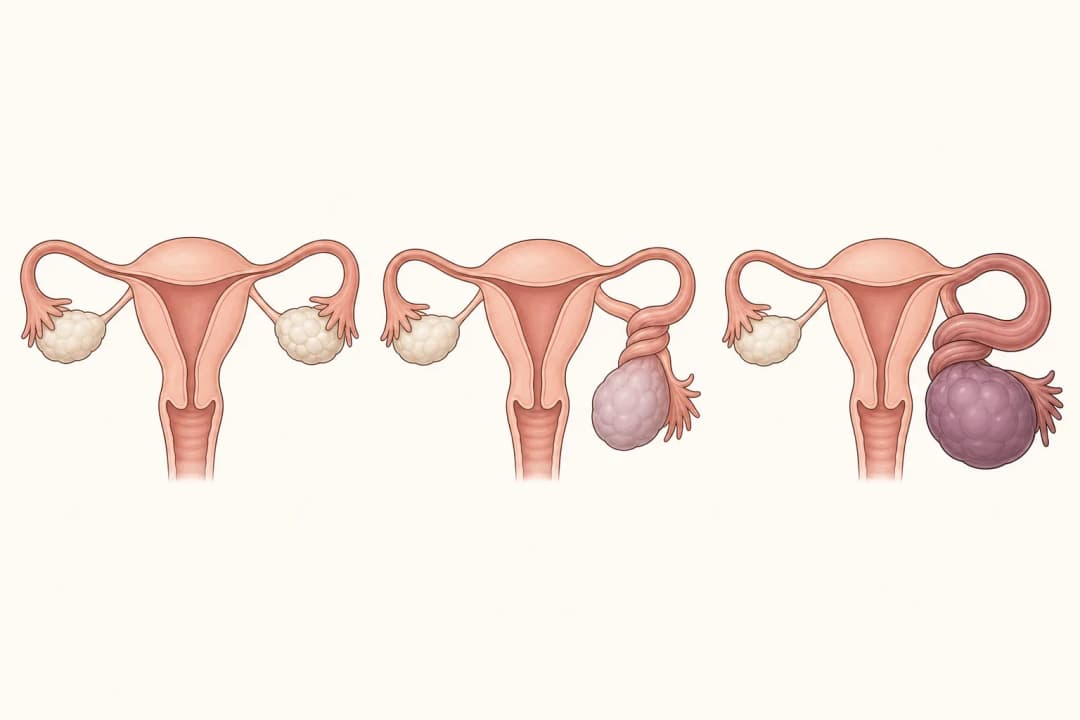
Ovarian torsion is more likely when an ovary is enlarged or unusually mobile, although it can occur without a known risk factor.
This answers one question. It is not a diagnosis and does not replace an assessment by a licensed doctor.
At a glance
- Main risk factor
- An enlarged ovary, often from a cyst or mass.
- Other context
- Fertility treatment and pregnancy can alter ovarian size or position.
- Key warning
- Sudden one-sided pelvic pain needs urgent assessment.
Factors that may increase risk
An ovarian cyst or other ovarian mass can add weight and make the ovary more likely to rotate. Fertility treatment may stimulate the ovaries and enlarge them, which can also increase mobility. Pregnancy can change the position and size of pelvic organs. A previous episode of torsion raises concern for recurrence, and some people have supporting tissues that allow greater movement. Torsion is more often considered when pain is sudden and one-sided, but a risk factor is not required and having one does not mean torsion will happen. Several other problems can cause pelvic pain, so assessment is needed rather than trying to diagnose the cause from risk factors alone.
How to respond to a possible risk
If you have a known ovarian cyst, enlarged ovary, or recent fertility treatment, ask your clinician what symptoms should prompt immediate review. Keep a record of the side, onset, and pattern of any pelvic pain, along with vomiting or fever. Do not try to manage abrupt severe pain at home simply because you already know about a cyst. A clinician may use an examination and ultrasound to investigate, while remembering that a reassuring scan does not always rule torsion out. If an ovarian cyst needs removal, [Laparoscopic Ovarian Cystectomy](/treatments/gynaecological-surgery/laparoscopic-ovarian-cystectomy/) may be discussed.
When to seek urgent care
Go to urgent care for sudden pelvic or lower abdominal pain, especially when it is one-sided or comes with nausea, vomiting, dizziness, faintness, or fever. Seek help even if the pain eases, because intermittent twisting can cause symptoms that fluctuate. If you are pregnant or undergoing fertility treatment, report new sudden pain promptly. These warning signs do not prove torsion; they signal that conditions affecting the ovary and other pelvic organs need timely assessment. You can read more about this symptom in [Pelvic Pain](/symptoms/pelvic-pain/).
Questions for your doctor
Ask whether the size or appearance of a cyst changes your risk, what to do if pain starts at night, and whether fertility treatment needs monitoring. If you have had torsion before, ask how recurrence would be managed and which symptoms should take you straight to emergency care.
Find care
General Clinics & Polyclinics in Abu Dhabi
That answer is general. If you want it applied to your own case, these are licensed general clinics & polyclinics listed in Abu Dhabi.
27 Ar Ruwwad St - Shakhbout City - MSH4 - Abu Dhabi - United Arab Emirates
Accepts: Daman, Thiqa, Cigna, MetLife +20 more
Al Ruwais, Al Dhafrah
Accepts: Daman, Thiqa, AXA, Cigna +16 more
Al Bahyah - Al Bahyah Old - Abu Dhabi - United Arab Emirates
Accepts: Daman, Thiqa, Cigna, Allianz Care +18 more
Abu Dhabi
Accepts: Daman, Thiqa, AXA, Cigna +27 more
Ordered by verification status and how complete each clinic's public record is, then alphabetically. This is a directory listing, not a ranking — Zavis does not rate or recommend providers.
A factual listing drawn from the DHA, DOH and MOHAP licence registers. It is not a referral, an endorsement, or advice that any of these providers is right for you.
Questions people ask
Does having an ovarian cyst mean torsion will happen?
No. A cyst can increase the chance of twisting, but most people with a cyst do not develop torsion, and torsion can occur without a known cyst.
Can ovarian torsion happen after fertility treatment?
Fertility treatment can enlarge the ovaries, which may make twisting more likely. New sudden pelvic pain during or after treatment needs prompt medical assessment.
Related
Related reading
Keep reading
Medical disclaimer. This page is general health information, not medical advice, and it cannot diagnose you. Always consult a licensed healthcare provider about your own symptoms and treatment. In an emergency in the UAE, call 998 for an ambulance.