
Ovarian Torsion: How Does It Happen?
Short answer
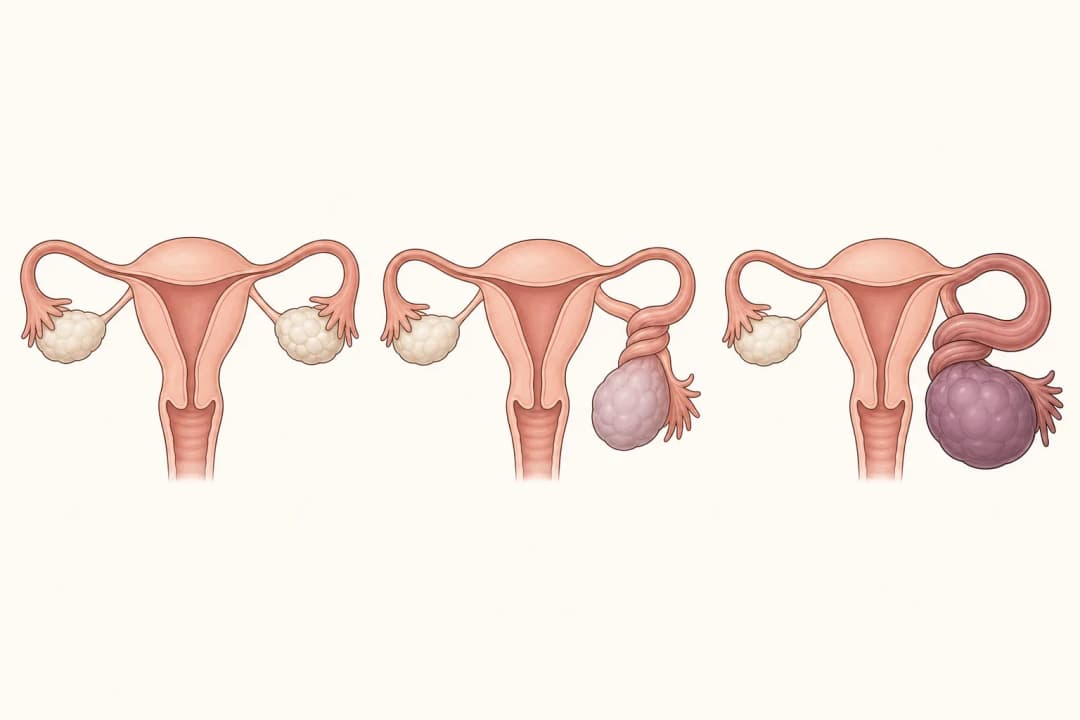
Ovarian torsion happens when an ovary twists around the tissues supporting it, which can reduce its blood supply.
This answers one question. It is not a diagnosis and does not replace an assessment by a licensed doctor.
At a glance
- Main mechanism
- Twisting can reduce blood flow to the ovary.
- Typical concern
- Sudden pelvic pain with nausea or vomiting.
- Response
- Urgent assessment is needed when torsion is suspected.
What happens inside the pelvis
An ovary is held near the uterus by flexible supporting tissues. If the ovary becomes heavier or more mobile, it may rotate around these supports. The twist can first obstruct the veins that drain blood; as swelling increases, it may also affect the arteries supplying the ovary. Torsion can involve an ovary with a cyst or another enlargement, but it can also occur without a known ovarian growth. The pain may begin suddenly, settle briefly, or come in waves if the ovary twists and partially untwists. Nausea and vomiting can occur because the pain is intense. A diagnosis usually combines your symptoms and examination with pelvic imaging, but imaging cannot always exclude torsion.
What to do if it is suspected
Do not wait for the pain to become constant or severe before seeking help. Contact urgent medical services or go to an emergency department, especially when pelvic pain is accompanied by vomiting, marked tenderness, or feeling faint. A clinician may arrange an examination, pregnancy testing when relevant, blood tests, and ultrasound. If torsion remains a concern, treatment is usually surgical assessment to untwist the ovary and restore circulation where possible. A cyst or other cause of enlargement may be treated during the same procedure; one possible approach is [Laparoscopic Ovarian Cystectomy](/treatments/gynaecological-surgery/laparoscopic-ovarian-cystectomy/).
When to seek urgent care
Seek urgent care for sudden one-sided pelvic or lower abdominal pain, particularly if it comes with nausea, vomiting, fever, dizziness, or pain that returns after easing. These symptoms can have several causes, so they do not confirm torsion, but delay can allow reduced blood flow to damage the ovary. If you are pregnant, recently had fertility treatment, or have a known ovarian cyst and develop abrupt pain, treat it as urgent. For more detail about the symptom itself, see [Pelvic Pain](/symptoms/pelvic-pain/).
Questions for your doctor
Ask what findings make torsion more or less likely, whether an ultrasound is needed, and how quickly you should be reviewed if the pain changes. You can also ask whether an ovarian cyst, fertility medication, or prior pelvic surgery could affect your risk, and what procedure might preserve the ovary if torsion is found.
Find care
General Clinics & Polyclinics in Abu Dhabi
That answer is general. If you want it applied to your own case, these are licensed general clinics & polyclinics listed in Abu Dhabi.
27 Ar Ruwwad St - Shakhbout City - MSH4 - Abu Dhabi - United Arab Emirates
Accepts: Daman, Thiqa, Cigna, MetLife +20 more
Al Ruwais, Al Dhafrah
Accepts: Daman, Thiqa, AXA, Cigna +16 more
Al Bahyah - Al Bahyah Old - Abu Dhabi - United Arab Emirates
Accepts: Daman, Thiqa, Cigna, Allianz Care +18 more
Abu Dhabi
Accepts: Daman, Thiqa, AXA, Cigna +27 more
Ordered by verification status and how complete each clinic's public record is, then alphabetically. This is a directory listing, not a ranking — Zavis does not rate or recommend providers.
A factual listing drawn from the DHA, DOH and MOHAP licence registers. It is not a referral, an endorsement, or advice that any of these providers is right for you.
Questions people ask
Can ovarian torsion untwist on its own?
It can sometimes twist and partially untwist, so pain may come and go. Temporary improvement does not make the problem safe to ignore.
Can torsion happen without an ovarian cyst?
Yes. A cyst or enlarged ovary can make twisting more likely, but torsion may also occur when no cyst is known.
Related
Related reading
Keep reading
Medical disclaimer. This page is general health information, not medical advice, and it cannot diagnose you. Always consult a licensed healthcare provider about your own symptoms and treatment. In an emergency in the UAE, call 998 for an ambulance.