
What does osteopenia mean in postmenopausal women?
Short answer
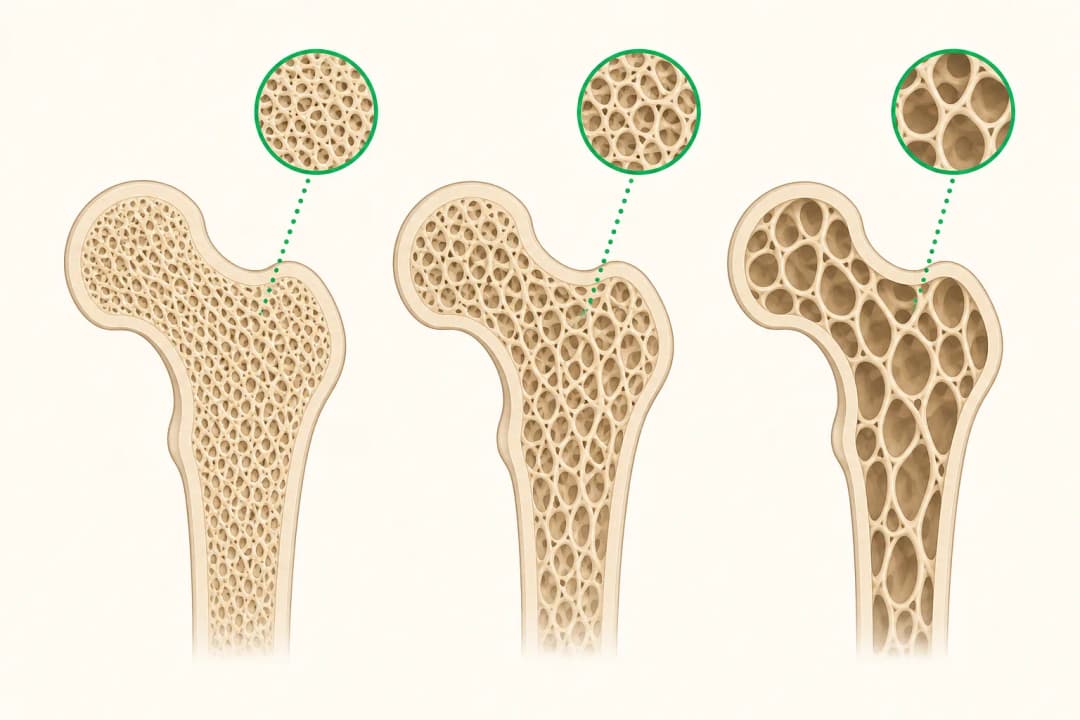
In postmenopausal women, osteopenia means bone density is reduced and fracture prevention becomes part of ongoing health care.
This answers one question. It is not a diagnosis and does not replace an assessment by a licensed doctor.
At a glance
- Meaning
- Osteopenia is reduced bone density, not automatically osteoporosis.
- Symptoms
- It often causes no symptoms until a fracture occurs.
- Focus
- Movement, nutrition, fall prevention and follow-up all matter.
What osteopenia means after menopause
Osteopenia describes bone density that is below the usual adult range but not in the osteoporosis range. Around menopause, changes in oestrogen can increase bone breakdown, so bone may become less dense over time. Osteopenia itself often causes no pain or visible change. It is usually found through a bone-density assessment or after a clinician reviews fracture risk.
A result is one part of the picture. Age, previous fractures, family history, medicines, smoking, alcohol, body weight, balance and conditions affecting calcium or vitamin D can influence the plan. Osteopenia does not mean a fracture is certain, and it is not the same diagnosis as osteoporosis.
How to protect your bones
Discuss the result with a clinician and ask when reassessment is appropriate. Include regular weight-bearing activity and strength work suited to your fitness, along with balance practice if falls are a concern. Eat a varied diet that supplies calcium and protein, and ask whether vitamin D intake or testing is relevant for you. Avoid smoking and keep alcohol within the limits advised for your health.
Review medicines and medical conditions that may affect bone. Make the home safer by improving lighting, clearing trip hazards and using supportive footwear. Do not start high-dose supplements or a new exercise programme without checking that it fits your medical history.
When to seek care
Arrange prompt medical review after a fall with persistent pain, new back pain, a noticeable change in height, or pain in the hip, wrist or ribs. Seek urgent help after a major injury, if you cannot stand or walk, or if pain is severe or accompanied by weakness or numbness.
Questions for your doctor
Ask what your bone-density result means, whether your fracture risk changes the plan, which exercise is suitable, whether calcium or vitamin D needs attention, and when your medicines and bone health should be reviewed.
Find care
General Clinics & Polyclinics in Abu Dhabi
That answer is general. If you want it applied to your own case, these are licensed general clinics & polyclinics listed in Abu Dhabi.
27 Ar Ruwwad St - Shakhbout City - MSH4 - Abu Dhabi - United Arab Emirates
Accepts: Daman, Thiqa, Cigna, MetLife +20 more
Al Ruwais, Al Dhafrah
Accepts: Daman, Thiqa, AXA, Cigna +16 more
Al Bahyah - Al Bahyah Old - Abu Dhabi - United Arab Emirates
Accepts: Daman, Thiqa, Cigna, Allianz Care +18 more
Abu Dhabi
Accepts: Daman, Thiqa, AXA, Cigna +27 more
Ordered by verification status and how complete each clinic's public record is, then alphabetically. This is a directory listing, not a ranking — Zavis does not rate or recommend providers.
A factual listing drawn from the DHA, DOH and MOHAP licence registers. It is not a referral, an endorsement, or advice that any of these providers is right for you.
Questions people ask
Does osteopenia always progress to osteoporosis?
No. Bone health can remain stable or improve with appropriate lifestyle measures and treatment of contributing factors.
Can postmenopausal women exercise with osteopenia?
Many can do weight-bearing, strengthening and balance activities, but the safest choices depend on fractures, pain and other health conditions.
Medical disclaimer. This page is general health information, not medical advice, and it cannot diagnose you. Always consult a licensed healthcare provider about your own symptoms and treatment. In an emergency in the UAE, call 998 for an ambulance.