
What should you know about non invasive carboxytherapy?
Short answer
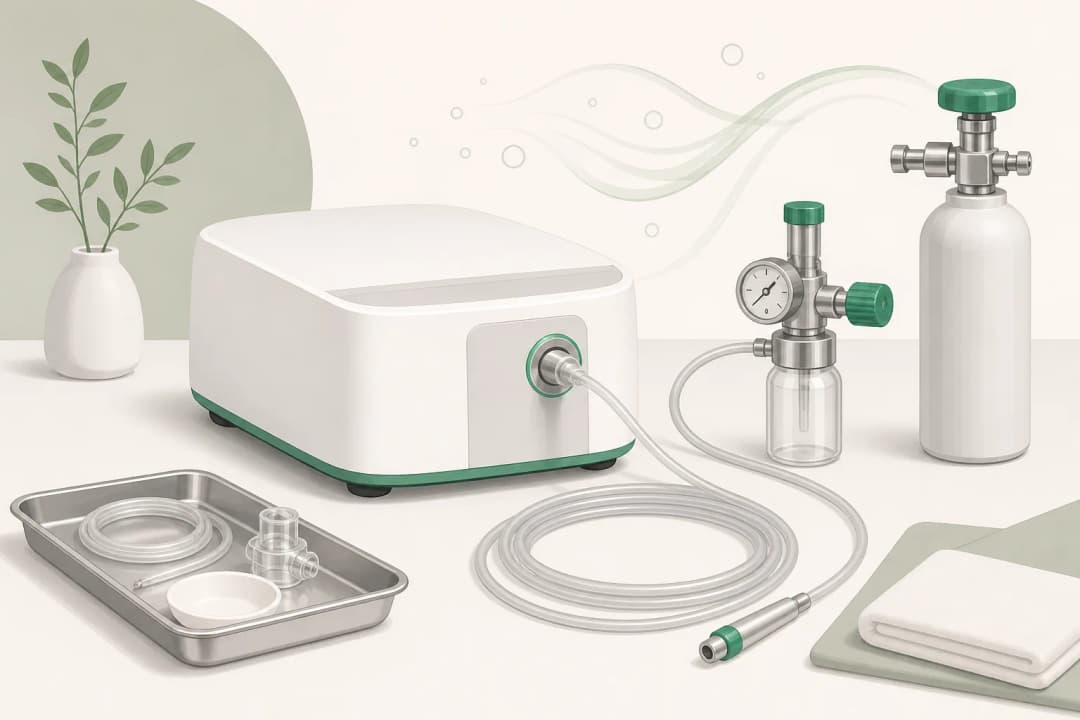
Non-invasive carboxytherapy is a cosmetic treatment using carbon dioxide at the skin surface or through a device, without injecting gas into tissue.
This answers one question. It is not a diagnosis and does not replace an assessment by a licensed doctor.
At a glance
- Delivery
- Carbon dioxide at the surface or via a device
- Skin status
- Treat only intact, settled skin
- Confirm first
- Device, protocol, aftercare, and complication plan
How it is described
Carboxytherapy is also called carbon dioxide therapy. The name can cover different protocols, so the delivery method matters: a non-invasive session should not pierce the skin or place gas below it. Clinics may discuss skin texture, circulation, puffiness, or the appearance of cellulite, but the expected change depends on the area, device, and skin condition. Ask for a plain explanation of the mechanism and whether the treatment is intended to improve appearance rather than diagnose or treat a medical disease. Read the dedicated [Carboxytherapy](/treatments/aesthetic-procedures/carboxytherapy/) page for context.
Before a session
Tell the practitioner about pregnancy, breathing problems, circulation concerns, active skin disease, allergies, and medicines that affect healing. Do not treat over broken, infected, or recently sunburned skin. Confirm the device, treatment area, number and spacing of sessions, expected redness or tingling, aftercare, and who will manage a complication. Take a photo in consistent lighting if you want to judge gradual cosmetic change, rather than relying on immediate swelling or temporary redness.
When to seek care
Contact the provider for worsening pain, blistering, marked swelling, spreading redness, pus, or skin colour changes. Seek urgent help for breathing difficulty, faintness, chest pain, or facial swelling. A persistent rash or wound needs medical assessment and should not be covered by another cosmetic session.
Questions for your doctor
Ask whether the proposed method is truly non-invasive, what evidence the provider uses for your goal, and what alternatives fit your skin. Ask how the clinician screens for conditions that could make treatment unsuitable.
Find care
General Clinics & Polyclinics in Abu Dhabi
That answer is general. If you want it applied to your own case, these are licensed general clinics & polyclinics listed in Abu Dhabi.
27 Ar Ruwwad St - Shakhbout City - MSH4 - Abu Dhabi - United Arab Emirates
Accepts: Daman, Thiqa, Cigna, MetLife +20 more
Al Ruwais, Al Dhafrah
Accepts: Daman, Thiqa, AXA, Cigna +16 more
Al Bahyah - Al Bahyah Old - Abu Dhabi - United Arab Emirates
Accepts: Daman, Thiqa, Cigna, Allianz Care +18 more
Abu Dhabi
Accepts: Daman, Thiqa, AXA, Cigna +27 more
Ordered by verification status and how complete each clinic's public record is, then alphabetically. This is a directory listing, not a ranking — Zavis does not rate or recommend providers.
A factual listing drawn from the DHA, DOH and MOHAP licence registers. It is not a referral, an endorsement, or advice that any of these providers is right for you.
Questions people ask
Is non-invasive carboxytherapy the same as injected carboxytherapy?
No. Non-invasive treatment does not pierce the skin or deliver gas beneath it; ask the provider to describe the exact method.
Will redness after treatment always mean a problem?
Mild short-lived redness may be expected, but worsening redness, pain, blistering, or discharge warrants medical advice.
Related
Related reading
Keep reading
Medical disclaimer. This page is general health information, not medical advice, and it cannot diagnose you. Always consult a licensed healthcare provider about your own symptoms and treatment. In an emergency in the UAE, call 998 for an ambulance.