
What should you know about newborn sweaty hands and feet?
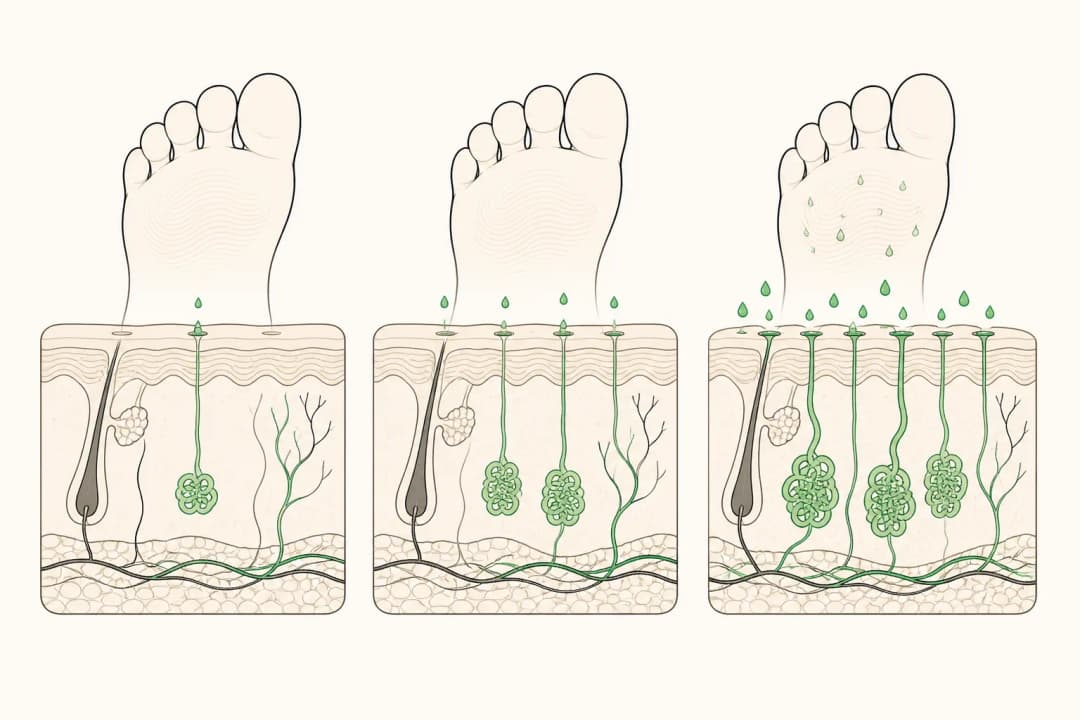
Short answer
Newborn hands and feet may become damp with warmth, crying, or enclosed clothing, but sweating that persists when the baby is comfortable or comes with illness needs prompt medical advice.
This answers one question. It is not a diagnosis and does not replace an assessment by a licensed doctor.
At a glance
- Common triggers
- Warm layers, mittens, socks, feeding, and crying
- Record
- Timing, temperature, feeding, breathing, color, and wet diapers
- Urgent concern
- Sweating with breathing trouble, color change, or poor feeding
Why hands and feet may feel wet
Newborn temperature control is still developing. Warm wrapping, gloves, socks, feeding, or crying can make the palms and soles moist for a short time. Moisture between fingers or toes may irritate delicate skin, and a rash with scaling or odor can point to a separate skin problem such as athlete’s foot. Sweating on the hands and feet does not by itself establish excessive sweating as a condition. The pattern matters: note whether it is occasional or persistent, happens during sleep or feeding, and occurs elsewhere.
Safe steps for caregivers
Keep clothing comfortable and breathable, and remove unnecessary layers rather than cooling the baby abruptly. Dry the palms, soles, and skin folds gently, especially after feeding or bathing. Change wet mittens and socks, wash fabrics with a mild fragrance-free detergent, and avoid powders or fragranced lotions. Do not apply antiperspirant or use iontophoresis on a newborn. Keep a short record of timing, room warmth, feeding, color, breathing, and wet diapers to share with the clinician.
When to seek care
Ask for medical advice if the dampness is frequent or heavy, interferes with feeding or sleep, or causes cracking, redness, swelling, peeling, pain, or odor. Seek urgent help if sweating accompanies breathing difficulty, blue or gray color, unusual limpness, poor feeding, repeated vomiting, fewer wet diapers, or fever under local newborn guidance. A clinician can decide whether examination or testing is appropriate; avoid diagnosing the cause from sweating alone.
Questions for your doctor
Does the timing suggest warmth or another cause? Should we change clothing or bathing habits? What skin findings would suggest infection, and when would treatment for excessive sweating ever be considered?
Find care
General Clinics & Polyclinics in Abu Dhabi
That answer is general. If you want it applied to your own case, these are licensed general clinics & polyclinics listed in Abu Dhabi.
27 Ar Ruwwad St - Shakhbout City - MSH4 - Abu Dhabi - United Arab Emirates
Accepts: Daman, Thiqa, Cigna, MetLife +20 more
Al Ruwais, Al Dhafrah
Accepts: Daman, Thiqa, AXA, Cigna +16 more
Al Bahyah - Al Bahyah Old - Abu Dhabi - United Arab Emirates
Accepts: Daman, Thiqa, Cigna, Allianz Care +18 more
Abu Dhabi
Accepts: Daman, Thiqa, AXA, Cigna +27 more
Ordered by verification status and how complete each clinic's public record is, then alphabetically. This is a directory listing, not a ranking — Zavis does not rate or recommend providers.
A factual listing drawn from the DHA, DOH and MOHAP licence registers. It is not a referral, an endorsement, or advice that any of these providers is right for you.
Questions people ask
Is it normal for a newborn’s palms and soles to feel damp?
Brief dampness can follow warmth, crying, or feeding, but persistent or heavy sweating should be discussed with a clinician.
Can you use an adult antiperspirant on a newborn’s hands or feet?
No. Newborn skin can react to these products, so use only care recommended specifically by a healthcare professional.
Related
Related reading
Keep reading
Medical disclaimer. This page is general health information, not medical advice, and it cannot diagnose you. Always consult a licensed healthcare provider about your own symptoms and treatment. In an emergency in the UAE, call 998 for an ambulance.