
What should you know about newborn sweaty feet?
Short answer
Newborn feet can feel damp from warmth, socks, or normal temperature changes, but persistent heavy sweating, skin breakdown, breathing concerns, or an unwell baby needs medical assessment.
This answers one question. It is not a diagnosis and does not replace an assessment by a licensed doctor.
At a glance
- Check first
- Warmth, layers, sock fit, and whether both feet are affected
- Protect skin
- Dry between toes and change damp socks promptly
- Do not self-treat
- Avoid adult antiperspirants, antifungals, and iontophoresis
What may be behind damp feet
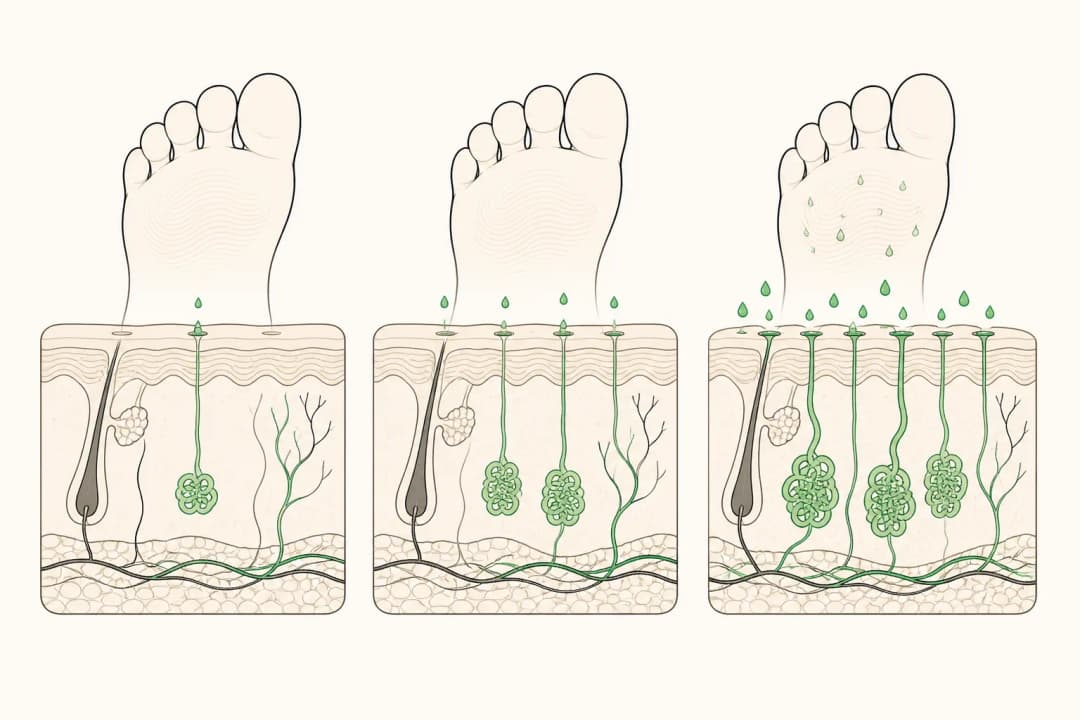
Babies lose and gain heat differently from adults. A warm room, layered clothing, tight socks, or recent crying can leave the feet moist. Sweat trapped between toes can soften the skin and allow irritation; peeling, cracking, odor, or itching can also signal a fungal problem such as athlete’s foot, although this is not the only explanation. Repeated sweating that soaks socks or happens when the baby is cool should be described to a clinician. Excessive sweating is a symptom, not a diagnosis, and newborns should not be labelled with plantar hyperhidrosis from damp feet alone.
Practical care
Check whether the baby is overdressed and follow local newborn guidance for comfortable room temperature. Use soft, breathable socks and change damp clothing promptly. Gently dry between the toes without rubbing, and keep footwear loose when it is used. Avoid powders, adult antiperspirants, antifungal creams, and home remedies unless a healthcare professional recommends them. Record when the sweating happens and whether it affects both feet, the hands, or the whole body.
When to seek care
Arrange medical advice if moisture is persistent, the skin becomes white and soggy, cracked, red, swollen, blistered, painful, or foul-smelling, or if there is a spreading rash. Seek urgent help if sweating comes with difficulty breathing, bluish or pale color, unusual sleepiness, poor feeding, repeated vomiting, or a fever according to local newborn guidance. Do not use iontophoresis or prescription antiperspirant for a newborn unless a specialist specifically directs it.
Questions for your doctor
Is the moisture explained by warmth or clothing? Could the skin changes represent irritation or infection? What sock and washing routine should we use, and what would make treatment necessary?
Find care
General Clinics & Polyclinics in Abu Dhabi
That answer is general. If you want it applied to your own case, these are licensed general clinics & polyclinics listed in Abu Dhabi.
27 Ar Ruwwad St - Shakhbout City - MSH4 - Abu Dhabi - United Arab Emirates
Accepts: Daman, Thiqa, Cigna, MetLife +20 more
Al Ruwais, Al Dhafrah
Accepts: Daman, Thiqa, AXA, Cigna +16 more
Al Bahyah - Al Bahyah Old - Abu Dhabi - United Arab Emirates
Accepts: Daman, Thiqa, Cigna, Allianz Care +18 more
Abu Dhabi
Accepts: Daman, Thiqa, AXA, Cigna +27 more
Ordered by verification status and how complete each clinic's public record is, then alphabetically. This is a directory listing, not a ranking — Zavis does not rate or recommend providers.
A factual listing drawn from the DHA, DOH and MOHAP licence registers. It is not a referral, an endorsement, or advice that any of these providers is right for you.
Questions people ask
Can warm socks make a newborn’s feet sweaty?
Yes. Layers and enclosed socks can trap heat and moisture; changing damp socks and reducing unnecessary layers may help.
Can newborns use prescription antiperspirant for sweaty feet?
No treatment should be started without a clinician; prescription antiperspirants are not routine newborn care.
Related
Related reading
Keep reading
Medical disclaimer. This page is general health information, not medical advice, and it cannot diagnose you. Always consult a licensed healthcare provider about your own symptoms and treatment. In an emergency in the UAE, call 998 for an ambulance.