
Nappy rash in the genital area: what to know
Short answer
Nappy rash in the genital area is commonly caused by moisture, friction and contact with urine or stool, and gentle cleansing with frequent changes can help.
This answers one question. It is not a diagnosis and does not replace an assessment by a licensed doctor.
At a glance
- Main triggers
- Moisture, friction, urine, stool and irritating products
- Safe cleaning
- Lukewarm water and gentle patting
What genital-area nappy rash means
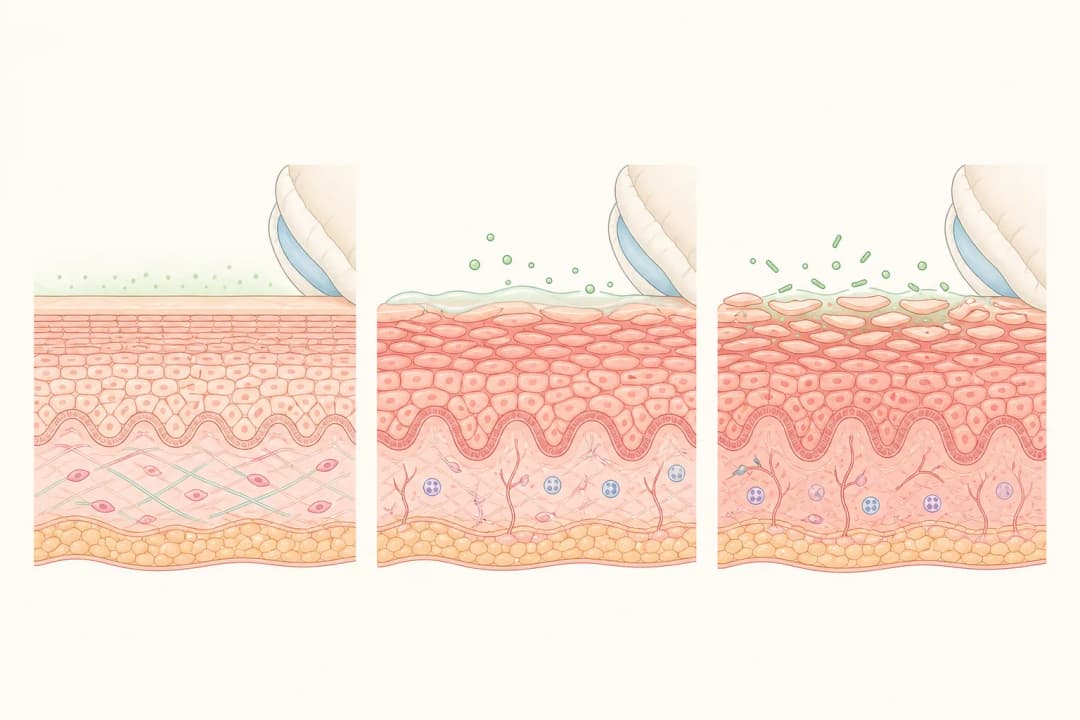
The rash may look red, sore, shiny or dry on the skin covered by the nappy, including the outer genital skin and folds. Nappy rash is inflammation of the skin barrier. Wetness, rubbing, diarrhoea, frequent stools and fragranced products can make it worse. A yeast-related rash may be more vivid red and involve skin folds, but appearance alone cannot confirm the cause.
Keep the distinction between external skin and internal genital tissue in mind. Do not insert creams, wipes or cotton buds into the vagina or penis opening. In an uncircumcised baby, never force the foreskin back; clean only what moves naturally.
How to care for the area
Change the nappy promptly after wetting or soiling. Rinse with lukewarm water or use fragrance-free products, then pat the skin dry. Give short periods without a nappy when practical, and fasten the replacement nappy loosely enough to reduce rubbing. A thin layer of a bland barrier product on external skin can protect it from moisture.
Avoid talcum powder, fragranced wipes, antiseptics and scrubbing. If the rash is not settling, a clinician can recommend a suitable emollient; see [Emollient Therapy](/treatments/medical-dermatology/emollient-therapy/). A suspected yeast rash may need a prescribed or pharmacist-recommended product, so read about [Topical Antifungal Treatment](/treatments/medical-dermatology/topical-antifungal-therapy/) without treating an uncertain rash yourself.
When to seek care
Arrange prompt medical advice if the rash is spreading, very painful, blistered, bleeding, weeping, crusted, or accompanied by fever. Seek urgent help if your baby is unusually drowsy, difficult to wake, feeding poorly, passing much less urine, or appears seriously unwell.
A clinician should review a rash that does not improve after careful nappy care, repeatedly returns, affects the urinary opening, or causes pain when passing urine. Get advice sooner for a newborn or for any baby with broken skin, because infection can develop through damaged skin.
Questions for your doctor
Ask whether the rash is irritant, yeast-related or another condition; which products are safe on external genital skin; how often to apply them; and how quickly improvement should begin. Mention recent diarrhoea, antibiotics, new wipes, changes in feeding, or pain during urination.
Find care
General Clinics & Polyclinics in Abu Dhabi
That answer is general. If you want it applied to your own case, these are licensed general clinics & polyclinics listed in Abu Dhabi.
27 Ar Ruwwad St - Shakhbout City - MSH4 - Abu Dhabi - United Arab Emirates
Accepts: Daman, Thiqa, Cigna, MetLife +20 more
Al Ruwais, Al Dhafrah
Accepts: Daman, Thiqa, AXA, Cigna +16 more
Al Bahyah - Al Bahyah Old - Abu Dhabi - United Arab Emirates
Accepts: Daman, Thiqa, Cigna, Allianz Care +18 more
Abu Dhabi
Accepts: Daman, Thiqa, AXA, Cigna +27 more
Ordered by verification status and how complete each clinic's public record is, then alphabetically. This is a directory listing, not a ranking — Zavis does not rate or recommend providers.
A factual listing drawn from the DHA, DOH and MOHAP licence registers. It is not a referral, an endorsement, or advice that any of these providers is right for you.
Questions people ask
Should I clean inside the genital area?
Clean only the external skin. Do not insert products, and never force back a foreskin that does not move naturally.
When might antifungal treatment be considered?
A clinician may consider it when the pattern suggests yeast, particularly if folds are involved or simple barrier care is not helping; diagnosis should guide treatment.
Related
Related reading
Keep reading
Medical disclaimer. This page is general health information, not medical advice, and it cannot diagnose you. Always consult a licensed healthcare provider about your own symptoms and treatment. In an emergency in the UAE, call 998 for an ambulance.