
Myalgia and Rhabdomyolysis: What Should I Know?
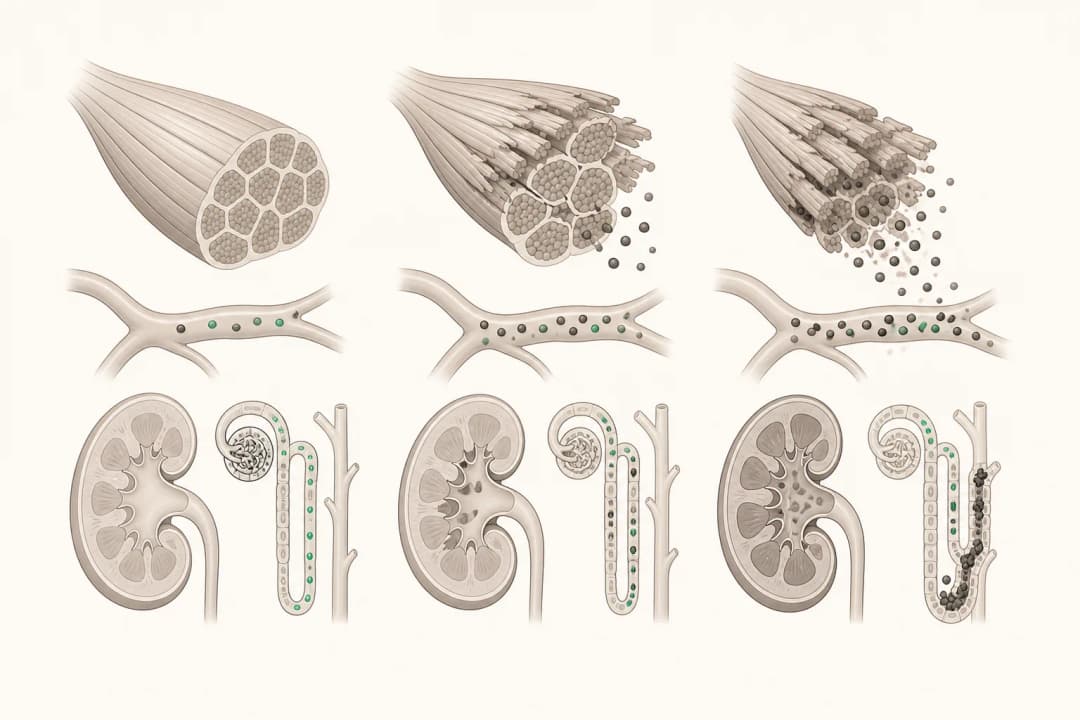
Short answer
Rhabdomyolysis is muscle breakdown that can follow intense exertion, injury, heat, or medicines and needs prompt medical assessment, especially with dark urine or reduced urination.
This answers one question. It is not a diagnosis and does not replace an assessment by a licensed doctor.
At a glance
- Red flag
- Dark urine or reduced urination after muscle symptoms needs urgent assessment.
- Pause
- Stop strenuous exercise until serious muscle injury has been considered.
Myalgia versus rhabdomyolysis
Myalgia means muscle pain and can occur with ordinary muscle soreness after exercise, a strain, infection, or another condition. Rhabdomyolysis is different: damaged muscle releases substances into the bloodstream that may affect the kidneys.
Severe muscle pain, unusual weakness, swelling, marked tenderness, nausea, or feeling unwell after exertion should not be dismissed as routine soreness. Urine may become tea-coloured or brown, but urine colour alone cannot confirm or exclude the condition.
What to do now
Stop strenuous exercise and seek medical advice promptly if symptoms are severe, widespread, or accompanied by weakness, swelling, or dark urine. Do not try to train through these symptoms or rely on supplements to correct them.
A clinician may assess the muscles, hydration, urine, and blood tests, then treat the underlying trigger. Tell them about recent exercise, heat exposure, injuries, medicines, and supplements. Follow fluid and activity advice rather than forcing large amounts of fluid without guidance.
When to seek urgent care
Seek urgent care now for dark or cola-coloured urine, very little urine, severe or rapidly increasing muscle pain, pronounced weakness, confusion, fainting, breathing difficulty, or swelling that feels tight. These features can signal a serious muscle injury or its complications.
Questions for your doctor
Ask: Could this be ordinary muscle soreness or rhabdomyolysis? Do I need urine and blood tests? Which medicines or supplements could contribute? When can I safely return to exercise, and what warning signs should I monitor?
Find care
General Clinics & Polyclinics in Abu Dhabi
That answer is general. If you want it applied to your own case, these are licensed general clinics & polyclinics listed in Abu Dhabi.
27 Ar Ruwwad St - Shakhbout City - MSH4 - Abu Dhabi - United Arab Emirates
Accepts: Daman, Thiqa, Cigna, MetLife +20 more
Al Ruwais, Al Dhafrah
Accepts: Daman, Thiqa, AXA, Cigna +16 more
Al Bahyah - Al Bahyah Old - Abu Dhabi - United Arab Emirates
Accepts: Daman, Thiqa, Cigna, Allianz Care +18 more
Abu Dhabi
Accepts: Daman, Thiqa, AXA, Cigna +27 more
Ordered by verification status and how complete each clinic's public record is, then alphabetically. This is a directory listing, not a ranking — Zavis does not rate or recommend providers.
A factual listing drawn from the DHA, DOH and MOHAP licence registers. It is not a referral, an endorsement, or advice that any of these providers is right for you.
Questions people ask
Is all muscle soreness rhabdomyolysis?
No. Ordinary muscle soreness is common after unfamiliar activity, while rhabdomyolysis involves muscle breakdown and may cause severe symptoms, weakness, swelling, or urine changes.
Can rhabdomyolysis happen after exercise?
Yes. It can follow unusually intense exertion, particularly with other stresses such as heat, dehydration, injury, or certain medicines.
Related
Related reading
Keep reading
Medical disclaimer. This page is general health information, not medical advice, and it cannot diagnose you. Always consult a licensed healthcare provider about your own symptoms and treatment. In an emergency in the UAE, call 998 for an ambulance.