
What should you know about muscle pain after rhabdomyolysis?
Short answer
Muscle pain after rhabdomyolysis needs medical follow-up because recovery, renewed muscle injury and kidney complications must be distinguished.
This answers one question. It is not a diagnosis and does not replace an assessment by a licensed doctor.
At a glance
- Key concern
- Ongoing muscle injury or kidney stress
- Return to activity
- Gradual and guided by clinical review
Understanding pain after muscle breakdown
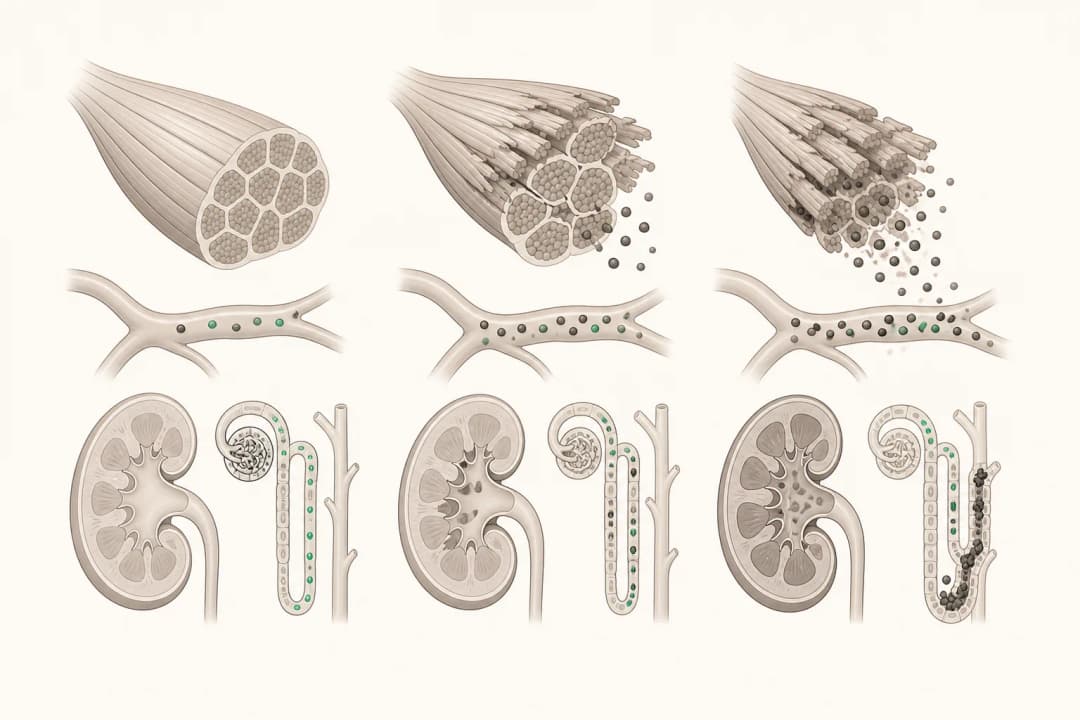
Rhabdomyolysis involves injury to muscle cells and release of muscle contents into the bloodstream. Soreness, weakness and reduced exercise tolerance can remain while injured tissue recovers. Similar soreness after exercise is often milder and follows a predictable activity pattern, but it should not be used to dismiss symptoms after rhabdomyolysis.
Pain that is worsening, returning after activity, or accompanied by weakness may mean the muscle has not recovered or has been injured again. Blood and urine tests can help a clinician assess muscle injury and kidney function.
How to support recovery
Follow the treating clinician’s instructions about fluids, medicines, activity and repeat testing. Do not restart intense exercise simply because soreness has eased. Resume activity gradually and stop if pain, weakness, swelling or unusual fatigue increases. Avoid self-prescribing supplements or anti-inflammatory medicines without checking, because some choices may be unsuitable when kidney function is being monitored. Keep a note of urine colour, urine amount, pain pattern and activity changes to discuss at review.
Warning signs
Seek urgent care for very dark or cola-coloured urine, much less urine, increasing swelling, severe muscle pain, marked weakness, confusion, fainting or repeated vomiting. Contact your medical team promptly if symptoms return after exercise or if you cannot follow the hydration or activity plan. Emergency symptoms should not wait for a routine appointment.
Questions for follow-up
Ask when repeat blood or urine tests are needed, how to judge readiness for exercise, which medicines to avoid, and which changes in urine, pain or strength should prompt immediate review.
Find care
General Clinics & Polyclinics in Abu Dhabi
That answer is general. If you want it applied to your own case, these are licensed general clinics & polyclinics listed in Abu Dhabi.
27 Ar Ruwwad St - Shakhbout City - MSH4 - Abu Dhabi - United Arab Emirates
Accepts: Daman, Thiqa, Cigna, MetLife +20 more
Al Ruwais, Al Dhafrah
Accepts: Daman, Thiqa, AXA, Cigna +16 more
Al Bahyah - Al Bahyah Old - Abu Dhabi - United Arab Emirates
Accepts: Daman, Thiqa, Cigna, Allianz Care +18 more
Abu Dhabi
Accepts: Daman, Thiqa, AXA, Cigna +27 more
Ordered by verification status and how complete each clinic's public record is, then alphabetically. This is a directory listing, not a ranking — Zavis does not rate or recommend providers.
A factual listing drawn from the DHA, DOH and MOHAP licence registers. It is not a referral, an endorsement, or advice that any of these providers is right for you.
Questions people ask
Is pain normal after rhabdomyolysis?
Some soreness can persist during recovery, but new, worsening or severe pain needs medical advice rather than self-treatment.
Can I exercise while recovering?
Only follow an activity plan from your treating clinician; increase effort gradually and stop for returning pain or weakness.
Related
Related reading
Keep reading
Medical disclaimer. This page is general health information, not medical advice, and it cannot diagnose you. Always consult a licensed healthcare provider about your own symptoms and treatment. In an emergency in the UAE, call 998 for an ambulance.