
The most common cause of central precocious puberty
Short answer
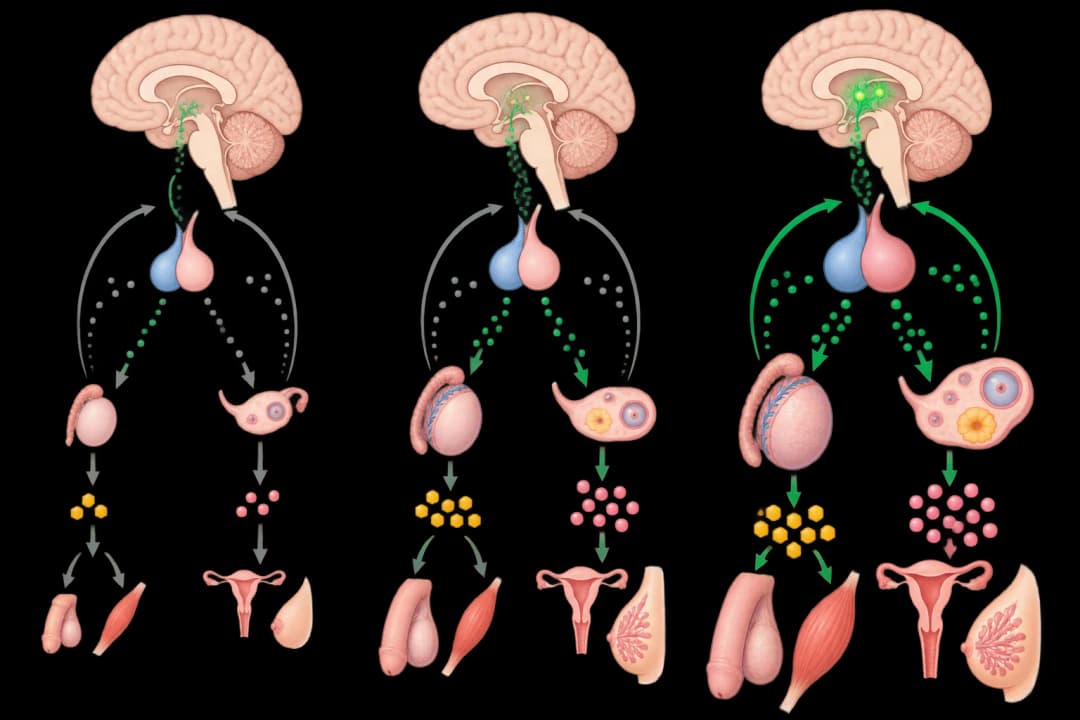
The most common cause of central precocious puberty is early activation of the normal brain–pituitary–gonad hormone pathway, often without a single identifiable cause.
This answers one question. It is not a diagnosis and does not replace an assessment by a licensed doctor.
At a glance
- Mechanism
- Early activation of brain, pituitary, and gonad hormone signalling
- Possible finding
- No single identifiable cause in many children
- Assessment
- Growth review, hormone testing, and selected further tests
What central means
Central precocious puberty begins when the brain releases signals that activate the pituitary gland, which then stimulates the ovaries or testes to make sex hormones. This produces puberty-related changes earlier than expected, such as breast development, testicular enlargement, pubic hair, body odour, growth acceleration, or vaginal bleeding. In many children, no underlying problem is found. In others, the early signalling can be associated with a brain or spinal condition, previous injury, infection, or treatment affecting the central nervous system. The pattern and pace of change help guide evaluation.
How it is assessed
Arrange an appointment with a paediatrician or paediatric endocrinologist when puberty changes appear unusually early or progress quickly. The clinician may review growth measurements, family timing of puberty, medicines, and neurological symptoms. Blood tests can assess hormone patterns, and a bone-age study may show how quickly bones are maturing. Some children need imaging or other tests based on the examination and hormone results. Keep a record of when changes began and whether growth, headaches, vision, or behaviour changed with them.
When to seek prompt care
Seek prompt medical advice for rapidly progressing puberty changes, severe or persistent headaches, vision changes, seizures, unusual vomiting, weakness, or changes in balance. These symptoms do not establish a cause, but they may signal a need for timely assessment. Seek emergency help for a seizure, sudden weakness, severe headache with vomiting, or a child who is difficult to wake.
Questions to ask
Ask whether the changes fit central puberty, which tests are needed, whether bone maturation is being assessed, and whether a specialist referral or brain imaging is appropriate. Ask how treatment decisions would relate to growth, development, and the cause found.
Find care
General Clinics & Polyclinics in Abu Dhabi
That answer is general. If you want it applied to your own case, these are licensed general clinics & polyclinics listed in Abu Dhabi.
27 Ar Ruwwad St - Shakhbout City - MSH4 - Abu Dhabi - United Arab Emirates
Accepts: Daman, Thiqa, Cigna, MetLife +20 more
Al Ruwais, Al Dhafrah
Accepts: Daman, Thiqa, AXA, Cigna +16 more
Al Bahyah - Al Bahyah Old - Abu Dhabi - United Arab Emirates
Accepts: Daman, Thiqa, Cigna, Allianz Care +18 more
Abu Dhabi
Accepts: Daman, Thiqa, AXA, Cigna +27 more
Ordered by verification status and how complete each clinic's public record is, then alphabetically. This is a directory listing, not a ranking — Zavis does not rate or recommend providers.
A factual listing drawn from the DHA, DOH and MOHAP licence registers. It is not a referral, an endorsement, or advice that any of these providers is right for you.
Questions people ask
Does central precocious puberty always have a serious cause?
No. Many children have no single identifiable cause, but assessment is needed to check for underlying conditions.
What symptoms should be reported quickly?
Rapid progression, severe headaches, vision changes, seizures, unusual vomiting, weakness, or balance changes warrant prompt medical advice.
Related
Related reading
Keep reading
Medical disclaimer. This page is general health information, not medical advice, and it cannot diagnose you. Always consult a licensed healthcare provider about your own symptoms and treatment. In an emergency in the UAE, call 998 for an ambulance.