
What should you know about molar pregnancy and the fetus?
Short answer
In a molar pregnancy, abnormal placental tissue grows instead of a normally developing pregnancy, so a viable fetus cannot develop; prompt specialist care and follow-up are needed.
This answers one question. It is not a diagnosis and does not replace an assessment by a licensed doctor.
At a glance
- Pregnancy outcome
- A molar pregnancy cannot develop into a viable fetus.
- Main follow-up test
- Serial blood tests measure the pregnancy hormone hCG.
- Specialist care
- Persistent or rising hCG needs prompt review by the care team.
What a molar pregnancy means
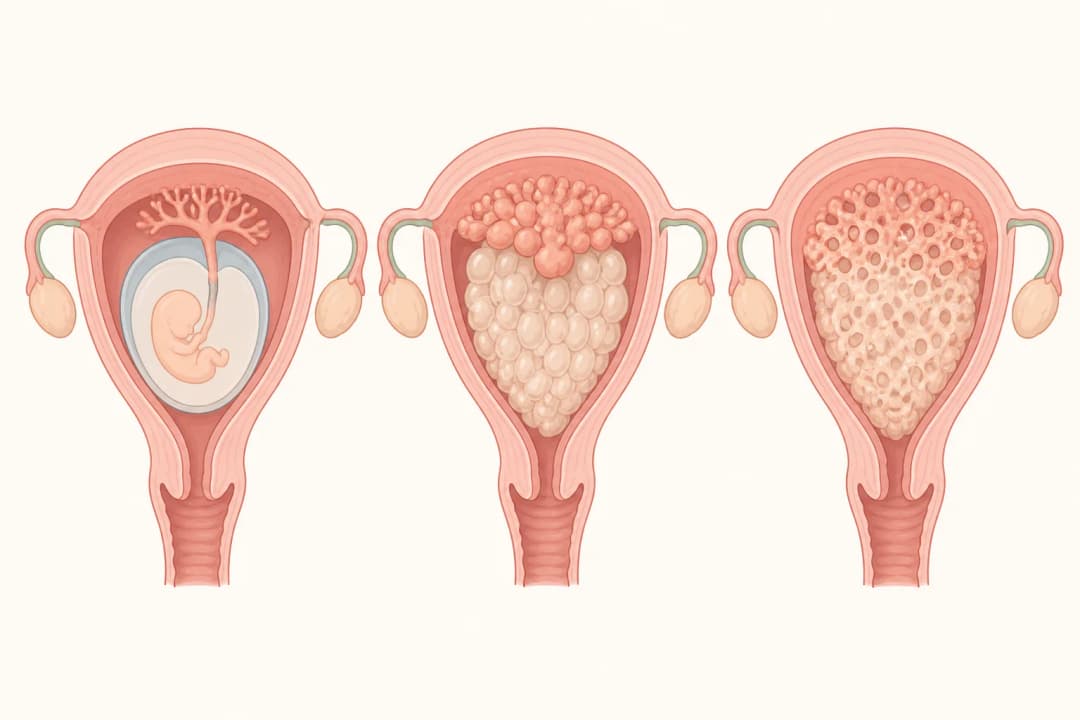
A molar pregnancy, also called a hydatidiform mole, starts when an abnormal fertilisation event causes placental cells to grow in an unusual way. In a complete mole, there is no developing embryo. In a partial mole, some fetal tissue may be present, but it cannot develop into a viable fetus. The abnormal tissue can make pregnancy hormones rise and may appear as unusual tissue on an ultrasound. A molar pregnancy is not caused by anything the pregnant person did.
Most molar pregnancies are not cancer, but some abnormal trophoblastic cells can remain after the pregnancy is removed and need treatment. Rarely, gestational trophoblastic disease can become a cancer such as choriocarcinoma. Follow-up hormone testing helps the care team check that the abnormal cells have cleared.
What to do after a suspected diagnosis
Arrange care with an obstetric or gynaecology team experienced in molar pregnancy. Assessment commonly includes an ultrasound, blood tests for the pregnancy hormone hCG, and sometimes examination of tissue removed from the uterus. Treatment usually removes the molar tissue from the uterus. Your clinician will explain the safest approach for your symptoms, bleeding, medical history, and future pregnancy plans.
Keep every follow-up appointment for hCG testing. The result should steadily fall; a plateau, rise, or persistent detectable level can signal remaining trophoblastic disease and may lead to additional treatment. Use contraception if your team recommends it during monitoring, because a new pregnancy can make hCG results difficult to interpret.
When to seek urgent care
Seek urgent medical help for heavy or increasing vaginal bleeding, faintness, severe weakness, severe pelvic or abdominal pain, trouble breathing, chest pain, or a severe headache with visual changes. Bleeding between periods can also need assessment during recovery, especially if it is new, persistent, or accompanied by pain or dizziness.
Contact your care team promptly if follow-up hCG results stop falling, rise, or remain detectable, or if symptoms return after treatment. These findings do not identify the cause by themselves, but they require timely review.
Questions for your doctor
Ask whether the findings suggest a complete or partial mole, how the tissue will be removed, and when your hCG monitoring begins. You can also ask what symptoms should trigger emergency care, how long monitoring is expected to continue, when it is medically reasonable to plan another pregnancy, and whether a specialist oncology team should be involved. If hCG remains elevated, ask what further tests or treatments may be considered, including chemotherapy.
Questions people ask
Can a fetus survive a molar pregnancy?
A complete mole has no developing embryo. A partial mole may contain fetal tissue, but the pregnancy cannot result in a viable fetus.
Does a molar pregnancy always become cancer?
No. Most do not become cancer, but follow-up hCG testing is needed because abnormal trophoblastic cells can occasionally persist or require treatment.
Could chemotherapy be needed after a molar pregnancy?
If abnormal trophoblastic disease persists or behaves like cancer, a specialist may recommend chemotherapy. The treatment decision depends on test results and clinical assessment.
Related
Related reading
Keep reading
Cancer care in the UAE
Hospitals & Medical Centers in Abu Dhabi
Most UAE cancer care is delivered inside hospital services rather than by standalone oncology clinics, so these are licensed hospitals & medical centers listed in Abu Dhabi. Confirm the specific cancer service exists before you travel, and know that asking for a second opinion is routine.
Ahalia Hospital Musaffah Building - Musaffah - Musaffah Industrial - Abu Dhabi - United Arab Emirates
Accepts: Daman, Thiqa, AXA, Cigna +26 more
Al Ruwais Industrial City - Abu Dhabi - United Arab Emirates
Accepts: Daman, Thiqa, AXA, Cigna +30 more
Abu Dhabi, Abu Dhabi
Accepts: Daman, Thiqa, AXA, Cigna +30 more
Second opinions are routine in cancer care and asking for one does not affect your treatment. How to arrange a second opinion in the UAE.
Ordered by verification status and how complete each clinic's public record is, then alphabetically. This is a directory listing, not a ranking — Zavis does not rate or recommend providers.
A factual listing drawn from the DHA, DOH and MOHAP licence registers. It is not a referral, an endorsement, or advice that any of these providers is right for you.
Medical disclaimer. This page is general health information, not medical advice, and it cannot diagnose you. Always consult a licensed healthcare provider about your own symptoms and treatment. In an emergency in the UAE, call 998 for an ambulance.