
Milk allergy hives: what to know
Short answer
Milk allergy hives are raised, itchy welts that can appear soon after milk exposure and may occur with swelling or breathing symptoms.
This answers one question. It is not a diagnosis and does not replace an assessment by a licensed doctor.
At a glance
- Typical appearance
- Raised, itchy welts that may move or fade
- Key distinction
- Milk allergy involves immune recognition of milk proteins
- Emergency signs
- Breathing trouble, faintness, or tongue and throat swelling
What the reaction can look like
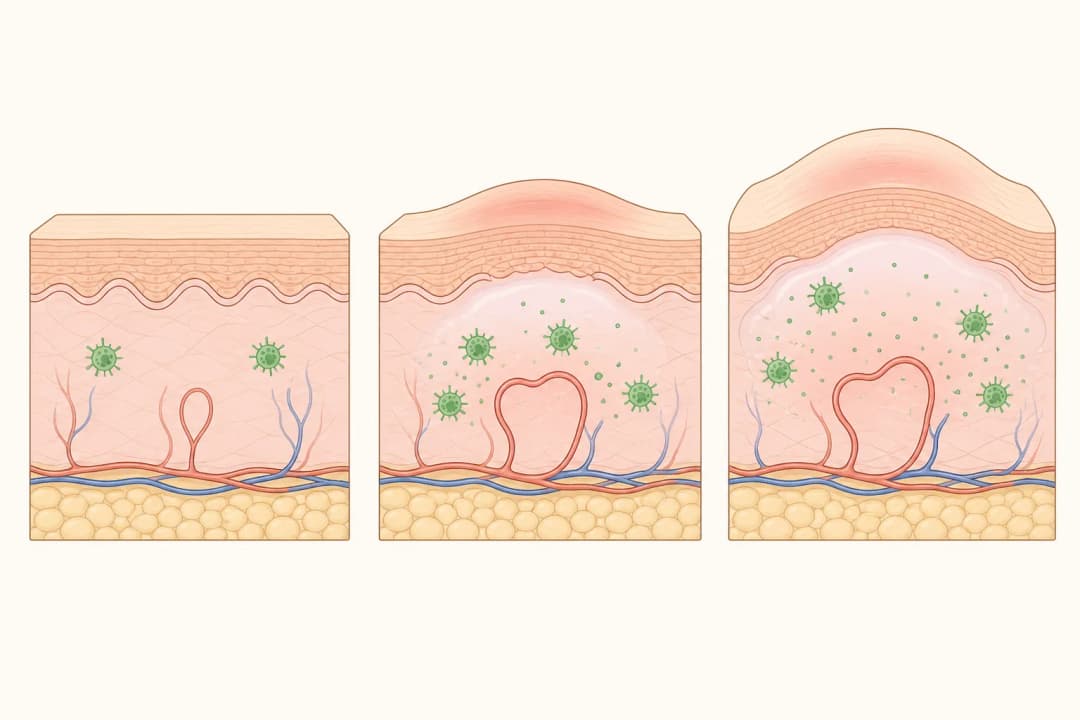
Hives may be pink, red, or close to your natural skin tone. Individual welts can change shape, fade, and reappear in another area. A milk allergy is an immune reaction to milk proteins; it is different from difficulty digesting lactose. Hives are a common presentation of an immediate milk allergy, but a rash alone cannot confirm the cause. [Hives](/conditions/urticaria/) can be accompanied by [Itchy Skin](/symptoms/itchy-skin/) or deeper [Skin Swelling](/symptoms/skin-swelling/).
What to do after suspected exposure
Stop the suspected milk exposure and note what was eaten, how quickly symptoms began, and whether other symptoms followed. Do not deliberately re-test the food at home. A clinician can review the history and decide whether allergy assessment is appropriate. If a prescribed emergency medicine is available, use it according to the personal action plan. An antihistamine may be advised for selected mild symptoms, but it does not replace emergency treatment for breathing or circulation problems. Learn more about [Antihistamine Treatment](/treatments/medical-dermatology/oral-antihistamine-therapy/).
When to seek urgent care
Call emergency services immediately for trouble breathing, wheezing, throat tightness, faintness, sudden weakness, or swelling of the tongue or throat. A rapidly spreading reaction with vomiting or severe dizziness also needs urgent assessment. Facial or lip swelling can represent [Angioedema](/conditions/angioedema/) and should be assessed promptly, especially when it follows milk exposure.
Questions for your doctor
Ask which foods and ingredients should be avoided, whether you need an emergency action plan, and how to distinguish a milk allergy from lactose intolerance. Bring photographs of the welts and a timeline of exposure, symptoms, and treatment.
Find care
General Clinics & Polyclinics in Abu Dhabi
That answer is general. If you want it applied to your own case, these are licensed general clinics & polyclinics listed in Abu Dhabi.
27 Ar Ruwwad St - Shakhbout City - MSH4 - Abu Dhabi - United Arab Emirates
Accepts: Daman, Thiqa, Cigna, MetLife +20 more
Al Ruwais, Al Dhafrah
Accepts: Daman, Thiqa, AXA, Cigna +16 more
Al Bahyah - Al Bahyah Old - Abu Dhabi - United Arab Emirates
Accepts: Daman, Thiqa, Cigna, Allianz Care +18 more
Abu Dhabi
Accepts: Daman, Thiqa, AXA, Cigna +27 more
Ordered by verification status and how complete each clinic's public record is, then alphabetically. This is a directory listing, not a ranking — Zavis does not rate or recommend providers.
A factual listing drawn from the DHA, DOH and MOHAP licence registers. It is not a referral, an endorsement, or advice that any of these providers is right for you.
Questions people ask
Can milk allergy cause hives without stomach symptoms?
Yes. Hives may occur on their own, although other allergic symptoms can develop and need monitoring.
Should I test milk again to confirm the cause?
No. Avoid deliberate home testing and ask a clinician about a supervised assessment.
Related
Related reading
Keep reading
Medical disclaimer. This page is general health information, not medical advice, and it cannot diagnose you. Always consult a licensed healthcare provider about your own symptoms and treatment. In an emergency in the UAE, call 998 for an ambulance.