
What should you know about measles, mumps and rubella (MMR)?
Short answer
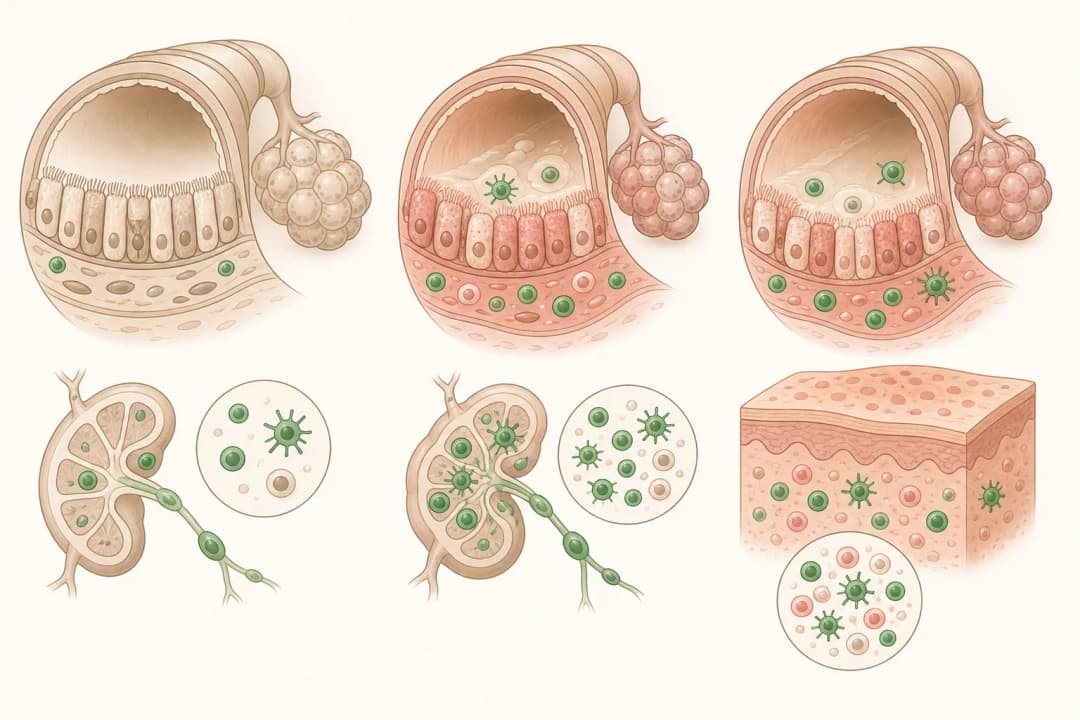
Measles, mumps and rubella are separate viral infections. They can spread between people, and illness may be more serious for infants, pregnant people or anyone with reduced immunity. MMR vaccination trains the immune system to recognise all three infections without causing the illnesses themselves.
This answers one question. It is not a diagnosis and does not replace an assessment by a licensed doctor.
At a glance
- MMR
- One vaccine protects against measles, mumps and rubella.
- Symptoms
- Fever, rash and swollen glands need clinical context.
What MMR covers
Measles commonly causes fever and a spreading rash; mumps may cause painful swelling around the cheeks or jaw; rubella can cause a milder rash but is particularly concerning during pregnancy. A fever or swollen glands can have many causes, so either symptom needs context rather than a diagnosis based on appearance alone.
Vaccination history, recent contact with an infected person, travel and symptoms help a clinician decide whether testing or further assessment is needed.
Practical next steps
Check your vaccination record and ask a GP or vaccination service whether any doses are missing. If measles is possible, call ahead before attending a waiting room so staff can reduce exposure to others. Rest, drink fluids and use suitable fever relief according to the product instructions or professional advice. Do not share cups, towels or close indoor space while an infection is being assessed.
When to seek care
Arrange prompt medical advice for fever with a rash, swollen glands with significant illness, breathing difficulty, dehydration, unusual sleepiness, a seizure or worsening symptoms. Seek urgent help for severe breathing problems, collapse or difficulty waking. Mention pregnancy, very young age, immune problems or recent exposure when you call.
Questions for your doctor
Ask whether the symptoms fit measles, mumps or rubella, whether testing is needed, how long to avoid close contact, and whether your vaccination record suggests another MMR dose.
Find care
General Clinics & Polyclinics in Abu Dhabi
That answer is general. If you want it applied to your own case, these are licensed general clinics & polyclinics listed in Abu Dhabi.
27 Ar Ruwwad St - Shakhbout City - MSH4 - Abu Dhabi - United Arab Emirates
Accepts: Daman, Thiqa, Cigna, MetLife +20 more
Al Ruwais, Al Dhafrah
Accepts: Daman, Thiqa, AXA, Cigna +16 more
Al Bahyah - Al Bahyah Old - Abu Dhabi - United Arab Emirates
Accepts: Daman, Thiqa, Cigna, Allianz Care +18 more
Abu Dhabi
Accepts: Daman, Thiqa, AXA, Cigna +27 more
Ordered by verification status and how complete each clinic's public record is, then alphabetically. This is a directory listing, not a ranking — Zavis does not rate or recommend providers.
A factual listing drawn from the DHA, DOH and MOHAP licence registers. It is not a referral, an endorsement, or advice that any of these providers is right for you.
Questions people ask
Can MMR cause measles, mumps or rubella?
MMR uses weakened vaccine viruses and is designed to stimulate protection rather than cause these infections.
What should I do after possible measles exposure?
Call a healthcare service promptly, explain the exposure and avoid arriving unannounced if you have fever or a rash.
Related
Related reading
Keep reading
Medical disclaimer. This page is general health information, not medical advice, and it cannot diagnose you. Always consult a licensed healthcare provider about your own symptoms and treatment. In an emergency in the UAE, call 998 for an ambulance.