
How is measles transmitted?
Short answer
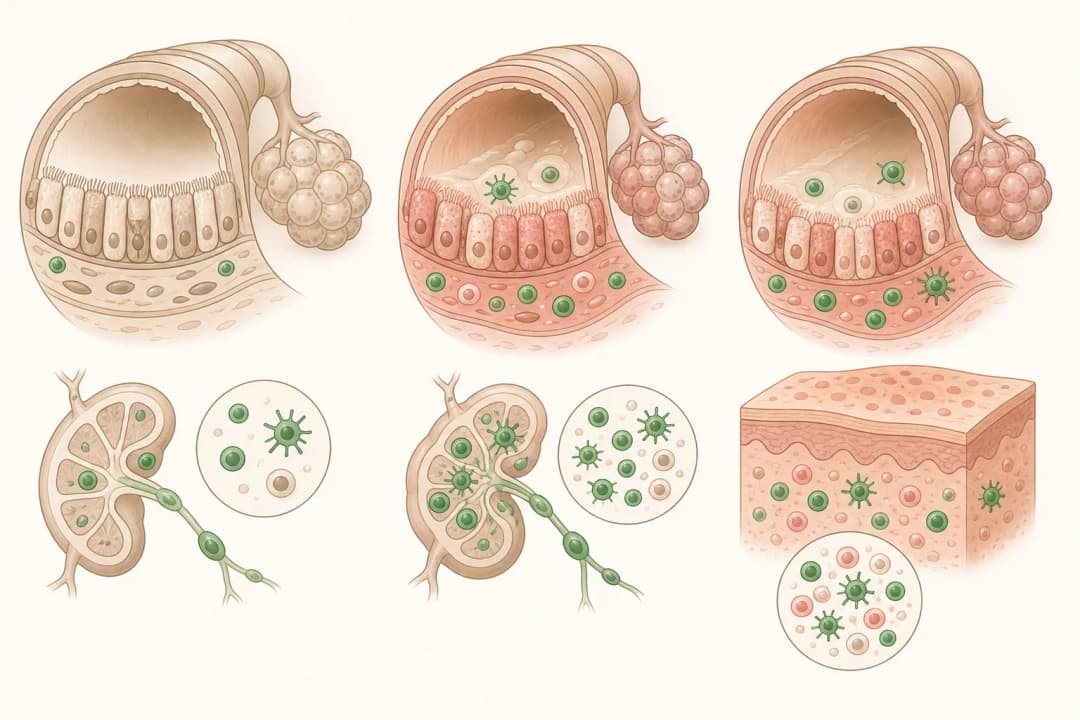
Measles is transmitted through the air and respiratory droplets released by an infected person when they cough, sneeze, breathe, or speak.
This answers one question. It is not a diagnosis and does not replace an assessment by a licensed doctor.
At a glance
- Main route
- Shared air and respiratory droplets
- First step
- Call ahead before attending a clinic
- Prevention
- MMR vaccination and avoiding exposure
What this means in daily life
The virus can remain in an indoor space for a period after an infected person has left. Close contact, shared air, and crowded settings can therefore allow transmission even without touching the person. Someone may spread measles before the rash is obvious, so a person with fever, cough, runny nose, red eyes, or a spreading rash should avoid gatherings and contact with people who are vulnerable.
Measles is highly contagious, but a rash alone does not establish the diagnosis. A clinician considers the pattern of symptoms, exposure history, and vaccination history. Read more about [Measles](/conditions/measles/), [Fever](/symptoms/fever/), and [Swollen Glands](/symptoms/swollen-glands/).
What to do after possible exposure
Call a GP or clinic before arriving and explain that measles exposure is possible; this lets the team arrange assessment without exposing people in a waiting room. Stay home, limit visitors, improve ventilation, and do not share close indoor time with infants, pregnant people, or anyone with reduced immunity until you receive advice. Check vaccination records and tell the clinician when exposure occurred and whether symptoms have started. A [GP Consultation](/treatments/consultations-and-assessment/gp-consultation/) can help plan assessment, while [MMR Vaccination](/treatments/preventive-care-and-vaccination/mmr-vaccination/) helps prevent measles.
When to seek care
Seek prompt medical advice after a known exposure, especially if the exposed person is a young child, pregnant, or immunocompromised. Arrange urgent help for breathing difficulty, unusual drowsiness, confusion, dehydration, a seizure, or a rapidly worsening illness. Phone ahead and mention the suspected infection rather than walking into a clinic unannounced.
Questions for your doctor
Ask whether testing or monitoring is needed, how long to stay away from others, and whether household contacts need advice about vaccination or observation. Also ask which symptoms should trigger same-day review.
Find care
General Clinics & Polyclinics in Abu Dhabi
That answer is general. If you want it applied to your own case, these are licensed general clinics & polyclinics listed in Abu Dhabi.
27 Ar Ruwwad St - Shakhbout City - MSH4 - Abu Dhabi - United Arab Emirates
Accepts: Daman, Thiqa, Cigna, MetLife +20 more
Al Ruwais, Al Dhafrah
Accepts: Daman, Thiqa, AXA, Cigna +16 more
Al Bahyah - Al Bahyah Old - Abu Dhabi - United Arab Emirates
Accepts: Daman, Thiqa, Cigna, Allianz Care +18 more
Abu Dhabi
Accepts: Daman, Thiqa, AXA, Cigna +27 more
Ordered by verification status and how complete each clinic's public record is, then alphabetically. This is a directory listing, not a ranking — Zavis does not rate or recommend providers.
A factual listing drawn from the DHA, DOH and MOHAP licence registers. It is not a referral, an endorsement, or advice that any of these providers is right for you.
Questions people ask
Can measles spread without direct touch?
Yes. Shared indoor air can be enough for transmission; touching the infected person is not required.
What should I do if I think I was exposed?
Stay home, limit contact, and phone a healthcare service before attending so the team can advise you safely.
Related
Related reading
Keep reading
Medical disclaimer. This page is general health information, not medical advice, and it cannot diagnose you. Always consult a licensed healthcare provider about your own symptoms and treatment. In an emergency in the UAE, call 998 for an ambulance.