
What should you know about measles is an infectious disease?
Short answer
Measles is an infectious viral disease that spreads between people and can cause fever, rash and other symptoms.
This answers one question. It is not a diagnosis and does not replace an assessment by a licensed doctor.
At a glance
- Type
- Infectious viral disease
- Typical features
- Fever, respiratory symptoms and rash
- First contact
- Phone a healthcare service before attending
How the illness behaves
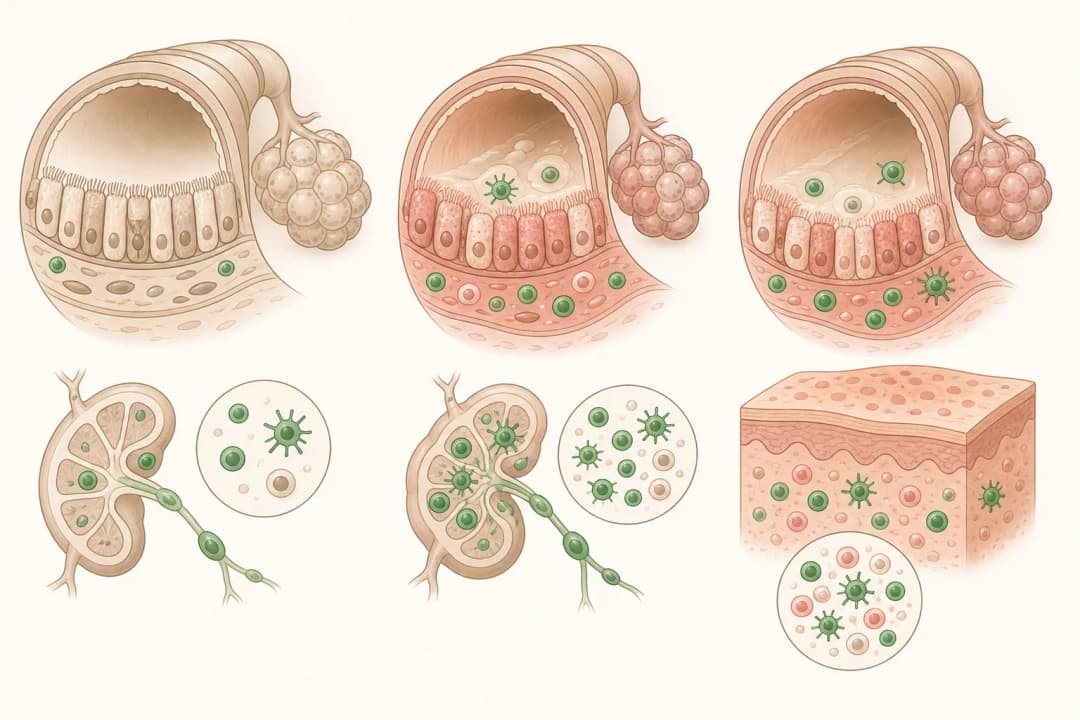
An infectious disease can pass from one person to another. Measles begins after the virus enters the body, then may cause fever, cough, runny nose, sore or red eyes and a rash. The illness can be more serious in babies, pregnant people and those with weakened immunity. Swollen glands can accompany some viral illnesses, but a symptom alone cannot confirm measles.
Read the condition overview for [Measles](/conditions/measles/), plus focused explanations of [Fever](/symptoms/fever/) and [Swollen Glands](/symptoms/swollen-glands/).
Reducing spread
If measles is possible, phone a healthcare service before visiting and follow its instructions about isolation. Avoid close contact with people who may become seriously ill, and do not share a waiting area without advice. Check vaccination records for household members and discuss protection with a clinician.
A [GP Consultation](/treatments/consultations-and-assessment/gp-consultation/) can assess symptoms and exposure. Information about prevention is available under [MMR Vaccination](/treatments/preventive-care-and-vaccination/mmr-vaccination/).
When to seek care
Get medical advice quickly for fever with a new widespread rash, known exposure, or symptoms in a young baby or someone with reduced immunity. Emergency help is needed for struggling to breathe, confusion, a seizure, inability to drink, or marked sleepiness. Call ahead because measles can spread in healthcare settings.
Useful questions
Ask how measles will be assessed, how long to avoid close contact, whether household contacts need vaccination advice, and which warning signs require emergency help.
Find care
General Clinics & Polyclinics in Abu Dhabi
That answer is general. If you want it applied to your own case, these are licensed general clinics & polyclinics listed in Abu Dhabi.
27 Ar Ruwwad St - Shakhbout City - MSH4 - Abu Dhabi - United Arab Emirates
Accepts: Daman, Thiqa, Cigna, MetLife +20 more
Al Ruwais, Al Dhafrah
Accepts: Daman, Thiqa, AXA, Cigna +16 more
Al Bahyah - Al Bahyah Old - Abu Dhabi - United Arab Emirates
Accepts: Daman, Thiqa, Cigna, Allianz Care +18 more
Abu Dhabi
Accepts: Daman, Thiqa, AXA, Cigna +27 more
Ordered by verification status and how complete each clinic's public record is, then alphabetically. This is a directory listing, not a ranking — Zavis does not rate or recommend providers.
A factual listing drawn from the DHA, DOH and MOHAP licence registers. It is not a referral, an endorsement, or advice that any of these providers is right for you.
Questions people ask
Does an infectious disease always cause symptoms?
No. Some people may have few or no obvious symptoms, so exposure history and clinical advice still matter.
Should I attend a clinic without calling?
If measles is possible, call first so the service can arrange safer assessment and limit contact with others.
Related
Related reading
Keep reading
Medical disclaimer. This page is general health information, not medical advice, and it cannot diagnose you. Always consult a licensed healthcare provider about your own symptoms and treatment. In an emergency in the UAE, call 998 for an ambulance.