
MCL injury: what to know
Short answer
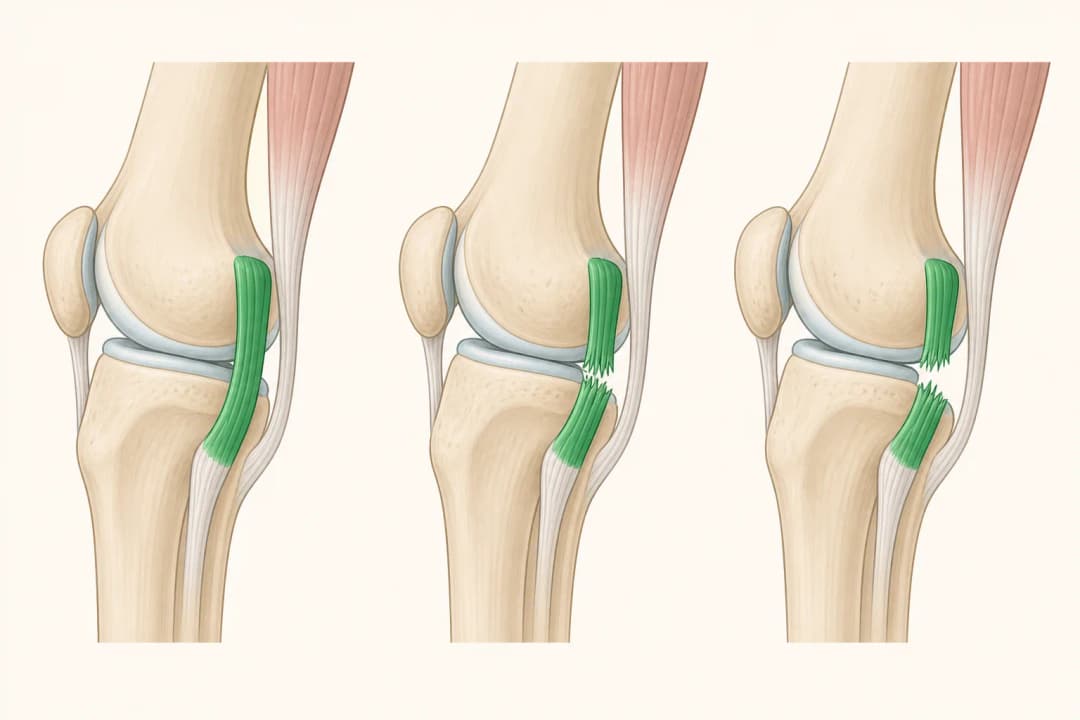
An MCL injury is a stretch or tear of the ligament supporting the inner side of the knee.
This answers one question. It is not a diagnosis and does not replace an assessment by a licensed doctor.
At a glance
- Location
- Inner side of the knee
- Common mechanism
- A force or twist stressing the knee inward
- Assessment focus
- Tenderness, stability and associated injuries
What an MCL injury means
The medial collateral ligament connects the thigh bone and shin bone along the inside of the knee. A force pushing the knee inward, a twist, or a sudden change of direction can strain it. A mild injury may leave the ligament intact, while a more substantial tear can cause inner-knee tenderness, swelling, bruising or a feeling that the knee gives way. A clinician checks the painful area and knee stability, and may use imaging when another injury is suspected.
What to do next
Reduce activities that involve cutting, pivoting or side-to-side force. Keep movement gentle within comfort, and follow the examination-based plan rather than testing the knee repeatedly. A hinged support may limit unwanted movement; learn more about [Knee Bracing](/treatments/non-surgical-orthopedics/knee-bracing/). Physiotherapy can restore motion, strength and balance in stages. A structured [Return-to-Sport Programme](/treatments/physiotherapy-and-rehabilitation/return-to-sport-programme/) helps assess readiness before demanding activity.
When to seek care
Arrange an assessment if pain, swelling or instability follows a knee impact or twist, especially when walking is difficult. Seek urgent care for a visibly deformed knee, inability to bear weight, a cold or numb foot, severe rapidly increasing swelling, or pain that is not settling.
Questions for your doctor
Ask which grade of ligament injury is suspected, whether the knee is stable, whether another structure needs checking, and which movements are safe now. Clarify when strengthening can begin and what signs should delay a return to sport.
Find care
General Clinics & Polyclinics in Abu Dhabi
That answer is general. If you want it applied to your own case, these are licensed general clinics & polyclinics listed in Abu Dhabi.
27 Ar Ruwwad St - Shakhbout City - MSH4 - Abu Dhabi - United Arab Emirates
Accepts: Daman, Thiqa, Cigna, MetLife +20 more
Al Ruwais, Al Dhafrah
Accepts: Daman, Thiqa, AXA, Cigna +16 more
Al Bahyah - Al Bahyah Old - Abu Dhabi - United Arab Emirates
Accepts: Daman, Thiqa, Cigna, Allianz Care +18 more
Abu Dhabi
Accepts: Daman, Thiqa, AXA, Cigna +27 more
Ordered by verification status and how complete each clinic's public record is, then alphabetically. This is a directory listing, not a ranking — Zavis does not rate or recommend providers.
A factual listing drawn from the DHA, DOH and MOHAP licence registers. It is not a referral, an endorsement, or advice that any of these providers is right for you.
Questions people ask
Can an MCL injury affect walking?
Yes. Pain, swelling or instability can make walking uncomfortable, and a clinician can advise whether temporary support is appropriate.
Does every MCL injury need surgery?
No. Many are managed with activity changes, support and progressive rehabilitation, while treatment depends on severity and associated damage.
Related
Related reading
Keep reading
Medical disclaimer. This page is general health information, not medical advice, and it cannot diagnose you. Always consult a licensed healthcare provider about your own symptoms and treatment. In an emergency in the UAE, call 998 for an ambulance.