
What Should You Know About Mature Sweaty Feet?
Short answer
Mature sweaty feet often reflect excessive sweating of the soles, but moisture, friction and skin changes can also allow fungal infection or irritation to develop.
This answers one question. It is not a diagnosis and does not replace an assessment by a licensed doctor.
At a glance
- Common area
- The soles and spaces between the toes
- Main concern
- Persistent moisture can cause friction, soft skin, odour, and irritation
- Treatment options
- Foot-care measures, antiperspirants, and clinician-guided iontophoresis
What sweaty feet can mean
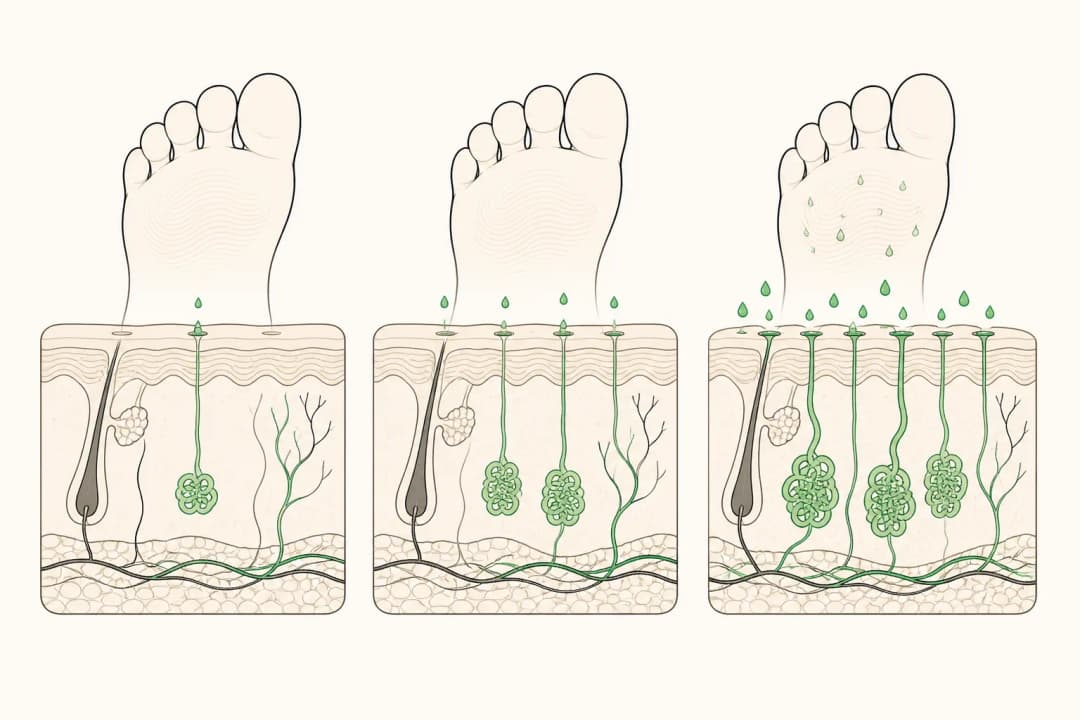
Sweating helps cool the body, yet the soles contain many sweat glands and may stay damp even when the rest of the body feels comfortable. Plantar hyperhidrosis describes sweating that is more persistent or disruptive than expected. It can make socks and shoes wet, soften the skin between the toes, and increase rubbing that leads to soreness or blisters.
Damp footwear can also create an environment where athlete’s foot develops. Itching, peeling, cracking, burning, or a rash between the toes points toward a skin condition rather than sweating alone. Odour is commonly related to moisture and microbes on the skin; it does not by itself identify the cause.
Read more about [Excessive Sweating](/symptoms/excessive-sweating/) and [Athlete's Foot](/conditions/athletes-foot/) to compare patterns and symptoms.
What you can do
Wash your feet regularly, dry carefully between the toes, and change socks when they become damp. Choose breathable footwear and alternate shoes so each pair can dry fully before it is worn again. Avoid sharing towels, socks, or shoes if there is peeling or a suspected fungal infection.
A pharmacist or dermatologist can help select an antiperspirant suitable for the soles. A prescription antiperspirant may be considered when non-prescription products do not control the sweating or the skin becomes irritated. Iontophoresis is another clinician-guided option that uses a mild electrical current through water to reduce sweating in the treated area. Treatment choice depends on your skin, medical history, and how much the sweating affects daily life.
See [Prescription Antiperspirant](/treatments/medical-dermatology/prescription-antiperspirant/) and [Iontophoresis](/treatments/laser-and-energy/iontophoresis/) for more detail.
When to seek care
Arrange a dermatology assessment if sweating continues despite careful foot care, interferes with work or sleep, or causes repeated skin breakdown. Seek prompt medical advice for spreading redness, warmth, swelling, pus, worsening pain, fever, or a wound that is not healing. People with diabetes, reduced sensation, poor circulation, or immune problems should have foot changes assessed early rather than treating cracks or sores themselves.
A clinician can examine the skin, check for athlete’s foot or another rash, and review medicines or health conditions that may contribute to new sweating. Sudden sweating that affects other body areas or occurs with dizziness, chest discomfort, breathlessness, or fainting needs urgent medical attention.
Questions for your doctor
Ask whether the pattern fits plantar hyperhidrosis or a skin infection, whether a prescription antiperspirant is appropriate for your skin, and how to prevent irritation between treatments. You can also ask how long to try a treatment before reviewing it, what symptoms would suggest athlete’s foot, and whether any medicine or health condition could be contributing to a recent change in sweating.
Find care
General Clinics & Polyclinics in Abu Dhabi
That answer is general. If you want it applied to your own case, these are licensed general clinics & polyclinics listed in Abu Dhabi.
27 Ar Ruwwad St - Shakhbout City - MSH4 - Abu Dhabi - United Arab Emirates
Accepts: Daman, Thiqa, Cigna, MetLife +20 more
Al Ruwais, Al Dhafrah
Accepts: Daman, Thiqa, AXA, Cigna +16 more
Al Bahyah - Al Bahyah Old - Abu Dhabi - United Arab Emirates
Accepts: Daman, Thiqa, Cigna, Allianz Care +18 more
Abu Dhabi
Accepts: Daman, Thiqa, AXA, Cigna +27 more
Ordered by verification status and how complete each clinic's public record is, then alphabetically. This is a directory listing, not a ranking — Zavis does not rate or recommend providers.
A factual listing drawn from the DHA, DOH and MOHAP licence registers. It is not a referral, an endorsement, or advice that any of these providers is right for you.
Questions people ask
Are sweaty feet always a fungal infection?
No. Sweating can occur without infection, although damp footwear may make athlete’s foot more likely. Itching, peeling, cracking, or a rash should be assessed if it does not settle with simple care.
Can sweaty feet be treated in adulthood?
Yes. Treatment can include drying and footwear changes, suitable antiperspirants, and clinician-guided options such as iontophoresis. A dermatologist can match the approach to your skin and symptoms.
When should sweaty feet be checked?
Arrange an assessment when sweating is persistent, disruptive, or associated with sores, pain, rash, or repeated skin breakdown. Seek prompt care for spreading redness, pus, fever, or a poorly healing wound.
Related
Related reading
Keep reading
Medical disclaimer. This page is general health information, not medical advice, and it cannot diagnose you. Always consult a licensed healthcare provider about your own symptoms and treatment. In an emergency in the UAE, call 998 for an ambulance.