
Management of Rhabdomyolysis
Short answer
Management of rhabdomyolysis requires prompt medical assessment, treatment of the cause, careful fluid management, and monitoring for kidney or electrolyte problems.
This answers one question. It is not a diagnosis and does not replace an assessment by a licensed doctor.
At a glance
- Main concern
- Muscle breakdown can affect kidney function and blood salts.
- Assessment
- Blood, urine, and symptom monitoring guide care.
What rhabdomyolysis means
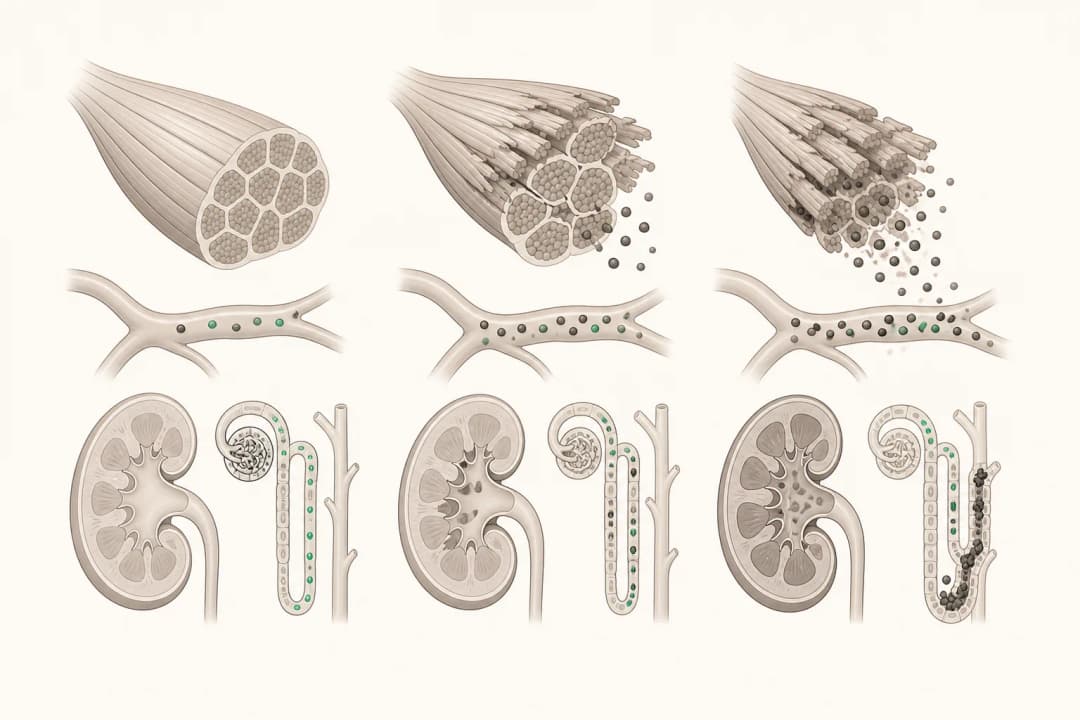
Rhabdomyolysis occurs when damaged muscle cells release their contents into the blood. It may follow unusually intense exercise, a crush injury, prolonged immobility, heat exposure, seizures, infection, or a medicine or substance. Muscle pain, weakness, swelling, and dark urine can occur, but symptoms vary. Tests commonly check muscle enzymes, kidney function, urine, and salts in the blood.
What treatment may involve
A clinician may give fluids through a vein when needed and repeat blood and urine tests to follow the response. Treatment also addresses the trigger: stopping a suspected medicine under medical direction, treating an injury or illness, correcting overheating, or managing exertional strain. Avoid strenuous exercise, alcohol, and unapproved supplements until a clinician explains when activity can resume. Do not force large amounts of fluid if you have heart or kidney disease without advice.
When to seek urgent care
Seek urgent medical care for severe muscle pain or weakness after exertion or injury, swelling that is rapidly increasing, urine that is much darker than usual or markedly reduced, vomiting, confusion, faintness, breathing difficulty, or a racing or irregular heartbeat. These signs can accompany dehydration, kidney stress, or changes in blood salts and should not be watched at home.
Questions for your doctor
Ask which trigger is suspected, which blood and urine results need repeating, how much activity and fluid are appropriate for you, whether any medicine or supplement should change, and which symptoms should send you back for immediate review.
Find care
General Clinics & Polyclinics in Abu Dhabi
That answer is general. If you want it applied to your own case, these are licensed general clinics & polyclinics listed in Abu Dhabi.
27 Ar Ruwwad St - Shakhbout City - MSH4 - Abu Dhabi - United Arab Emirates
Accepts: Daman, Thiqa, Cigna, MetLife +20 more
Al Ruwais, Al Dhafrah
Accepts: Daman, Thiqa, AXA, Cigna +16 more
Al Bahyah - Al Bahyah Old - Abu Dhabi - United Arab Emirates
Accepts: Daman, Thiqa, Cigna, Allianz Care +18 more
Abu Dhabi
Accepts: Daman, Thiqa, AXA, Cigna +27 more
Ordered by verification status and how complete each clinic's public record is, then alphabetically. This is a directory listing, not a ranking — Zavis does not rate or recommend providers.
A factual listing drawn from the DHA, DOH and MOHAP licence registers. It is not a referral, an endorsement, or advice that any of these providers is right for you.
Questions people ask
Can rhabdomyolysis be managed at home?
Some mild cases may be monitored outside hospital only after a clinician has assessed the results and arranged follow-up; suspected cases need prompt medical advice.
When can exercise restart?
Return to exercise should be gradual and individually cleared after symptoms and relevant tests have improved.
Related
Related reading
Keep reading
Medical disclaimer. This page is general health information, not medical advice, and it cannot diagnose you. Always consult a licensed healthcare provider about your own symptoms and treatment. In an emergency in the UAE, call 998 for an ambulance.