
What should you know about loyon cradle cap treatment?
Short answer
Loyon cradle cap treatment is intended to loosen and remove adherent scales gently, while the underlying scalp is monitored for irritation or another diagnosis.
This answers one question. It is not a diagnosis and does not replace an assessment by a licensed doctor.
At a glance
- Typical finding
- Greasy or dry scales on an infant's scalp
- Gentle rule
- Soften and lift scale; do not scrape or pick
- Review trigger
- Increasing redness, oozing, swelling, or an unwell baby
Understanding cradle cap
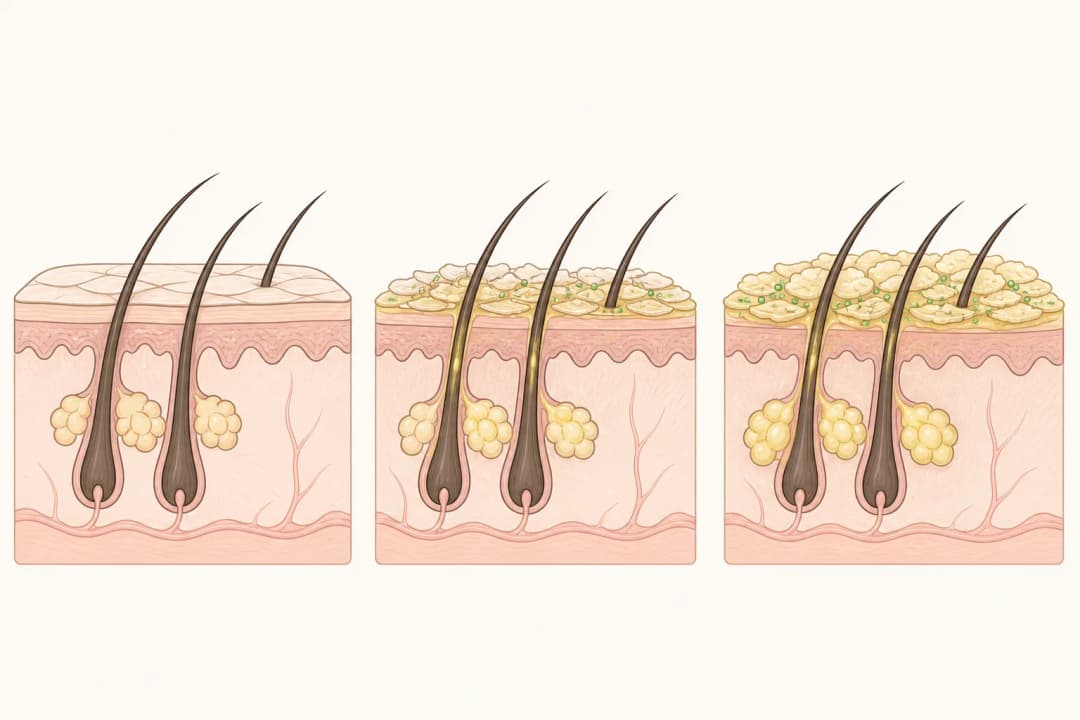
Cradle cap is infantile seborrheic dermatitis. It commonly causes greasy or dry yellowish scales on the scalp and may extend to the eyebrows or skin behind the ears. Babies are usually not distressed by it, and the condition is not a sign that the scalp is dirty. Scales can return after they are removed because the skin may continue to produce them for a while.
A product described for cradle-cap care may soften or loosen scale rather than treat every possible cause of a rash. Broken skin, marked redness, oozing, swelling, or a rash beyond typical areas deserves a clinician's assessment before continuing home treatment.
How to approach care
Follow the product instructions and use only a small amount on the intended scalp area. Do not pick scales with fingernails or scrape them forcefully. After softened scale lifts, wash gently with a baby-appropriate cleanser and use a soft brush only if the infant is comfortable. Keep product away from the eyes, mouth, and irritated or broken skin.
Simple moisturising care may help soften persistent scale; see Emollient Therapy for the wider approach. A clinician may consider Topical Antifungal Treatment when the appearance suggests a different or overlapping yeast-related problem. Do not apply medicated creams, essential oils, or adult scalp products without advice suited to the baby.
When to seek care
Contact a clinician if the scalp becomes increasingly red, sore, swollen, wet, crusted, or foul-smelling, or if the baby develops fever, poor feeding, unusual sleepiness, or a spreading rash. Seek urgent care for a baby who appears seriously unwell. Arrange review if gentle care does not help or if hair loss, bleeding, or thick plaques develop.
Questions for your doctor
Ask whether the rash fits cradle cap; whether this product is suitable for your baby's age and scalp condition; how long it should remain on the skin; what to do if irritation occurs; and whether another treatment is needed for redness, infection, or spread beyond the scalp.
Find care
General Clinics & Polyclinics in Abu Dhabi
That answer is general. If you want it applied to your own case, these are licensed general clinics & polyclinics listed in Abu Dhabi.
27 Ar Ruwwad St - Shakhbout City - MSH4 - Abu Dhabi - United Arab Emirates
Accepts: Daman, Thiqa, Cigna, MetLife +20 more
Al Ruwais, Al Dhafrah
Accepts: Daman, Thiqa, AXA, Cigna +16 more
Al Bahyah - Al Bahyah Old - Abu Dhabi - United Arab Emirates
Accepts: Daman, Thiqa, Cigna, Allianz Care +18 more
Abu Dhabi
Accepts: Daman, Thiqa, AXA, Cigna +27 more
Ordered by verification status and how complete each clinic's public record is, then alphabetically. This is a directory listing, not a ranking — Zavis does not rate or recommend providers.
A factual listing drawn from the DHA, DOH and MOHAP licence registers. It is not a referral, an endorsement, or advice that any of these providers is right for you.
Questions people ask
Does cradle cap mean a baby's scalp is dirty?
No. Cradle cap is a form of infantile seborrheic dermatitis and is not caused by poor hygiene.
Can I pick off the scales?
Avoid picking or scraping. Gentle softening, washing, and a soft brush can reduce loose scale without injuring the scalp.
Related
Related reading
Keep reading
Medical disclaimer. This page is general health information, not medical advice, and it cannot diagnose you. Always consult a licensed healthcare provider about your own symptoms and treatment. In an emergency in the UAE, call 998 for an ambulance.