
What should you know about loss of heterozygosity retinoblastoma?
Short answer
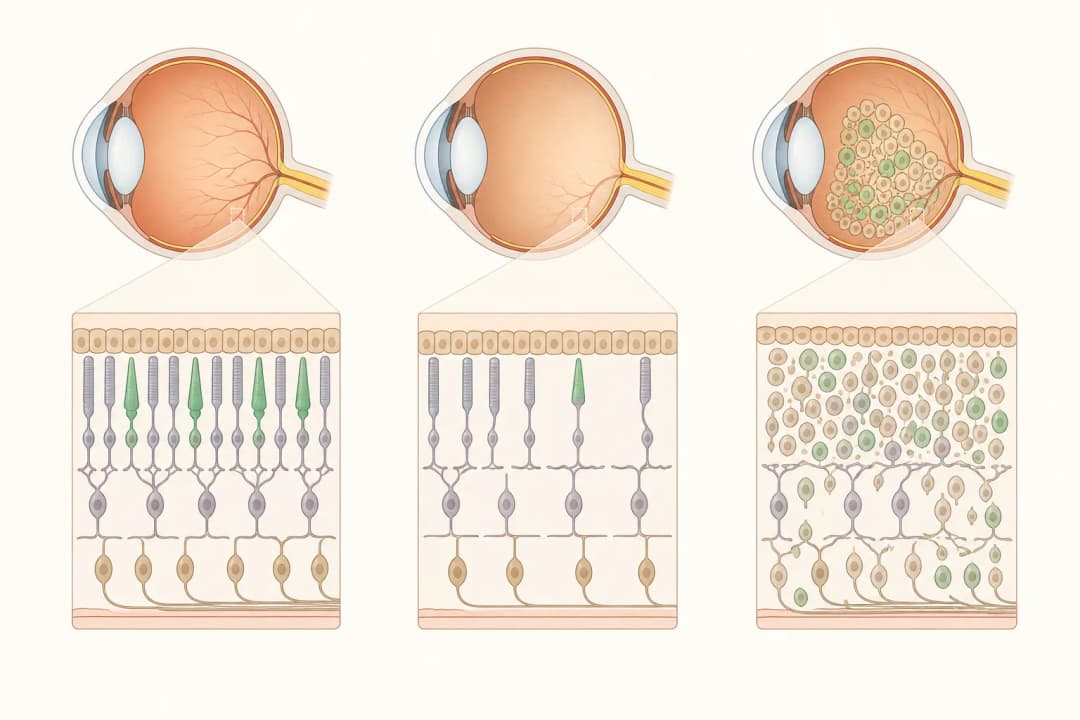
Loss of heterozygosity in retinoblastoma describes the loss of a working copy of a protective gene in retinal cells, which can allow tumour growth.
This answers one question. It is not a diagnosis and does not replace an assessment by a licensed doctor.
At a glance
- Main gene discussed
- RB1
- Affected area
- Developing retinal cells
What the term means
Retinoblastoma is linked to changes affecting the RB1 gene, a gene that helps control cell division. Loss of heterozygosity means that a cell has lost the remaining normal copy or activity of this gene after another change has already affected it. In the developing retina, this can remove an important growth control and contribute to a tumour. The finding is about tumour biology; it does not by itself describe a child’s symptoms, outlook, or treatment response.
What to do next
A paediatric ophthalmology or oncology team may combine eye examination, imaging, family history, and genetic testing. Ask whether testing is being performed on tumour tissue, blood, or both, because those results answer different questions. Care may aim to control the eye tumour while protecting vision where possible. Depending on the tumour’s position and treatment plan, options can include chemotherapy or carefully directed radiation such as brachytherapy.
When to seek care
Seek urgent medical advice for a child with a new white reflection in the pupil, a crossed or wandering eye, a painful red eye, swelling around the eye, or a sudden change in vision. These signs have several possible causes, but prompt assessment matters because retinoblastoma can progress within the eye. Follow the oncology team’s instructions promptly if fever, vomiting, marked pain, or a treatment-related concern develops.
Questions for your doctor
Ask what the loss-of-heterozygosity result means in this child’s tumour, whether RB1 testing is recommended for the child or relatives, and how the result affects eye-preserving treatment choices. You can also ask how vision will be monitored, which symptoms require same-day contact, and whether a genetics appointment would help your family understand inherited risk.
Questions people ask
Does loss of heterozygosity prove that a child has retinoblastoma?
It is a tumour-related genetic finding interpreted alongside examination and imaging; it is not a substitute for the full diagnosis.
Can this result affect family discussions?
Yes. The team may recommend genetic counselling or testing when the findings suggest a possible inherited RB1 change.
Related
Related reading
Keep reading
Cancer care in the UAE
Hospitals & Medical Centers in Abu Dhabi
Most UAE cancer care is delivered inside hospital services rather than by standalone oncology clinics, so these are licensed hospitals & medical centers listed in Abu Dhabi. Confirm the specific cancer service exists before you travel, and know that asking for a second opinion is routine.
Ahalia Hospital Musaffah Building - Musaffah - Musaffah Industrial - Abu Dhabi - United Arab Emirates
Accepts: Daman, Thiqa, AXA, Cigna +26 more
Al Ruwais Industrial City - Abu Dhabi - United Arab Emirates
Accepts: Daman, Thiqa, AXA, Cigna +30 more
Abu Dhabi, Abu Dhabi
Accepts: Daman, Thiqa, AXA, Cigna +30 more
Second opinions are routine in cancer care and asking for one does not affect your treatment. How to arrange a second opinion in the UAE.
Ordered by verification status and how complete each clinic's public record is, then alphabetically. This is a directory listing, not a ranking — Zavis does not rate or recommend providers.
A factual listing drawn from the DHA, DOH and MOHAP licence registers. It is not a referral, an endorsement, or advice that any of these providers is right for you.
Medical disclaimer. This page is general health information, not medical advice, and it cannot diagnose you. Always consult a licensed healthcare provider about your own symptoms and treatment. In an emergency in the UAE, call 998 for an ambulance.