
What should you know about long term effects of fetal growth restriction?
Short answer
Long-term effects of fetal growth restriction vary with its cause, severity, timing, and the baby’s health at birth; careful monitoring helps identify feeding, growth, or developmental needs early.
This answers one question. It is not a diagnosis and does not replace an assessment by a licensed doctor.
At a glance
- Follow-up
- Growth, fetal wellbeing, feeding, weight, and development may need review
- Factors that matter
- Cause, timing, severity, and health at birth
What the diagnosis means
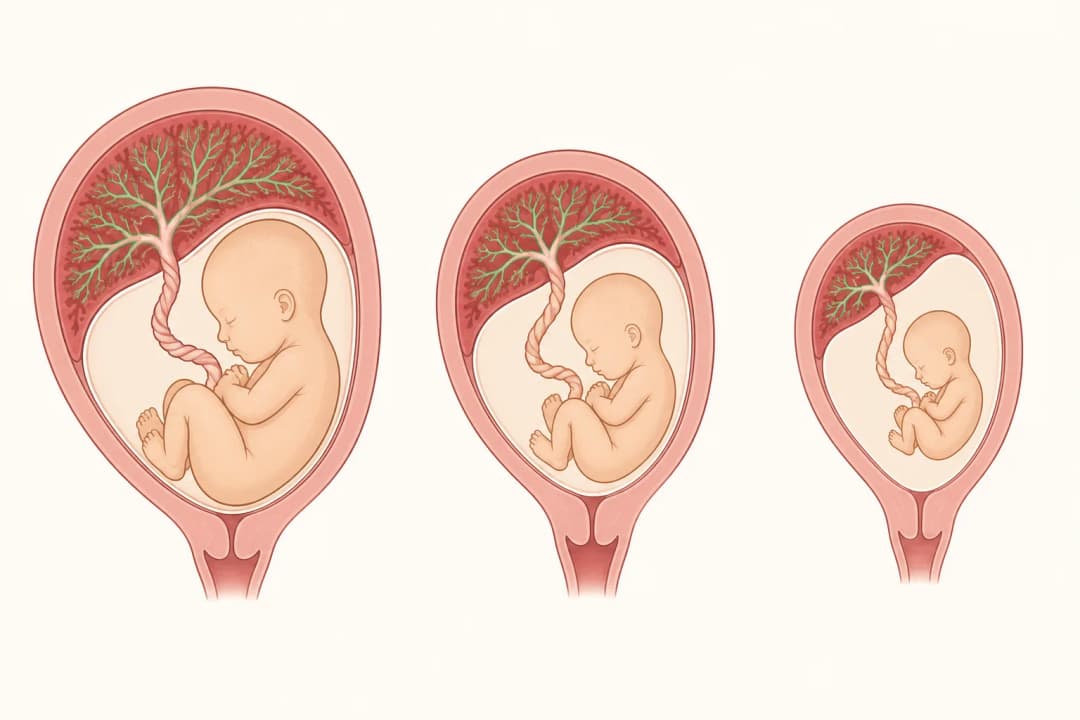
Fetal growth restriction means a baby is not growing as expected in the womb. It may relate to placental function, maternal health, infection, or other factors, and it is not the same as simply having a naturally small baby. Some babies catch up after birth, while others need support with temperature control, blood sugar, feeding, breathing, or growth.
The care team uses the overall picture rather than one measurement. A growth scan can follow size and fluid, while fetal heart monitoring can assess wellbeing. After birth, the baby’s weight, feeding, head growth, movement, hearing, vision, and development may be reviewed over time.
What to do next
Keep antenatal appointments and ask how often growth and wellbeing checks are needed. Follow advice about fetal movement and attend any recommended Growth Scan or Fetal Heart Monitoring visit. After birth, keep child-health reviews and mention feeding difficulty, poor weight gain, unusual sleepiness, or missed developmental skills.
When to seek care
During pregnancy, contact your maternity team urgently if fetal movements reduce or change, or if you have bleeding, fluid loss, regular painful contractions, severe headache, vision changes, or sudden swelling. After birth, seek prompt help for breathing difficulty, blue colour, marked lethargy, inability to feed, or fewer wet nappies.
Questions for your doctor
Ask what may have contributed to the restricted growth, what the scans and monitoring show, and whether delivery timing should change. Discuss whether induction of labour is suitable, what newborn checks are planned, and which growth or development signs should be followed at home.
Find care
General Clinics & Polyclinics in Abu Dhabi
That answer is general. If you want it applied to your own case, these are licensed general clinics & polyclinics listed in Abu Dhabi.
27 Ar Ruwwad St - Shakhbout City - MSH4 - Abu Dhabi - United Arab Emirates
Accepts: Daman, Thiqa, Cigna, MetLife +20 more
Al Ruwais, Al Dhafrah
Accepts: Daman, Thiqa, AXA, Cigna +16 more
Al Bahyah - Al Bahyah Old - Abu Dhabi - United Arab Emirates
Accepts: Daman, Thiqa, Cigna, Allianz Care +18 more
Abu Dhabi
Accepts: Daman, Thiqa, AXA, Cigna +27 more
Ordered by verification status and how complete each clinic's public record is, then alphabetically. This is a directory listing, not a ranking — Zavis does not rate or recommend providers.
A factual listing drawn from the DHA, DOH and MOHAP licence registers. It is not a referral, an endorsement, or advice that any of these providers is right for you.
Questions people ask
Will every baby with fetal growth restriction have long-term problems?
No. Outcomes differ widely. Some babies grow well after birth, while others benefit from extra feeding, growth, or developmental support.
Can a growth scan predict the future?
A scan estimates growth and checks wellbeing, but it cannot predict every later outcome. Your care team combines scan findings with pregnancy history and newborn assessments.
Related
Related reading
Keep reading
Medical disclaimer. This page is general health information, not medical advice, and it cannot diagnose you. Always consult a licensed healthcare provider about your own symptoms and treatment. In an emergency in the UAE, call 998 for an ambulance.