
What should you know about lithotripsy for kidney stones?
Short answer
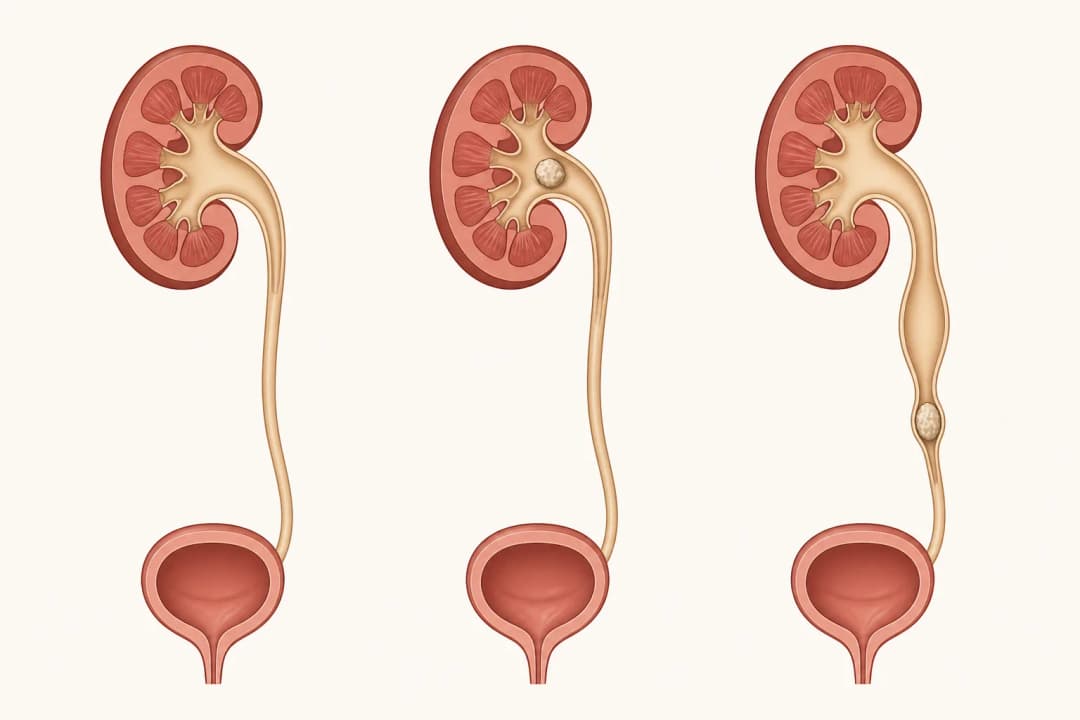
Lithotripsy breaks a kidney stone into smaller fragments so your body can pass them in urine.
This answers one question. It is not a diagnosis and does not replace an assessment by a licensed doctor.
At a glance
- Treatment aim
- Break the stone into passable fragments
- Possible sensations
- Cramping or discomfort while fragments pass
- Follow-up
- Ask when review or imaging is needed
What lithotripsy involves
A clinician first considers the stone's size, position and whether urine is flowing freely. During treatment, focused shock waves are directed from outside the body towards the stone. The fragments may leave over the following days, and some people notice blood in the urine, cramping or discomfort as they pass. Lithotripsy is not suitable for every stone; blockage, infection, pregnancy or certain medicines may change the plan.
Preparing and recovering
Ask how to take regular medicines before the appointment, especially blood-thinning medicines. Follow the team's instructions about eating, drinking and arranging transport if sedation is used. Afterward, drink fluids if your clinician says this is appropriate, use only recommended pain relief, and strain urine if asked so a fragment can be checked. A GP Consultation can help assess ongoing pain, while an Abdominal Ultrasound may be used to review the urinary system. Kidney Stones and Dehydration information can help with prevention advice.
When to seek urgent help
Seek urgent medical care for fever or chills, worsening flank or abdominal pain, repeated vomiting, inability to pass urine, faintness, or feeling suddenly very unwell. A stone with infection or blocked urine needs prompt assessment. Contact your treating team if bleeding becomes heavy, pain is not controlled by the advised medicine, or expected fragments do not pass. Painful Urination and Difficulty Passing Urine are useful symptoms to describe clearly.
Questions for your doctor
Ask where the stone is, why lithotripsy is recommended, what alternatives exist, which medicines need adjustment, how to collect fragments, and when follow-up imaging is planned.
Find care
General Clinics & Polyclinics in Abu Dhabi
That answer is general. If you want it applied to your own case, these are licensed general clinics & polyclinics listed in Abu Dhabi.
27 Ar Ruwwad St - Shakhbout City - MSH4 - Abu Dhabi - United Arab Emirates
Accepts: Daman, Thiqa, Cigna, MetLife +20 more
Al Ruwais, Al Dhafrah
Accepts: Daman, Thiqa, AXA, Cigna +16 more
Al Bahyah - Al Bahyah Old - Abu Dhabi - United Arab Emirates
Accepts: Daman, Thiqa, Cigna, Allianz Care +18 more
Abu Dhabi
Accepts: Daman, Thiqa, AXA, Cigna +27 more
Ordered by verification status and how complete each clinic's public record is, then alphabetically. This is a directory listing, not a ranking — Zavis does not rate or recommend providers.
A factual listing drawn from the DHA, DOH and MOHAP licence registers. It is not a referral, an endorsement, or advice that any of these providers is right for you.
Questions people ask
Will lithotripsy remove the stone immediately?
No. It breaks the stone, and fragments usually need to pass through urine afterward.
Can every kidney stone be treated with lithotripsy?
No. The stone's position, size, composition and your health affect the treatment choice.
Related
Related reading
Keep reading
Medical disclaimer. This page is general health information, not medical advice, and it cannot diagnose you. Always consult a licensed healthcare provider about your own symptoms and treatment. In an emergency in the UAE, call 998 for an ambulance.