
LCL and MCL injury
Short answer
An LCL or MCL injury damages a side ligament of the knee, so treatment depends on stability, associated injuries and safe gradual rehabilitation.
This answers one question. It is not a diagnosis and does not replace an assessment by a licensed doctor.
At a glance
- LCL
- Supports the outer side of the knee
- MCL
- Supports the inner side of the knee
- Rehabilitation
- Motion, strength, balance and staged loading
The short answer
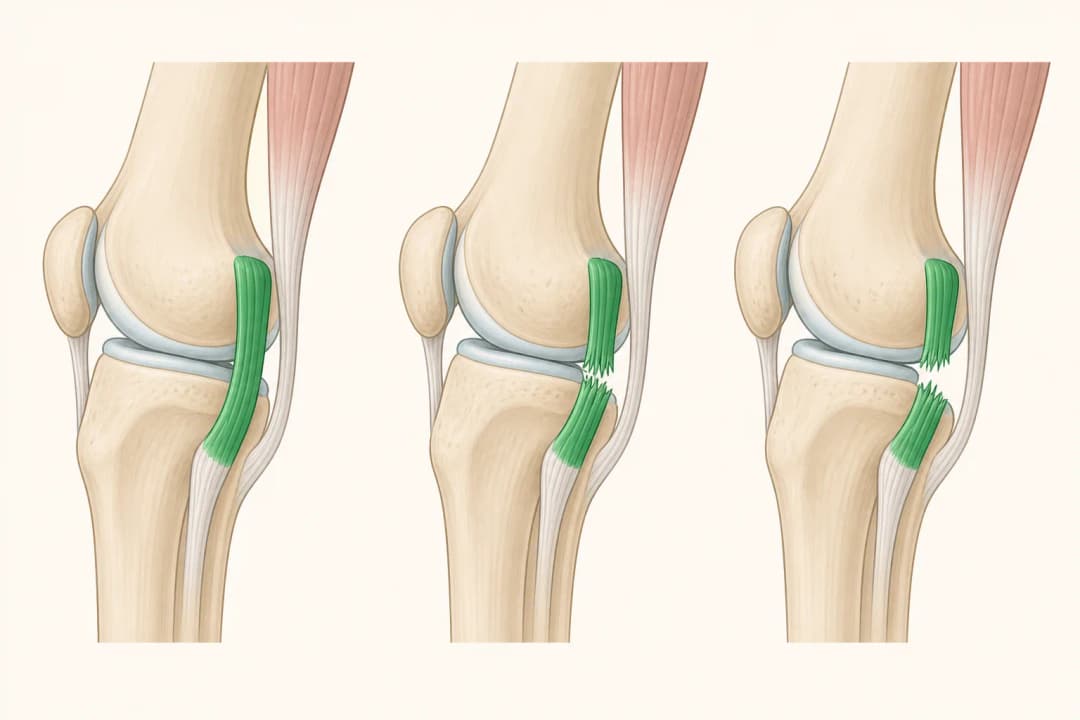
An LCL or MCL injury damages a side ligament of the knee, so treatment depends on stability, associated injuries and safe gradual rehabilitation. The LCL supports the outer side of the knee; the MCL supports the inner side.
How these injuries differ
A blow to the outside of the knee can stress the MCL, while force that pushes the knee outward or twists it can affect the LCL. Pain along the inner or outer joint line, swelling, tenderness and a feeling of giving way may occur. A clinician checks alignment, ligament stability, walking and the possibility of meniscus, bone or cruciate-ligament injury.
The label alone does not show how much the ligament is injured. Examination and, when appropriate, imaging help determine whether protection, supervised rehabilitation or specialist treatment is needed.
Supporting recovery
Reduce pivoting, cutting and contact activity while the knee is unstable or painful. Follow advice about weight-bearing, ice or compression, and use a brace only as directed; knee bracing can support protection but does not replace rehabilitation. Physiotherapy can restore knee motion, leg strength, balance and control. Increase activity in stages rather than testing the knee with a sudden match or hard run.
When to seek care
Have prompt assessment after a twisting injury with a pop, rapid swelling, marked instability or inability to bear weight. Seek urgent help if the foot becomes cold, pale, numb or weak, or if the knee is visibly deformed. Persistent locking, worsening swelling or pain that prevents sleep also warrants review before progressing activity.
Questions for your doctor
Ask which ligament is involved, whether the knee is stable, how much weight you may place through the leg, and which exercises are appropriate now. Discuss when driving, work, running and contact sport can resume, and whether a return-to-sport programme would make the progression safer.
Find care
General Clinics & Polyclinics in Abu Dhabi
That answer is general. If you want it applied to your own case, these are licensed general clinics & polyclinics listed in Abu Dhabi.
27 Ar Ruwwad St - Shakhbout City - MSH4 - Abu Dhabi - United Arab Emirates
Accepts: Daman, Thiqa, Cigna, MetLife +20 more
Al Ruwais, Al Dhafrah
Accepts: Daman, Thiqa, AXA, Cigna +16 more
Al Bahyah - Al Bahyah Old - Abu Dhabi - United Arab Emirates
Accepts: Daman, Thiqa, Cigna, Allianz Care +18 more
Abu Dhabi
Accepts: Daman, Thiqa, AXA, Cigna +27 more
Ordered by verification status and how complete each clinic's public record is, then alphabetically. This is a directory listing, not a ranking — Zavis does not rate or recommend providers.
A factual listing drawn from the DHA, DOH and MOHAP licence registers. It is not a referral, an endorsement, or advice that any of these providers is right for you.
Questions people ask
Does every LCL or MCL injury need surgery?
No. Management depends on stability, severity and other damaged structures; many injuries are managed with protection and rehabilitation.
Can I play sport in a knee brace?
Only after assessment confirms that the knee is ready. A brace may assist protection, but it cannot make an unstable knee safe for sport by itself.
Related
Related reading
Keep reading
Medical disclaimer. This page is general health information, not medical advice, and it cannot diagnose you. Always consult a licensed healthcare provider about your own symptoms and treatment. In an emergency in the UAE, call 998 for an ambulance.