
What should you know about latex irritant contact dermatitis?
Short answer
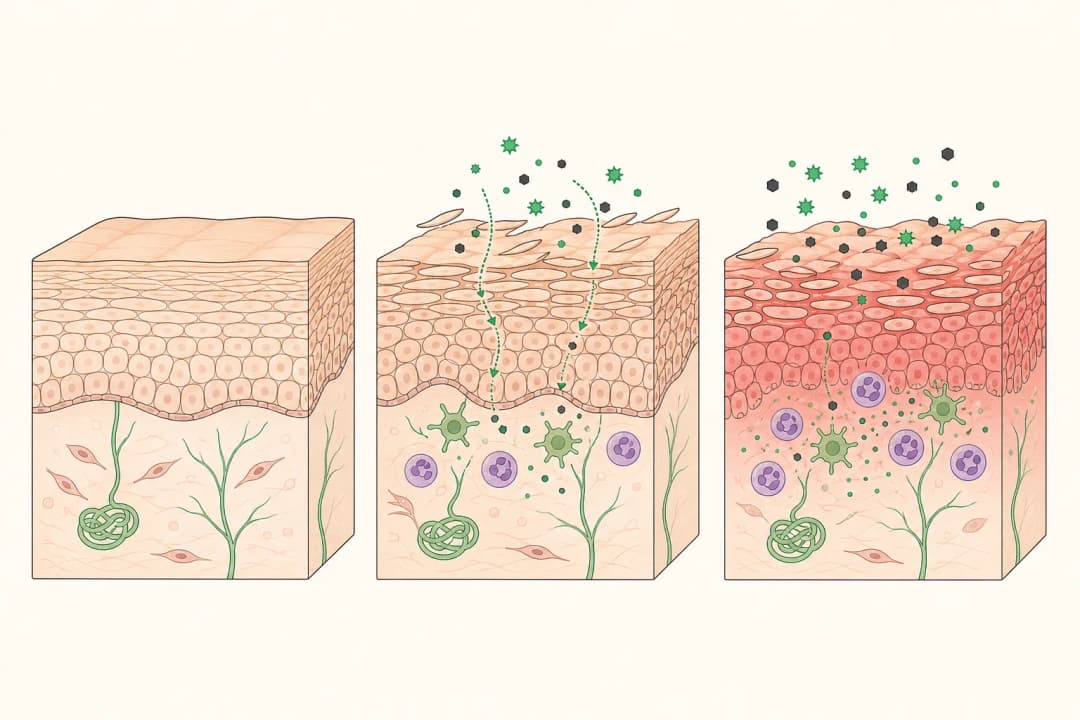
Latex irritant contact dermatitis is a non-contagious skin reaction caused by repeated or prolonged contact that damages the skin barrier, leading to redness, burning, dryness, cracking, or peeling.
This answers one question. It is not a diagnosis and does not replace an assessment by a licensed doctor.
At a glance
- Typical sensation
- Burning, soreness, dryness, cracking, and peeling can accompany the redness.
- First step
- Remove the suspected exposure and replace it with a latex-free option.
Irritation versus latex allergy
Irritant dermatitis can follow friction, sweat, occlusion, frequent handwashing, disinfectants, or direct contact with a glove or rubber product. Burning and soreness may be more prominent than itch, and the rash is often limited to exposed areas. [Peeling Skin](/symptoms/skin-peeling/) can occur as the barrier recovers.
Latex can also cause an allergic reaction, which is a different immune process. Rapid hives, facial swelling, wheezing, dizziness, or vomiting after exposure need urgent medical attention. A clinician may ask about timing, glove materials, workplace exposures, and whether symptoms occur under other products.
Reduce exposure and repair the barrier
Stop using the suspected product and tell your workplace or clinician that you need a latex-free alternative. Wash gently with lukewarm water, pat dry, and avoid fragranced soaps, scrubbing, and hot water. Keep nails short so scratching does not create broken skin.
Apply a bland moisturiser regularly, especially after washing. [Emollient Therapy](/treatments/medical-dermatology/emollient-therapy/) can reduce water loss while the barrier repairs. A clinician may prescribe [Topical Corticosteroids](/treatments/medical-dermatology/topical-corticosteroids/) for a limited period when inflammation is significant; use them exactly as directed.
When to seek care
Arrange medical review if the rash spreads, keeps returning despite avoiding the suspected product, develops cracks that do not heal, or shows pus, increasing warmth, or worsening pain. Persistent dermatitis may need patch testing or evaluation for another trigger.
Call emergency services for trouble breathing, throat tightness, faintness, widespread hives, or sudden swelling of the lips or tongue after latex exposure. These symptoms can signal a severe allergic reaction rather than simple irritation.
Questions for your doctor
Does this look like irritation, latex allergy, or another rash? Which products should I avoid, what glove material is suitable, and how should I use moisturiser or a prescribed steroid safely?
Find care
General Clinics & Polyclinics in Abu Dhabi
That answer is general. If you want it applied to your own case, these are licensed general clinics & polyclinics listed in Abu Dhabi.
27 Ar Ruwwad St - Shakhbout City - MSH4 - Abu Dhabi - United Arab Emirates
Accepts: Daman, Thiqa, Cigna, MetLife +20 more
Al Ruwais, Al Dhafrah
Accepts: Daman, Thiqa, AXA, Cigna +16 more
Al Bahyah - Al Bahyah Old - Abu Dhabi - United Arab Emirates
Accepts: Daman, Thiqa, Cigna, Allianz Care +18 more
Abu Dhabi
Accepts: Daman, Thiqa, AXA, Cigna +27 more
Ordered by verification status and how complete each clinic's public record is, then alphabetically. This is a directory listing, not a ranking — Zavis does not rate or recommend providers.
A factual listing drawn from the DHA, DOH and MOHAP licence registers. It is not a referral, an endorsement, or advice that any of these providers is right for you.
Questions people ask
Is irritant contact dermatitis contagious?
No. It results from skin-barrier damage and cannot spread from one person to another.
Can latex irritation become an allergy?
Irritation and allergy are different reactions, but repeated workplace symptoms deserve assessment so the cause and safe alternatives are clear.
Related
Related reading
Keep reading
Medical disclaimer. This page is general health information, not medical advice, and it cannot diagnose you. Always consult a licensed healthcare provider about your own symptoms and treatment. In an emergency in the UAE, call 998 for an ambulance.