
Side Effects of Laser Treatment for Xanthelasma
Short answer
Laser treatment for xanthelasma may cause redness, swelling, crusting or pigment and texture changes, so eyelid-area treatment requires careful planning and follow-up.
This answers one question. It is not a diagnosis and does not replace an assessment by a licensed doctor.
At a glance
- Common early effects
- Redness, swelling, tenderness or crusting
- Longer-lasting concerns
- Pigment, texture change or scarring
- Urgent symptom
- Vision change or significant eye pain
Possible treatment effects
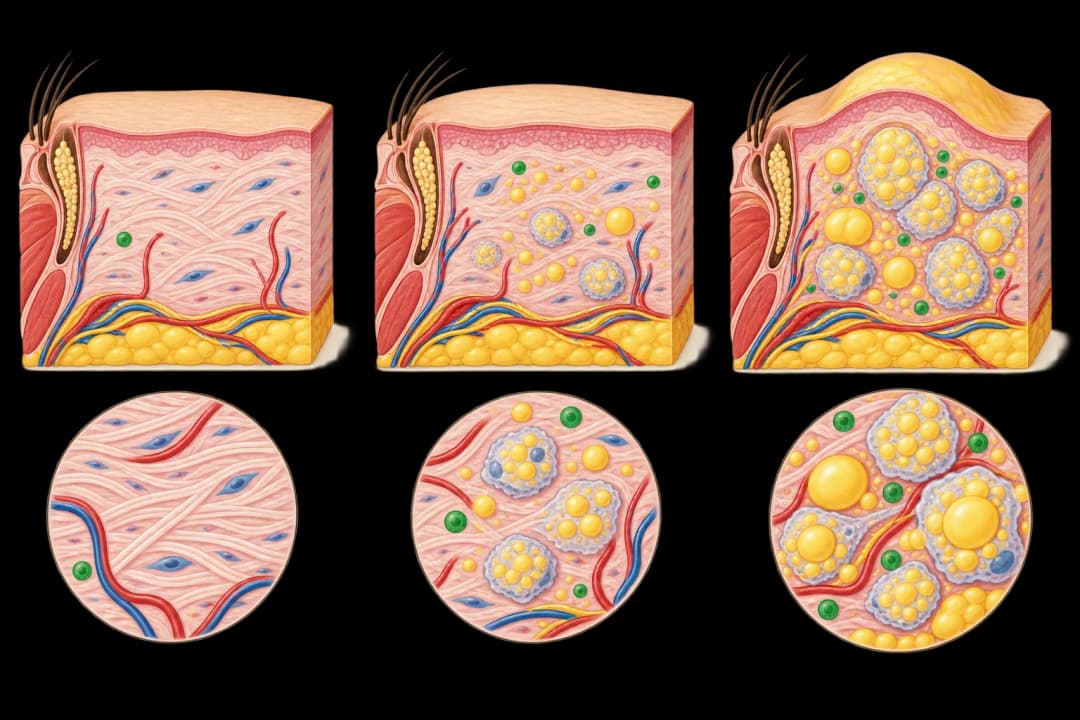
Xanthelasma is a yellowish deposit that commonly appears near the eyelids. A laser can remove or resurface the affected skin, but the eyelid area is thin and close to the eye. Expected short-term effects can include warmth, redness, swelling, tenderness, dryness and crusting. Temporary darkening or lightening may occur, and the treated surface can heal with a different texture or a scar. Rarely, treatment near the eye can injure the eye itself if protection and technique are inadequate.
Xanthelasma can recur after removal because the underlying tendency to form deposits may remain. A clinician may discuss medical evaluation alongside the cosmetic procedure.
Reducing irritation during healing
Use the prescribed ointment or cleanser exactly as directed, keep hands away from crusts and avoid applying unapproved cosmetics to the healing area. Protect the skin from sunlight after it has closed, because inflammation and ultraviolet exposure can worsen pigment change. Tell the clinician about contact lenses, eye disease, medicines and any history of raised scars. CO2 laser resurfacing and surgical excision are different approaches with different wound-care needs, so compare them before choosing.
Warning signs after treatment
Contact the treating clinician urgently for worsening eye pain, blurred or reduced vision, marked light sensitivity, difficulty closing the eyelid or swelling that is affecting the eye. Also seek advice if redness spreads, pain increases, pus appears or the wound opens. A new persistent lump, rapidly changing patch or recurrent deposit should be examined rather than treated repeatedly without reassessment.
Questions before treatment
Ask what type of laser will be used, how the eye will be shielded, what healing stages are expected and how pigment or scarring risk is handled for your skin tone. Discuss recurrence, follow-up and whether [CO2 Laser Resurfacing](/treatments/laser-and-energy/co2-laser-resurfacing/) or [Surgical Excision](/treatments/surgical-dermatology/excisional-surgery/) better matches the size and depth of the deposit.
Find care
General Clinics & Polyclinics in Abu Dhabi
That answer is general. If you want it applied to your own case, these are licensed general clinics & polyclinics listed in Abu Dhabi.
27 Ar Ruwwad St - Shakhbout City - MSH4 - Abu Dhabi - United Arab Emirates
Accepts: Daman, Thiqa, Cigna, MetLife +20 more
Al Ruwais, Al Dhafrah
Accepts: Daman, Thiqa, AXA, Cigna +16 more
Al Bahyah - Al Bahyah Old - Abu Dhabi - United Arab Emirates
Accepts: Daman, Thiqa, Cigna, Allianz Care +18 more
Abu Dhabi
Accepts: Daman, Thiqa, AXA, Cigna +27 more
Ordered by verification status and how complete each clinic's public record is, then alphabetically. This is a directory listing, not a ranking — Zavis does not rate or recommend providers.
A factual listing drawn from the DHA, DOH and MOHAP licence registers. It is not a referral, an endorsement, or advice that any of these providers is right for you.
Questions people ask
Is eyelid swelling after laser treatment always an emergency?
Mild swelling can be part of healing, but swelling with eye pain, vision change or difficulty closing the eyelid needs urgent clinical advice.
Can xanthelasma return after laser treatment?
Yes. Recurrence can occur, so follow-up and discussion of other contributing health factors may be appropriate.
Related
Related reading
Keep reading
Medical disclaimer. This page is general health information, not medical advice, and it cannot diagnose you. Always consult a licensed healthcare provider about your own symptoms and treatment. In an emergency in the UAE, call 998 for an ambulance.