
Laser treatment for kidney stones: what to know
Short answer
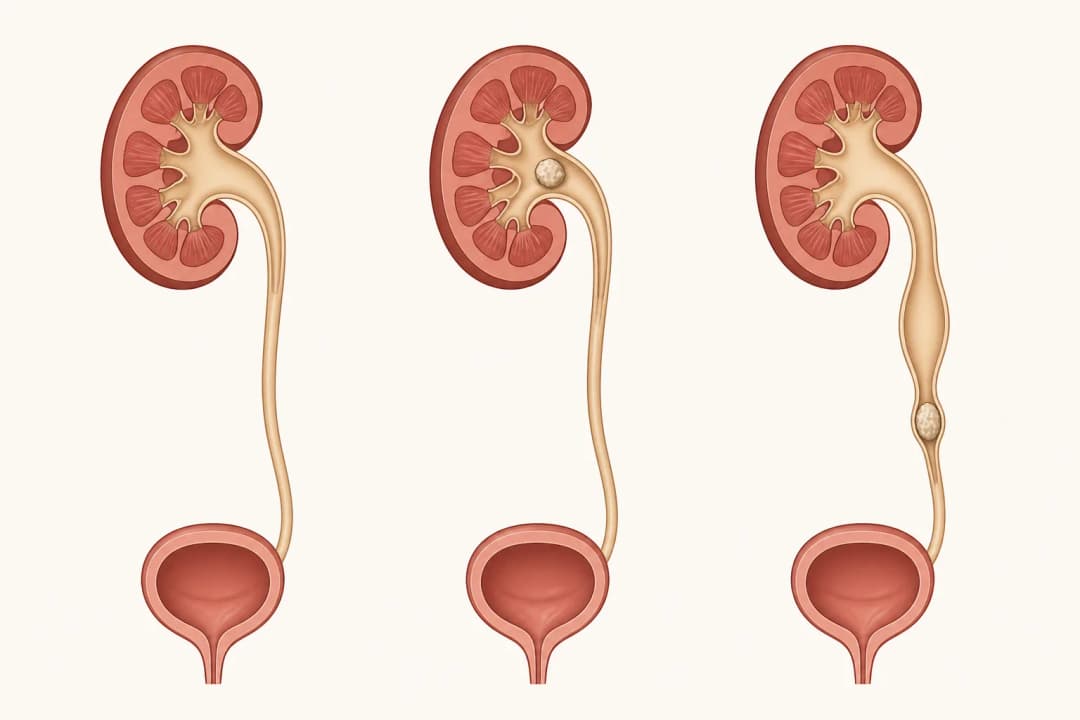
Laser treatment for kidney stones uses a fine laser through a urinary scope to break a stone into pieces that can be removed or passed.
This answers one question. It is not a diagnosis and does not replace an assessment by a licensed doctor.
At a glance
- Access
- A scope reaches the stone through the urinary passage.
- Possible after-effect
- A temporary stent may cause urgency or discomfort.
How the treatment works
A urologist usually passes a small scope through the urinary passage to reach the stone. Laser energy fragments the stone, and instruments or irrigation may help remove the pieces. The approach depends on the stone's size, position and hardness, as well as your urinary tract and general health. A temporary stent may be placed to support drainage while swelling settles; it can cause urinary urgency, discomfort or blood-tinged urine. Kidney stones can cause flank pain, abdominal pain, painful urination or difficulty passing urine, but symptoms vary.
Preparing and recovering
Your care team will explain fasting, medicines, anaesthesia and whether a stent is planned. Follow the discharge instructions, take prescribed medicines as directed and drink fluids if your clinician says this is suitable. Strain or collect stone fragments only if requested, because analysis can help guide prevention. Avoid strenuous activity until you are told it is safe. A GP Consultation can help coordinate assessment, while an Abdominal Ultrasound may be used to look for obstruction or monitor the urinary tract; it does not replace specialist planning in every case.
Warning signs after treatment
Seek urgent help for fever or chills with urinary symptoms, severe or worsening flank pain, repeated vomiting, inability to pass urine, heavy bleeding, fainting or breathing difficulty. Contact the treating team if pain is not controlled, a stent causes significant symptoms, or you are unsure whether a fragment has passed. Infection behind a blocked urinary tract can become serious, so fever with poor urine flow should not be watched at home. Dehydration can worsen weakness and urinary concentration; follow the fluid plan provided for you.
Questions before treatment
Ask why laser treatment is recommended, where the stone is, whether a stent is likely, how fragments will be checked, what activity and fluid advice applies, and who to contact if symptoms worsen.
Find care
General Clinics & Polyclinics in Abu Dhabi
That answer is general. If you want it applied to your own case, these are licensed general clinics & polyclinics listed in Abu Dhabi.
27 Ar Ruwwad St - Shakhbout City - MSH4 - Abu Dhabi - United Arab Emirates
Accepts: Daman, Thiqa, Cigna, MetLife +20 more
Al Ruwais, Al Dhafrah
Accepts: Daman, Thiqa, AXA, Cigna +16 more
Al Bahyah - Al Bahyah Old - Abu Dhabi - United Arab Emirates
Accepts: Daman, Thiqa, Cigna, Allianz Care +18 more
Abu Dhabi
Accepts: Daman, Thiqa, AXA, Cigna +27 more
Ordered by verification status and how complete each clinic's public record is, then alphabetically. This is a directory listing, not a ranking — Zavis does not rate or recommend providers.
A factual listing drawn from the DHA, DOH and MOHAP licence registers. It is not a referral, an endorsement, or advice that any of these providers is right for you.
Questions people ask
Does laser treatment remove every kidney stone?
It may be suitable for many stones, but the decision depends on size, location, composition, anatomy and your health. Your urologist will discuss alternatives.
Is blood in urine expected after laser stone treatment?
Some blood-tinged urine can occur after urinary instrumentation, but heavy bleeding, clots, worsening pain or inability to pass urine needs urgent advice.
Related
Related reading
Keep reading
Medical disclaimer. This page is general health information, not medical advice, and it cannot diagnose you. Always consult a licensed healthcare provider about your own symptoms and treatment. In an emergency in the UAE, call 998 for an ambulance.