
What should you know about labs in rhabdomyolysis?
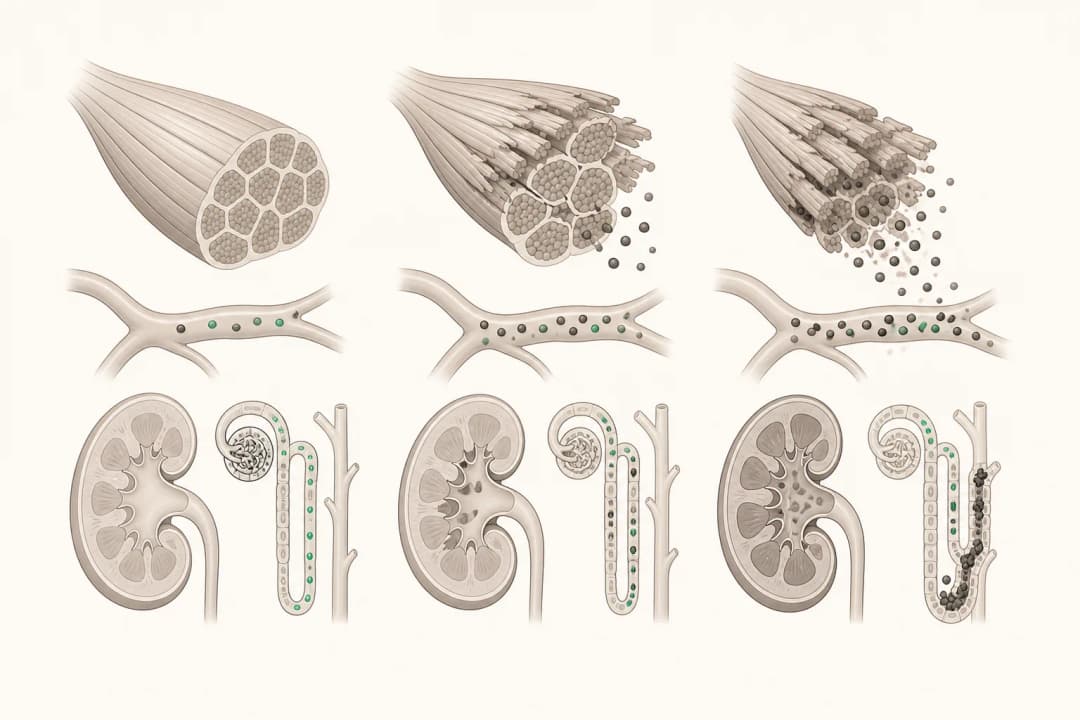
Short answer
Labs in rhabdomyolysis help measure muscle injury and detect kidney or electrolyte problems that may need prompt treatment.
This answers one question. It is not a diagnosis and does not replace an assessment by a licensed doctor.
At a glance
- Muscle marker
- CK is commonly followed over time.
- Safety checks
- Kidney function and electrolytes help guide monitoring.
- Urine
- Dark or reduced urine needs prompt attention.
Which tests may be included
A clinician may order CK to look for muscle-cell injury, along with blood tests for creatinine and other measures of kidney function. Electrolytes such as potassium, calcium, and phosphate can change when damaged muscle releases its contents. Urinalysis may suggest myoglobin in the urine, even though a routine dipstick does not identify every substance in the same way. The pattern matters more than one isolated number. Your clinician may repeat the panel to see whether muscle injury is settling or whether kidney and electrolyte concerns are emerging.
How to prepare and respond
Give a clear history of recent intense exercise, falls, compression, heat exposure, seizures, infection, medicines, and supplements. Tell the team about kidney disease or previous episodes of muscle breakdown. Avoid strenuous activity until you have medical guidance, and do not use leftover treatment or supplements to alter a result. If you are sent for repeat blood or urine tests, complete them on the schedule provided because changing results can affect decisions about fluids, monitoring, and discharge.
When to seek urgent care
Get urgent help for severe muscle pain or swelling, pronounced weakness, fainting, confusion, vomiting, dark urine, very little urine, or a racing or irregular heartbeat. New breathing difficulty or chest pain also needs emergency assessment. These symptoms may reflect complications of muscle breakdown or electrolyte disturbance and should not be judged by soreness alone.
Questions for your doctor
Which lab result is most concerning today? When should testing be repeated? Are my kidney function and electrolytes stable? What amount of fluid, rest, and activity is appropriate for me?
Find care
General Clinics & Polyclinics in Abu Dhabi
That answer is general. If you want it applied to your own case, these are licensed general clinics & polyclinics listed in Abu Dhabi.
27 Ar Ruwwad St - Shakhbout City - MSH4 - Abu Dhabi - United Arab Emirates
Accepts: Daman, Thiqa, Cigna, MetLife +20 more
Al Ruwais, Al Dhafrah
Accepts: Daman, Thiqa, AXA, Cigna +16 more
Al Bahyah - Al Bahyah Old - Abu Dhabi - United Arab Emirates
Accepts: Daman, Thiqa, Cigna, Allianz Care +18 more
Abu Dhabi
Accepts: Daman, Thiqa, AXA, Cigna +27 more
Ordered by verification status and how complete each clinic's public record is, then alphabetically. This is a directory listing, not a ranking — Zavis does not rate or recommend providers.
A factual listing drawn from the DHA, DOH and MOHAP licence registers. It is not a referral, an endorsement, or advice that any of these providers is right for you.
Questions people ask
Why are repeat labs sometimes needed?
Muscle injury and kidney effects can change after symptoms begin, so repeat testing may show whether the pattern is improving or needs closer treatment.
Can normal urine rule out rhabdomyolysis?
No. Urine findings are only one part of the assessment. Symptoms, CK, kidney function, electrolytes, and timing are considered together.
Related
Related reading
Keep reading
Medical disclaimer. This page is general health information, not medical advice, and it cannot diagnose you. Always consult a licensed healthcare provider about your own symptoms and treatment. In an emergency in the UAE, call 998 for an ambulance.