
What should you know about lab for rhabdomyolysis?
Short answer
Lab testing for rhabdomyolysis usually checks creatine kinase, kidney function, electrolytes, and urine for signs of muscle breakdown.
This answers one question. It is not a diagnosis and does not replace an assessment by a licensed doctor.
At a glance
- Key blood test
- Creatine kinase helps show muscle injury.
- Other checks
- Kidney function, electrolytes, and urine may be assessed.
- Activity
- Avoid intense exercise until a clinician advises otherwise.
What the lab results can mean
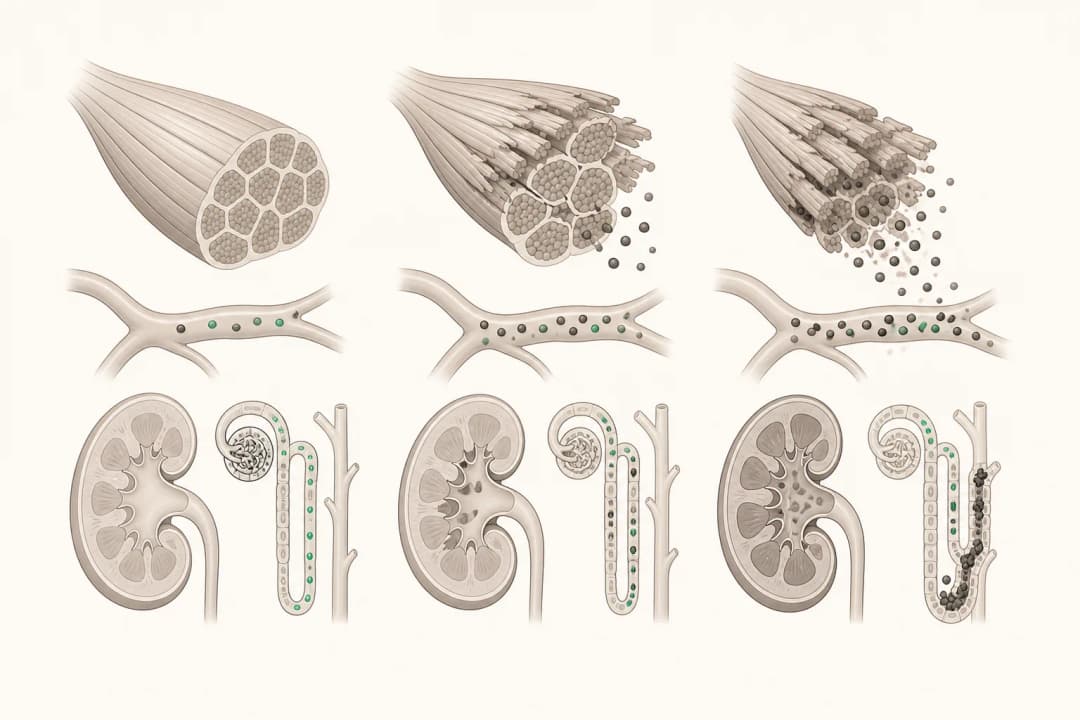
Creatine kinase, often called CK, is released when muscle fibres are injured and is a central test in this evaluation. Blood chemistry can show how the kidneys are handling waste and whether potassium or other electrolytes have shifted. A urine sample may contain myoglobin, a muscle protein that can darken urine and place stress on the kidneys. Results are interpreted with your symptoms, recent exercise, injury, heat exposure, medicines, and examination. A single result may not show the whole pattern, so a clinician may repeat testing to follow the direction of change.
What to do while being assessed
Tell the clinician when symptoms began and mention strenuous exercise, a crush injury, prolonged immobility, seizures, heat exposure, alcohol or drug use, and prescription or supplement changes. Do not return to intense training while muscle injury is being considered. Follow the fluid and activity advice you are given; treatment may require monitored fluids and observation when kidney or electrolyte problems are present. Muscle soreness after exercise can have several explanations, so testing is more useful than trying to judge the cause from soreness alone.
When to seek urgent care
Seek urgent medical assessment for severe or worsening muscle pain, marked weakness, swelling, very dark or reduced urine, vomiting, confusion, fainting, chest symptoms, or trouble breathing. These signs can accompany significant muscle breakdown or a disturbance in body chemistry. Do not wait for a routine appointment if symptoms are rapidly progressing or follow a major injury or heat illness.
Questions for your doctor
Which tests are being checked, and what result needs follow-up? Should kidney function or electrolytes be repeated? Which activities, medicines, and supplements should I pause? What urine changes or weakness should prompt immediate help?
Find care
General Clinics & Polyclinics in Abu Dhabi
That answer is general. If you want it applied to your own case, these are licensed general clinics & polyclinics listed in Abu Dhabi.
27 Ar Ruwwad St - Shakhbout City - MSH4 - Abu Dhabi - United Arab Emirates
Accepts: Daman, Thiqa, Cigna, MetLife +20 more
Al Ruwais, Al Dhafrah
Accepts: Daman, Thiqa, AXA, Cigna +16 more
Al Bahyah - Al Bahyah Old - Abu Dhabi - United Arab Emirates
Accepts: Daman, Thiqa, Cigna, Allianz Care +18 more
Abu Dhabi
Accepts: Daman, Thiqa, AXA, Cigna +27 more
Ordered by verification status and how complete each clinic's public record is, then alphabetically. This is a directory listing, not a ranking — Zavis does not rate or recommend providers.
A factual listing drawn from the DHA, DOH and MOHAP licence registers. It is not a referral, an endorsement, or advice that any of these providers is right for you.
Questions people ask
Is a CK test enough to diagnose rhabdomyolysis?
No. CK is important, but clinicians also consider symptoms, examination, urine findings, kidney function, electrolytes, and how results change over time.
Can muscle soreness after exercise be rhabdomyolysis?
Soreness alone has many possible causes. Severe pain, weakness, swelling, or dark or reduced urine needs prompt medical assessment rather than self-diagnosis.
Related
Related reading
Keep reading
Medical disclaimer. This page is general health information, not medical advice, and it cannot diagnose you. Always consult a licensed healthcare provider about your own symptoms and treatment. In an emergency in the UAE, call 998 for an ambulance.