
What should you know about Kveni ceramic bearings?
Short answer
Kveni ceramic bearings refer to ceramic bearing components discussed in joint replacement; their suitability depends on the implant design, bone, activity, and surgeon’s assessment.
This answers one question. It is not a diagnosis and does not replace an assessment by a licensed doctor.
At a glance
- Where it fits
- Inside an artificial joint as a moving surface
- What it does
- Allows controlled movement between implant parts
- Decision factors
- Anatomy, implant design, bone, and activity
What a ceramic bearing is
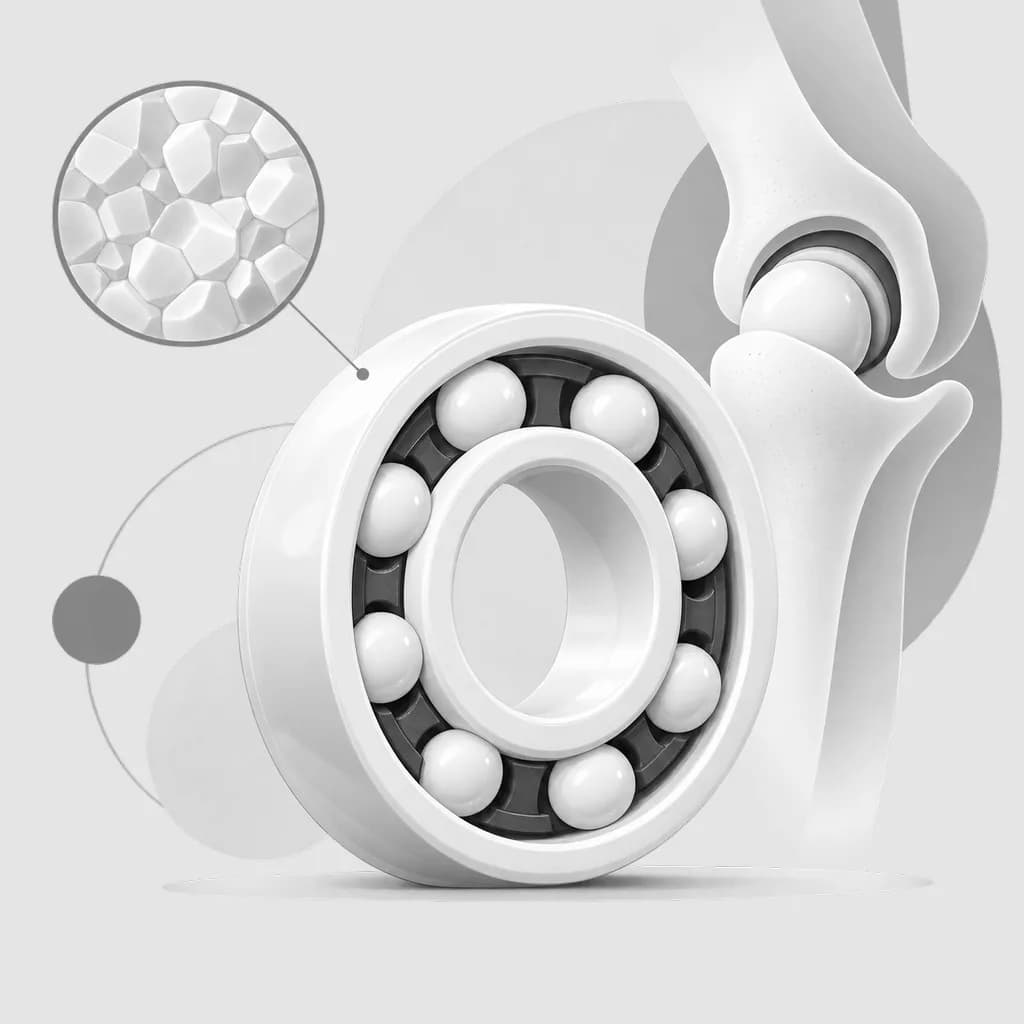
A bearing is the moving surface inside an artificial joint. In a hip replacement, a ceramic head may move inside a liner made from ceramic or another bearing material. The smooth surfaces are designed to permit controlled movement and limit material wear. The bearing is only one part of the reconstruction; the stem, socket shell, fixation, alignment, and surrounding muscles also affect how the hip functions.
The term Kveni may refer to a product name or a description used in a treatment discussion. Ask for the exact component name and its compatibility with the rest of the implant rather than relying on the label alone.
How to prepare for the discussion
Before total hip replacement, tell the surgical team about previous operations, allergies, medical conditions, and the activities you hope to resume. Ask what bearing couple is proposed, why it suits your anatomy, and how the parts will be fixed. After surgery, follow the movement precautions and rehabilitation plan provided for your approach and implant.
Physiotherapy typically works on safe transfers, walking, hip strength, balance, and a gradual return to daily tasks. Avoid changing activity suddenly simply because the bearing is described as durable.
When to seek care
After replacement, contact the care team for increasing wound drainage, redness, fever, new calf swelling, or pain that is worsening rather than settling. Seek urgent help for sudden breathlessness, chest pain, a fall with inability to bear weight, or a hip that appears out of place. New clicking with pain, instability, or loss of function also deserves review.
Questions to ask
Ask for the exact ceramic component, its matching liner, the reason it is recommended, expected activity restrictions, warning signs after surgery, and how follow-up will assess the whole implant rather than the bearing alone.
Find care
General Clinics & Polyclinics in Abu Dhabi
That answer is general. If you want it applied to your own case, these are licensed general clinics & polyclinics listed in Abu Dhabi.
27 Ar Ruwwad St - Shakhbout City - MSH4 - Abu Dhabi - United Arab Emirates
Accepts: Daman, Thiqa, Cigna, MetLife +20 more
Al Ruwais, Al Dhafrah
Accepts: Daman, Thiqa, AXA, Cigna +16 more
Al Bahyah - Al Bahyah Old - Abu Dhabi - United Arab Emirates
Accepts: Daman, Thiqa, Cigna, Allianz Care +18 more
Abu Dhabi
Accepts: Daman, Thiqa, AXA, Cigna +27 more
Ordered by verification status and how complete each clinic's public record is, then alphabetically. This is a directory listing, not a ranking — Zavis does not rate or recommend providers.
A factual listing drawn from the DHA, DOH and MOHAP licence registers. It is not a referral, an endorsement, or advice that any of these providers is right for you.
Questions people ask
Does a ceramic bearing replace the whole hip?
No. It is one bearing component within a total hip replacement, which also includes other parts that restore the joint structure.
Can every patient have a ceramic bearing?
Not necessarily. The surgeon considers anatomy, bone quality, implant compatibility, medical history, and activity goals.
Related
Related reading
Keep reading
Medical disclaimer. This page is general health information, not medical advice, and it cannot diagnose you. Always consult a licensed healthcare provider about your own symptoms and treatment. In an emergency in the UAE, call 998 for an ambulance.