
What should you know about keto and kidney stones?
Short answer
Keto may make hydration and urine chemistry harder to manage, so people with kidney stones should plan fluids carefully and seek advice for urinary or flank symptoms.
This answers one question. It is not a diagnosis and does not replace an assessment by a licensed doctor.
At a glance
- Key habit
- Keep fluid intake steady unless a clinician has given different advice.
- Symptoms to notice
- Flank pain, painful urination and difficulty passing urine.
Why keto can matter
Ketogenic eating often reduces carbohydrate-rich foods and may change fluid intake, especially during the first part of the diet. Concentrated urine can allow minerals to crystallise more readily. The balance of protein, salt, calcium and other foods can also influence the urine environment. Kidney stones have different compositions, so the helpful dietary approach is not identical for everyone.
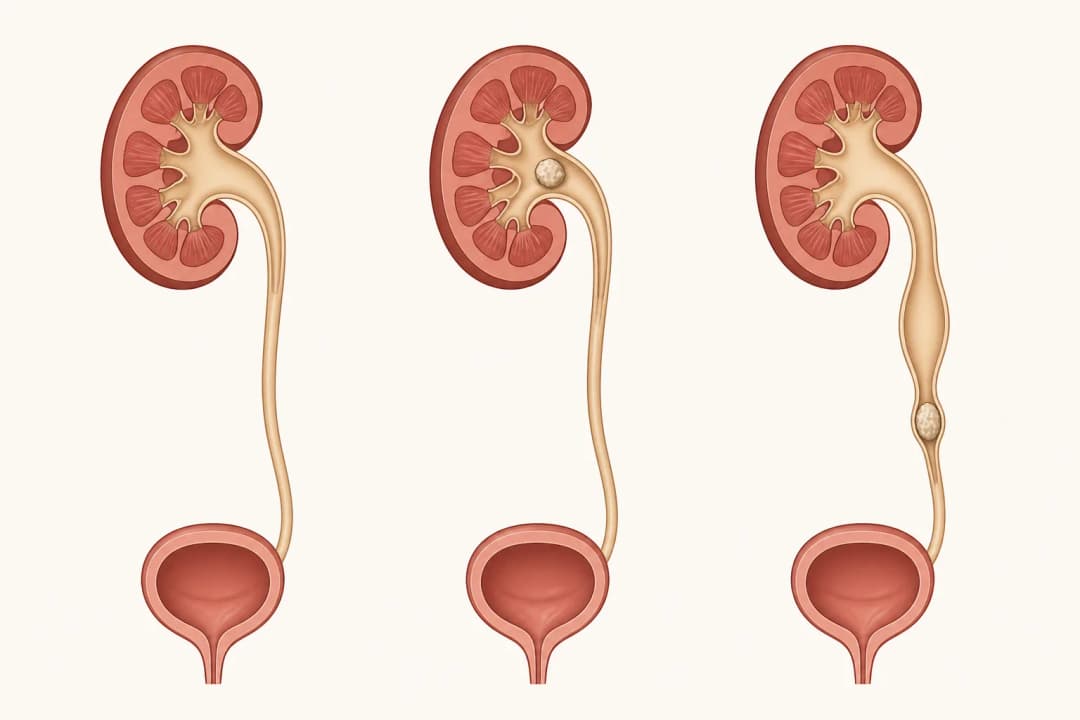
A stone may cause sharp pain in the flank or abdomen, pain that travels toward the groin, painful urination, blood in the urine or difficulty passing urine. Symptoms can overlap with infection, so do not assume that every pain is a stone.
Planning a safer approach
Before starting keto, tell your GP if you have had Kidney Stones, reduced kidney function, gout or repeated urinary problems. Ask how much fluid is appropriate for you; fluid advice may need adjustment if you have heart or kidney conditions. Avoid extreme fasting and very salty packaged foods, and choose a varied plan that can be maintained.
If symptoms begin, stop pushing through the diet and arrange a GP Consultation. An Abdominal Ultrasound may be considered when a clinician needs to assess the urinary tract or another cause of pain.
Warning signs
Get urgent care for severe or worsening flank or abdominal pain, fever or chills, repeated vomiting, inability to keep fluids down, difficulty passing urine, or painful urination with feeling unwell. A blocked urinary tract with infection can become serious.
Arrange prompt assessment for blood in urine, recurring pain or symptoms that do not settle after drinking normally. Do not use large amounts of fluid as a substitute for care if urine cannot pass.
Questions to take along
Ask what type of stone you have had, whether keto fits your kidney history, how to distribute fluids through the day, which foods to limit, and whether you need urine or blood tests. Ask how to recognise Dehydration and when imaging such as an Abdominal Ultrasound is appropriate.
Find care
General Clinics & Polyclinics in Abu Dhabi
That answer is general. If you want it applied to your own case, these are licensed general clinics & polyclinics listed in Abu Dhabi.
27 Ar Ruwwad St - Shakhbout City - MSH4 - Abu Dhabi - United Arab Emirates
Accepts: Daman, Thiqa, Cigna, MetLife +20 more
Al Ruwais, Al Dhafrah
Accepts: Daman, Thiqa, AXA, Cigna +16 more
Al Bahyah - Al Bahyah Old - Abu Dhabi - United Arab Emirates
Accepts: Daman, Thiqa, Cigna, Allianz Care +18 more
Abu Dhabi
Accepts: Daman, Thiqa, AXA, Cigna +27 more
Ordered by verification status and how complete each clinic's public record is, then alphabetically. This is a directory listing, not a ranking — Zavis does not rate or recommend providers.
A factual listing drawn from the DHA, DOH and MOHAP licence registers. It is not a referral, an endorsement, or advice that any of these providers is right for you.
Questions people ask
Can keto directly cause a kidney stone?
Keto may alter hydration and urine chemistry, but stone formation has several possible contributors and needs individual assessment.
Can I drink extra water to prevent a stone?
Ask a clinician what amount suits your health conditions; excessive fluid is not safe or useful when urine is blocked.
Related
Related reading
Keep reading
Medical disclaimer. This page is general health information, not medical advice, and it cannot diagnose you. Always consult a licensed healthcare provider about your own symptoms and treatment. In an emergency in the UAE, call 998 for an ambulance.