
What should you know about IV nutrient infusion therapy?
Short answer
IV nutrient infusion therapy delivers fluid and selected nutrients into a vein, but its value depends on a clear medical reason.
This answers one question. It is not a diagnosis and does not replace an assessment by a licensed doctor.
At a glance
- Delivery
- Fluid and nutrients enter a vein
- Good starting point
- A defined clinical purpose and history review
- Bring
- A complete list of medicines and supplements
How nutrient infusion works
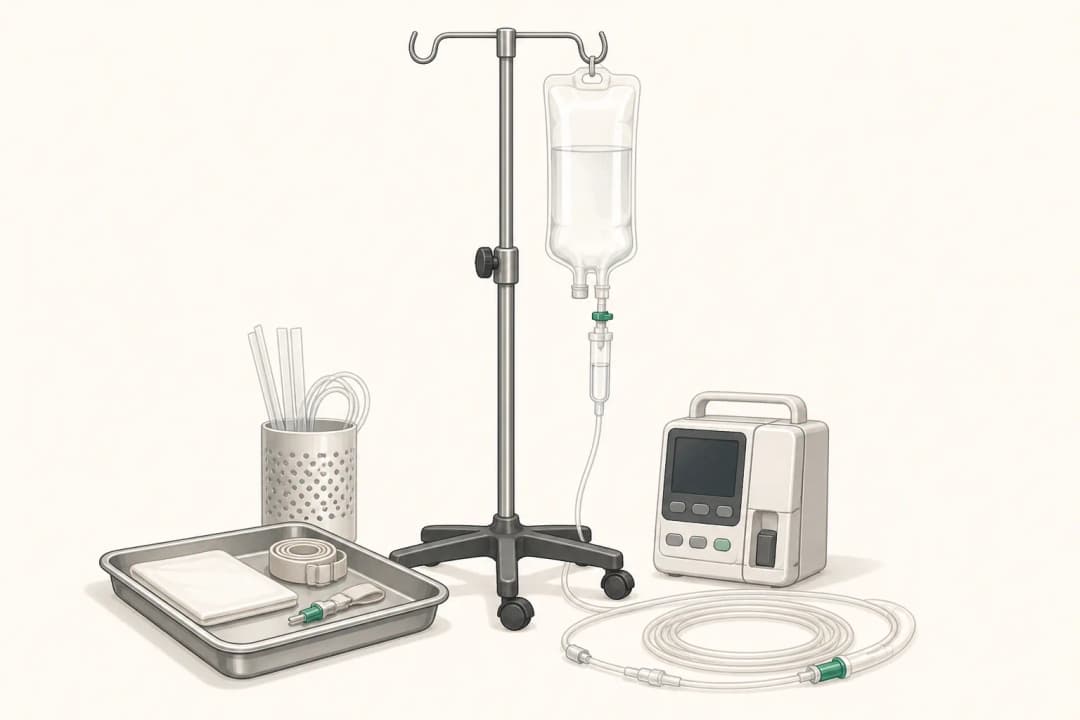
An IV nutrient infusion uses a cannula to deliver fluid and one or more added substances directly into a vein. This can be considered when a person cannot absorb or take a treatment by mouth, or when a clinician has identified a specific need. A menu of vitamins is not the same as a diagnosis, and more ingredients do not necessarily make a treatment more suitable.
Vitamin B12 and vitamin D have different roles and different treatment routes. A suspected [Vitamin D Deficiency](/conditions/vitamin-d-deficiency/) or [Vitamin B12 Deficiency](/conditions/vitamin-b12-deficiency/) should be assessed in context, including symptoms, examination, and relevant tests. A general infusion should not delay finding another cause of tiredness or weakness.
How to prepare
Request the written formula and ask who will review your medical history and test results. Mention kidney disease, heart disease, allergies, pregnancy, and every medicine or supplement you take. Check how the fluid will be monitored and what happens if you develop discomfort. If a deficiency needs treatment, a targeted option such as [Vitamin B12 Injection](/treatments/medical-management/vitamin-b12-injection/) may be discussed; the correct choice depends on the cause and absorption.
Warning signs
Tell the infusion clinician immediately if you develop itching, wheezing, dizziness, a racing heartbeat, or pain tracking up the arm. Get urgent help for breathing difficulty, facial swelling, fainting, severe chest pain, or sudden collapse. Afterward, seek medical advice for worsening pain, redness, warmth, or leakage at the cannula site, or for persistent vomiting or marked weakness.
Useful questions
Which nutrient or fluid is needed, and what evidence supports that choice? Could food, an oral supplement, or a targeted injection be enough? What are the relevant risks with my health conditions and medicines? How will you judge whether the treatment helped, and what follow-up is planned?
Find care
General Clinics & Polyclinics in Abu Dhabi
That answer is general. If you want it applied to your own case, these are licensed general clinics & polyclinics listed in Abu Dhabi.
27 Ar Ruwwad St - Shakhbout City - MSH4 - Abu Dhabi - United Arab Emirates
Accepts: Daman, Thiqa, Cigna, MetLife +20 more
Al Ruwais, Al Dhafrah
Accepts: Daman, Thiqa, AXA, Cigna +16 more
Al Bahyah - Al Bahyah Old - Abu Dhabi - United Arab Emirates
Accepts: Daman, Thiqa, Cigna, Allianz Care +18 more
Abu Dhabi
Accepts: Daman, Thiqa, AXA, Cigna +27 more
Ordered by verification status and how complete each clinic's public record is, then alphabetically. This is a directory listing, not a ranking — Zavis does not rate or recommend providers.
A factual listing drawn from the DHA, DOH and MOHAP licence registers. It is not a referral, an endorsement, or advice that any of these providers is right for you.
Questions people ask
Does an IV infusion replace testing?
No. Testing and assessment may be needed to identify a deficiency and rule out other explanations for symptoms.
What if I feel tired after an infusion?
Tiredness can arise from many conditions. If it persists, worsens, or affects daily activities, arrange a clinical assessment.
Related
Related reading
Keep reading
Medical disclaimer. This page is general health information, not medical advice, and it cannot diagnose you. Always consult a licensed healthcare provider about your own symptoms and treatment. In an emergency in the UAE, call 998 for an ambulance.