
What should you know about IV drip therapy for skin?
Short answer
IV drip therapy for skin may provide fluids and nutrients, but it is not a substitute for diagnosing or treating a specific skin problem.
This answers one question. It is not a diagnosis and does not replace an assessment by a licensed doctor.
At a glance
- Route
- Into a vein through a cannula
- Purpose
- Depends on the ingredients and clinical reason
- Key point
- A skin concern still needs a diagnosis
How a skin-focused drip works
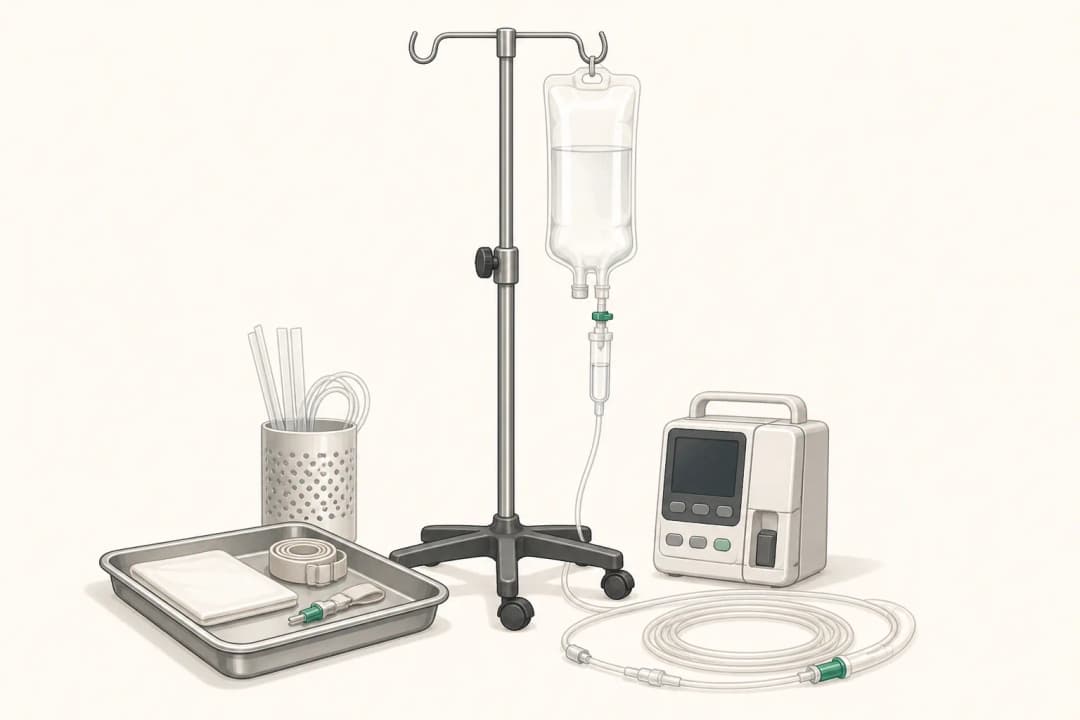
A cannula placed in a vein allows a prepared solution to enter the bloodstream. The contents vary by provider and may include fluids or vitamins. A drip does not automatically correct a deficiency, acne, eczema, pigmentation, or a wound. Skin changes can have many causes, so the useful first step is identifying what is happening rather than choosing a mixture by its marketing name.
A clinician should check your medicines, allergies, kidney and heart health, and any known deficiency before recommending intravenous nutrients. B12 deficiency and vitamin D deficiency have specific assessment and treatment pathways; a drip is not interchangeable with a prescribed Vitamin B12 Injection or Vitamin D Supplementation.
Before you book a drip
Ask for the complete ingredient list, the reason each ingredient is being offered, and who will assess you. Tell the clinician if you are pregnant, have kidney or heart disease, or have reacted to an infusion before. Confirm how the service handles sterile equipment, observation, and adverse reactions. If tiredness is your main concern, discuss Fatigue and possible causes rather than assuming a cosmetic infusion will address it.
When medical advice is needed
Seek urgent help during or after an infusion for trouble breathing, swelling of the lips or throat, fainting, severe chest discomfort, confusion, or rapidly worsening weakness. Contact a clinician about persistent rash, swelling, pain, new blisters, or a changing pigmented area; these findings need a skin assessment, not repeated drips.
Questions to ask
What skin problem are we treating, and what examination supports that plan? Which ingredients and doses are in the infusion? Could a tablet, topical treatment, or targeted injection be more suitable? How will we monitor for fluid or nutrient-related problems?
Find care
General Clinics & Polyclinics in Abu Dhabi
That answer is general. If you want it applied to your own case, these are licensed general clinics & polyclinics listed in Abu Dhabi.
27 Ar Ruwwad St - Shakhbout City - MSH4 - Abu Dhabi - United Arab Emirates
Accepts: Daman, Thiqa, Cigna, MetLife +20 more
Al Ruwais, Al Dhafrah
Accepts: Daman, Thiqa, AXA, Cigna +16 more
Al Bahyah - Al Bahyah Old - Abu Dhabi - United Arab Emirates
Accepts: Daman, Thiqa, Cigna, Allianz Care +18 more
Abu Dhabi
Accepts: Daman, Thiqa, AXA, Cigna +27 more
Ordered by verification status and how complete each clinic's public record is, then alphabetically. This is a directory listing, not a ranking — Zavis does not rate or recommend providers.
A factual listing drawn from the DHA, DOH and MOHAP licence registers. It is not a referral, an endorsement, or advice that any of these providers is right for you.
Questions people ask
Can an IV drip hydrate my skin?
It adds fluid to the bloodstream, but that does not guarantee a visible or lasting change in skin appearance.
Are vitamin drips suitable for everyone?
No. Medical history, medicines, allergies, kidney function, and heart health can affect whether an infusion is appropriate.
Related
Related reading
Keep reading
Medical disclaimer. This page is general health information, not medical advice, and it cannot diagnose you. Always consult a licensed healthcare provider about your own symptoms and treatment. In an emergency in the UAE, call 998 for an ambulance.