
What should you know about IUGR types?
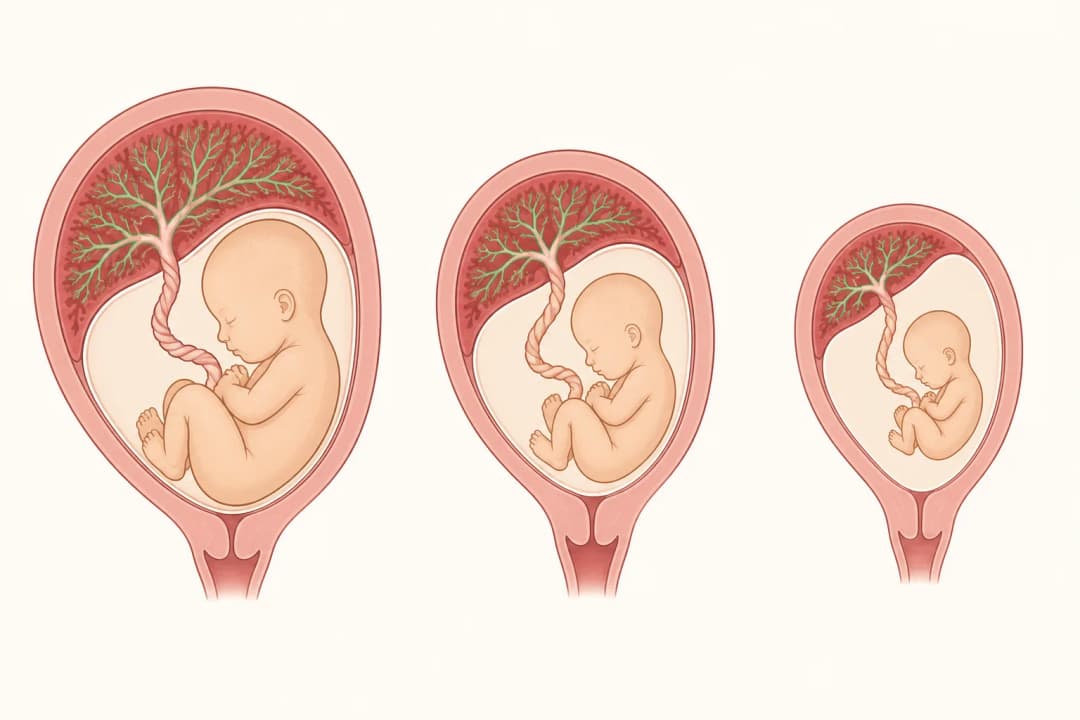
Short answer
Clinicians commonly describe fetal growth restriction by when it starts and how the baby's body measurements relate to one another. Earlier-onset restriction may affect several measurements and can be associated with placental or fetal concerns. Later-onset restriction may be subtler, with abdominal growth slowing while other measurements appear closer to expected. Some babies are small but healthy, so the label is interpreted with blood flow, fluid, growth over time and maternal health.
This answers one question. It is not a diagnosis and does not replace an assessment by a licensed doctor.
At a glance
- Patterns considered
- Timing, body proportions, growth trend and circulation
- Interpretation
- A small measurement is assessed with the full pregnancy picture
How patterns are distinguished
A scan may show a baby that is proportionately small, or a baby whose abdomen is smaller compared with the head. The report may use estimated weight, abdominal measurement, Doppler blood flow and amniotic fluid to describe concern. These patterns can overlap, and they are not a prediction of a baby's future health. Your maternity team may also review blood pressure, medical history, placental findings and the timing of the change.
How to respond to the classification
Ask which pattern the team sees and what evidence supports it. Attend repeat scans so clinicians can assess trajectory rather than one isolated measurement. Follow instructions for movement awareness and any home checks. A [Growth Scan](/treatments/pregnancy-and-birth-care/growth-scan/) can compare measurements, while [Fetal Heart Monitoring](/treatments/pregnancy-and-birth-care/fetal-heart-monitoring/) can assess wellbeing at a particular visit.
When not to wait for review
Seek prompt maternity advice if fetal movements reduce or change, or if you develop bleeding, fluid leakage, regular contractions or severe abdominal pain. Severe headache, visual symptoms or feeling suddenly unwell also warrant urgent assessment. The type of growth restriction does not make these warning signs safe to watch at home.
Questions about the type
Ask whether the finding is early or later in pregnancy, whether growth is proportionate, and whether blood flow or fluid is affected. Ask what will be repeated, which result would change the schedule, and how birth might be planned. You can ask whether [Induction of Labour](/treatments/pregnancy-and-birth-care/induction-of-labour/) is relevant and what alternatives would be considered.
Find care
General Clinics & Polyclinics in Abu Dhabi
That answer is general. If you want it applied to your own case, these are licensed general clinics & polyclinics listed in Abu Dhabi.
27 Ar Ruwwad St - Shakhbout City - MSH4 - Abu Dhabi - United Arab Emirates
Accepts: Daman, Thiqa, Cigna, MetLife +20 more
Al Ruwais, Al Dhafrah
Accepts: Daman, Thiqa, AXA, Cigna +16 more
Al Bahyah - Al Bahyah Old - Abu Dhabi - United Arab Emirates
Accepts: Daman, Thiqa, Cigna, Allianz Care +18 more
Abu Dhabi
Accepts: Daman, Thiqa, AXA, Cigna +27 more
Ordered by verification status and how complete each clinic's public record is, then alphabetically. This is a directory listing, not a ranking — Zavis does not rate or recommend providers.
A factual listing drawn from the DHA, DOH and MOHAP licence registers. It is not a referral, an endorsement, or advice that any of these providers is right for you.
Questions people ask
Is a constitutionally small baby the same as IUGR?
No. Some babies are small while remaining well; clinicians use growth trend and wellbeing findings to distinguish this from restriction.
What does asymmetric growth mean?
It usually describes different relative growth of body areas, such as a smaller abdomen compared with the head, and needs clinical interpretation.
Related
Related reading
Keep reading
Medical disclaimer. This page is general health information, not medical advice, and it cannot diagnose you. Always consult a licensed healthcare provider about your own symptoms and treatment. In an emergency in the UAE, call 998 for an ambulance.