
IUGR at 33 weeks: what should you know?
Short answer
IUGR at 33 weeks needs personalised monitoring because growth, blood flow and fetal wellbeing guide the plan for the rest of pregnancy.
This answers one question. It is not a diagnosis and does not replace an assessment by a licensed doctor.
At a glance
- Term used
- Fetal growth restriction (IUGR)
- Timing
- Identified at 33 weeks of pregnancy
- Key checks
- Growth, blood flow, fluid and fetal wellbeing
What IUGR at 33 weeks means
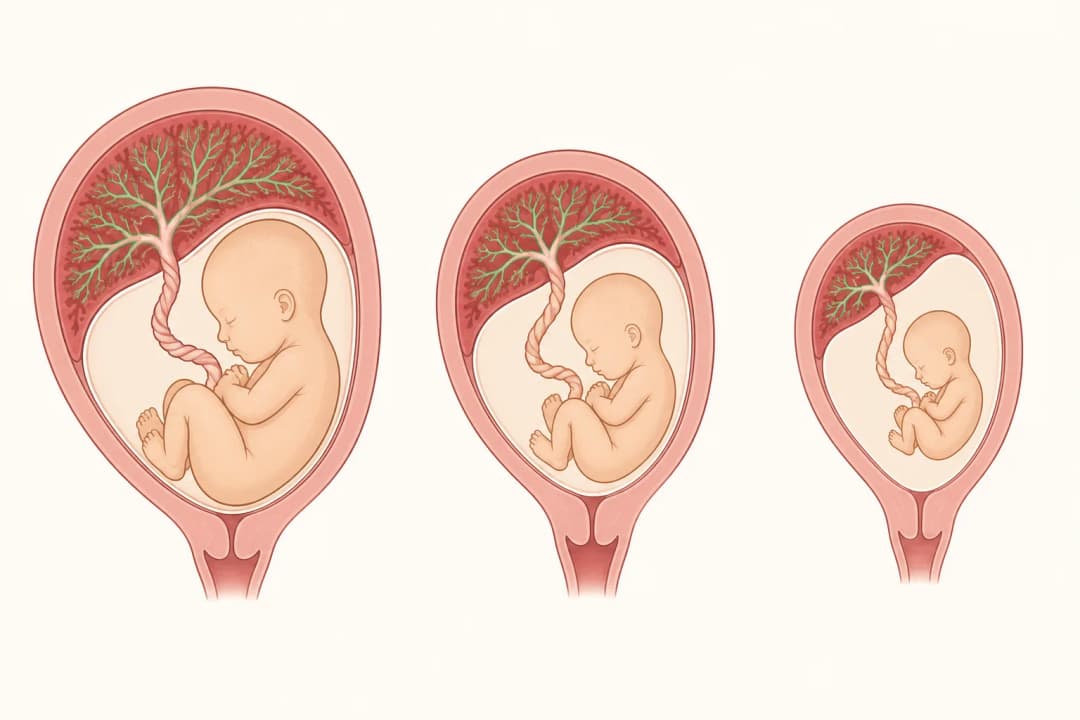
Fetal growth restriction, also called IUGR, describes a baby that measures smaller than expected for the stage of pregnancy or has slowed growth. An ultrasound estimate is not a direct weighing of the baby, so clinicians interpret it alongside earlier scans, placenta-related blood-flow measurements, amniotic fluid and the baby’s movements. Some babies are constitutionally small and healthy; others need closer observation because the placenta may not be delivering enough oxygen and nutrients. The finding does not by itself predict when birth will happen.
What usually happens next
Your maternity team may arrange repeat growth scans, Doppler measurements and fetal heart monitoring. Keep every appointment and follow the personal advice you receive about movement awareness, medicines and activity. A growth scan can compare measurements over time, while fetal heart monitoring checks the baby’s current response. Ask how often each check is planned and what result would change the timing or mode of birth. Do not start supplements or restrict activity because of an IUGR label unless your clinician recommends it.
When to seek urgent care
Contact your maternity unit promptly if your baby’s movements are reduced or noticeably different, or if you have vaginal bleeding, leaking fluid, regular painful contractions, severe abdominal pain, a severe headache, vision changes or sudden swelling. These symptoms need assessment for their own warning signs; they are not proof that IUGR caused them. If you feel unwell or cannot reach your usual team, use local urgent maternity services.
Questions for your doctor
Ask: How were the growth measurements and blood-flow results interpreted? Is the baby’s size changing as expected between scans? Which movements or symptoms should prompt an immediate call? What monitoring is planned, and what findings would lead to delivery? Would fetal heart monitoring, a growth scan or induction of labour be discussed in my situation?
Find care
General Clinics & Polyclinics in Abu Dhabi
That answer is general. If you want it applied to your own case, these are licensed general clinics & polyclinics listed in Abu Dhabi.
27 Ar Ruwwad St - Shakhbout City - MSH4 - Abu Dhabi - United Arab Emirates
Accepts: Daman, Thiqa, Cigna, MetLife +20 more
Al Ruwais, Al Dhafrah
Accepts: Daman, Thiqa, AXA, Cigna +16 more
Al Bahyah - Al Bahyah Old - Abu Dhabi - United Arab Emirates
Accepts: Daman, Thiqa, Cigna, Allianz Care +18 more
Abu Dhabi
Accepts: Daman, Thiqa, AXA, Cigna +27 more
Ordered by verification status and how complete each clinic's public record is, then alphabetically. This is a directory listing, not a ranking — Zavis does not rate or recommend providers.
A factual listing drawn from the DHA, DOH and MOHAP licence registers. It is not a referral, an endorsement, or advice that any of these providers is right for you.
Questions people ask
Does IUGR at 33 weeks always mean early birth?
No. The timing depends on growth trends, blood flow, fetal monitoring, fluid levels, movements and your overall health.
Can an ultrasound confirm the baby’s exact weight?
No. Ultrasound provides an estimate, which is interpreted with other findings and scans over time.
Related
Related reading
Keep reading
Medical disclaimer. This page is general health information, not medical advice, and it cannot diagnose you. Always consult a licensed healthcare provider about your own symptoms and treatment. In an emergency in the UAE, call 998 for an ambulance.