
Is rhabdomyolysis safe in CrossFit athletes?
Short answer
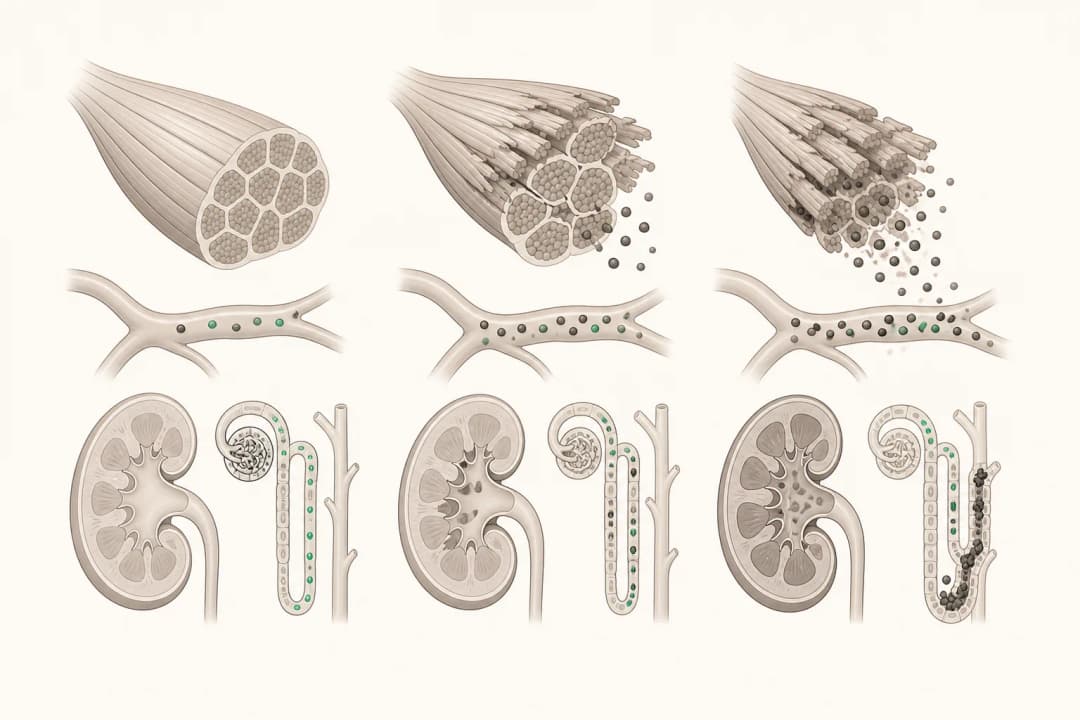
Rhabdomyolysis is not considered safe in CrossFit athletes because rapid muscle breakdown can affect kidney function and body chemistry.
This answers one question. It is not a diagnosis and does not replace an assessment by a licensed doctor.
At a glance
- Training response
- Rhabdomyolysis is a medical problem, not a normal fitness milestone
- Assessment
- Muscle, kidney, blood and urine checks may be needed
What this means
Rhabdomyolysis happens when damaged muscle releases substances into the bloodstream. It can follow unusually intense exercise, especially when training load rises quickly, recovery is limited, heat is significant or hydration is inadequate. Severe muscle soreness alone cannot confirm or exclude it.
Warning features can include muscle pain or swelling that feels out of proportion, marked weakness, reduced urine or urine that looks unusually dark. Blood tests and kidney assessment are used to judge the problem; waiting for symptoms to settle can be unsafe.
What to do now
Stop strenuous exercise and contact a clinician urgently if rhabdomyolysis is suspected. Do not attempt to train through profound soreness or weakness. A clinician may check muscle enzymes, kidney function, salts and urine, then guide fluids and observation. Return to CrossFit only after medical clearance and a gradual plan that accounts for the trigger, heat, recovery and conditioning.
When to seek care
Seek same-day medical assessment for severe muscle pain, swelling, weakness, dark urine or much less urine after a demanding workout. Go to emergency care for confusion, fainting, chest symptoms, severe vomiting, inability to drink or rapidly worsening weakness. These signs can indicate complications requiring monitoring and treatment.
Questions for your doctor
Ask which tests are needed, whether kidney function and salts are affected, how much activity is safe during recovery, and when repeat testing is appropriate. Discuss training volume, heat exposure, rest, hydration and any supplements or medicines that could influence risk.
Find care
General Clinics & Polyclinics in Abu Dhabi
That answer is general. If you want it applied to your own case, these are licensed general clinics & polyclinics listed in Abu Dhabi.
27 Ar Ruwwad St - Shakhbout City - MSH4 - Abu Dhabi - United Arab Emirates
Accepts: Daman, Thiqa, Cigna, MetLife +20 more
Al Ruwais, Al Dhafrah
Accepts: Daman, Thiqa, AXA, Cigna +16 more
Al Bahyah - Al Bahyah Old - Abu Dhabi - United Arab Emirates
Accepts: Daman, Thiqa, Cigna, Allianz Care +18 more
Abu Dhabi
Accepts: Daman, Thiqa, AXA, Cigna +27 more
Ordered by verification status and how complete each clinic's public record is, then alphabetically. This is a directory listing, not a ranking — Zavis does not rate or recommend providers.
A factual listing drawn from the DHA, DOH and MOHAP licence registers. It is not a referral, an endorsement, or advice that any of these providers is right for you.
Questions people ask
Can an experienced CrossFit athlete still develop rhabdomyolysis?
Yes. Experience does not remove the possibility, particularly after an abrupt change in intensity, volume, heat or recovery.
Should I exercise if my muscles are extremely sore?
Avoid strenuous exercise and obtain medical advice when soreness is severe, associated with weakness, swelling, dark urine or reduced urination.
Medical disclaimer. This page is general health information, not medical advice, and it cannot diagnose you. Always consult a licensed healthcare provider about your own symptoms and treatment. In an emergency in the UAE, call 998 for an ambulance.