
Is osteopenia safe in postmenopausal women?
Short answer
Osteopenia is not usually an immediate danger, but postmenopausal women should take it seriously because weaker bones can become more vulnerable to fractures.
This answers one question. It is not a diagnosis and does not replace an assessment by a licensed doctor.
At a glance
- Condition
- Lower-than-usual bone density, without the level seen in osteoporosis
- Symptoms
- Often none until a fracture or another problem occurs
- Focus
- Fracture-risk assessment, exercise, nutrition, and fall prevention
What osteopenia means
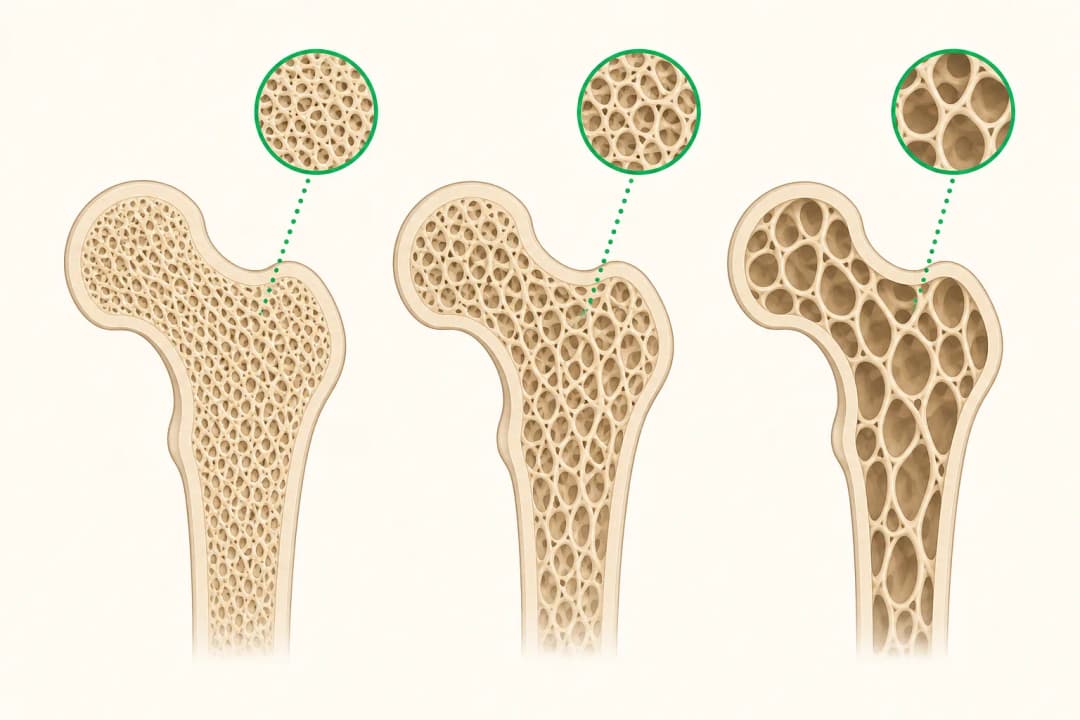
Osteopenia describes bone density that is below the usual range but not as low as osteoporosis. It often causes no symptoms, so a bone density test may identify it before a fracture occurs. After menopause, changes in oestrogen can speed bone loss for some women. Your overall fracture risk also depends on age, previous fractures, falls, medicines, family history, body weight, smoking, alcohol use, and other health conditions. A result should therefore be interpreted alongside your personal risk rather than treated as a prediction of a fracture.
Practical steps for bone protection
Arrange a review of the scan result and any factors that may accelerate bone loss. Regular weight-bearing activity, muscle-strengthening exercise, and balance work can support bones and reduce fall risk when chosen at a suitable level. Include calcium-rich foods and adequate vitamin D according to your clinician’s advice, and avoid smoking. Keep walkways clear, improve lighting, and use prescribed glasses or walking aids correctly. Some people need monitoring only, while others benefit from medication; that decision depends on fracture risk, not the word osteopenia alone. Do not start supplements or stop medicines without checking how they fit your health history.
When to seek medical care
Seek prompt medical assessment after a fall or a new pain in the back, hip, wrist, or another bone, especially if the pain began with little force. Sudden severe back pain, a new change in posture, difficulty standing, or loss of normal movement may signal a fracture and should not be ignored. Contact a clinician sooner if you have had a low-impact fracture, are taking long-term steroid medicine, or have repeated falls. Emergency help is appropriate when an injury causes inability to bear weight, visible deformity, numbness, or severe pain.
Questions for your doctor
Ask what your bone density result means for your fracture risk, whether another scan is needed, and which exercises are suitable for you. You can also ask whether medicines or health conditions are affecting your bones, how to meet calcium and vitamin D needs safely, and how to make your home safer from falls.
Find care
General Clinics & Polyclinics in Abu Dhabi
That answer is general. If you want it applied to your own case, these are licensed general clinics & polyclinics listed in Abu Dhabi.
27 Ar Ruwwad St - Shakhbout City - MSH4 - Abu Dhabi - United Arab Emirates
Accepts: Daman, Thiqa, Cigna, MetLife +20 more
Al Ruwais, Al Dhafrah
Accepts: Daman, Thiqa, AXA, Cigna +16 more
Al Bahyah - Al Bahyah Old - Abu Dhabi - United Arab Emirates
Accepts: Daman, Thiqa, Cigna, Allianz Care +18 more
Abu Dhabi
Accepts: Daman, Thiqa, AXA, Cigna +27 more
Ordered by verification status and how complete each clinic's public record is, then alphabetically. This is a directory listing, not a ranking — Zavis does not rate or recommend providers.
A factual listing drawn from the DHA, DOH and MOHAP licence registers. It is not a referral, an endorsement, or advice that any of these providers is right for you.
Questions people ask
Does osteopenia always become osteoporosis?
No. Bone density can remain stable or improve when contributing factors are addressed, although some people lose bone over time.
Can I exercise with osteopenia?
Many people can exercise safely. A clinician or physiotherapist can tailor weight-bearing, strengthening, and balance activities to your abilities and fracture risk.
Medical disclaimer. This page is general health information, not medical advice, and it cannot diagnose you. Always consult a licensed healthcare provider about your own symptoms and treatment. In an emergency in the UAE, call 998 for an ambulance.